How to read this: Sumba Destination Wedding is an independent wedding-curation guide — we research and compare cliffside, beach, resort and intimate settings on Sumba, then route your enquiry to a vetted planning partner. We are not a wedding planner, venue, resort or booking platform, and any property named (including well-known names) is a neutral example only, not a claim of endorsement or affiliation. Legal marriage requirements for foreigners in Indonesia are complex — this is general information, not legal advice; always verify current rules with the relevant authorities. Costs are by quote and vary by season, party size and logistics; figures here are indicative ranges only.
Sumba wedding welcome event ideas are, in a very real sense, more important here than at almost any other destination. Guests do not stroll over from a nearby hotel for a pre-dinner cocktail — they have flown from Bali on a turboprop, been collected in a four-wheel drive, and navigated roads that bear almost no resemblance to an airport transfer in Nusa Dua. By the time they arrive at the resort, they are dusty, mildly exhilarated, and deeply in need of something cold and a familiar face. That first communal gathering — the welcome dinner at a Sumba wedding — does a job no ceremony-day schedule can replicate: it brings everyone down to the same unhurried pace, gives travel-frayed guests a chance to meet across tables rather than in a rushed church aisle, and signals from the very first evening that this weekend is going to be different.
Below is a practical, honest guide to structuring that welcome and the side events around it. Not every idea fits every resort or every couple. Some require arranging months in advance; some depend on the season and weather. I will flag all of that as we go.
Why Welcome Events Matter More on a Remote Island
Most guests at a destination wedding have absorbed some travel friction before they arrive. Sumba amplifies that friction considerably. The direct flight from Bali — DPS to Tambolaka (TMC, now officially Lede Kalumbang Airport) — runs about 85 minutes on an ATR turboprop. That is not a long flight, but it is a small, loud, sometimes bumpy one, and it arrives WITA (UTC+8), one hour ahead of Jakarta and three or four hours ahead of Australia’s eastern time zones. Guests from Europe or North America have often been in transit for 24 hours or more by the time they pass through the resort gate.
Layered on top of that: not everyone lands at the same time. Flights are limited and the schedule is demand-driven; couples planning a full-resort buyout frequently find that guests arrive across a window of twelve to eighteen hours. A rigid rehearsal dinner format that assumes everyone appears at 7 p.m. sharp does not survive contact with real Sumba flight logistics.
The answer is to design a welcome format that breathes — a rolling cocktail hour, a dinner that opens the tables gradually, a layout where early arrivals can settle at the bar and late arrivals slot in without disrupting a formal programme. Build that in, and the awkwardness of staggered arrivals becomes part of the relaxed texture of the evening. Fight it, and you are stressed before the ceremony day even begins.
The Sunset Welcome Dinner: The Core Format
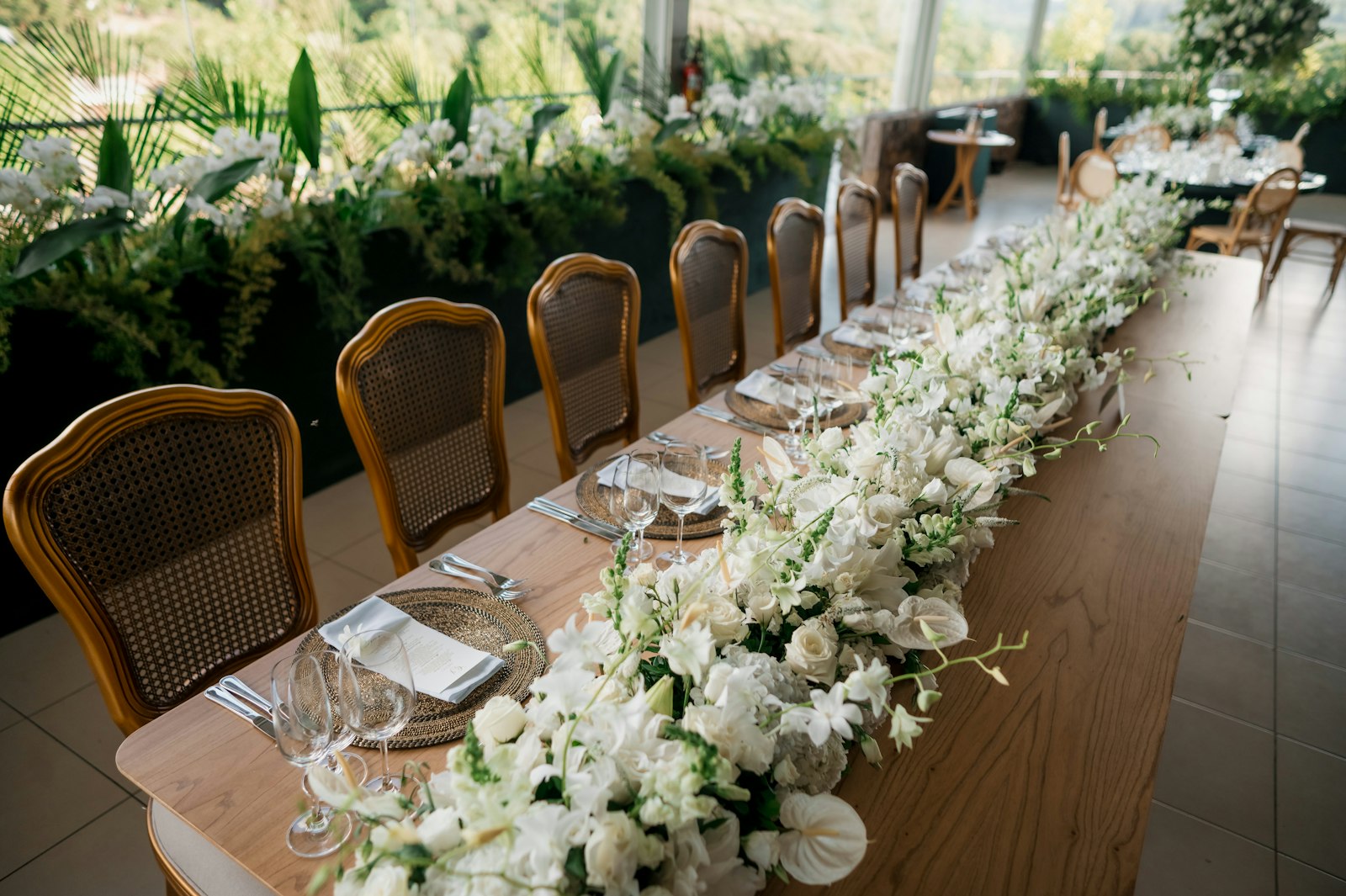
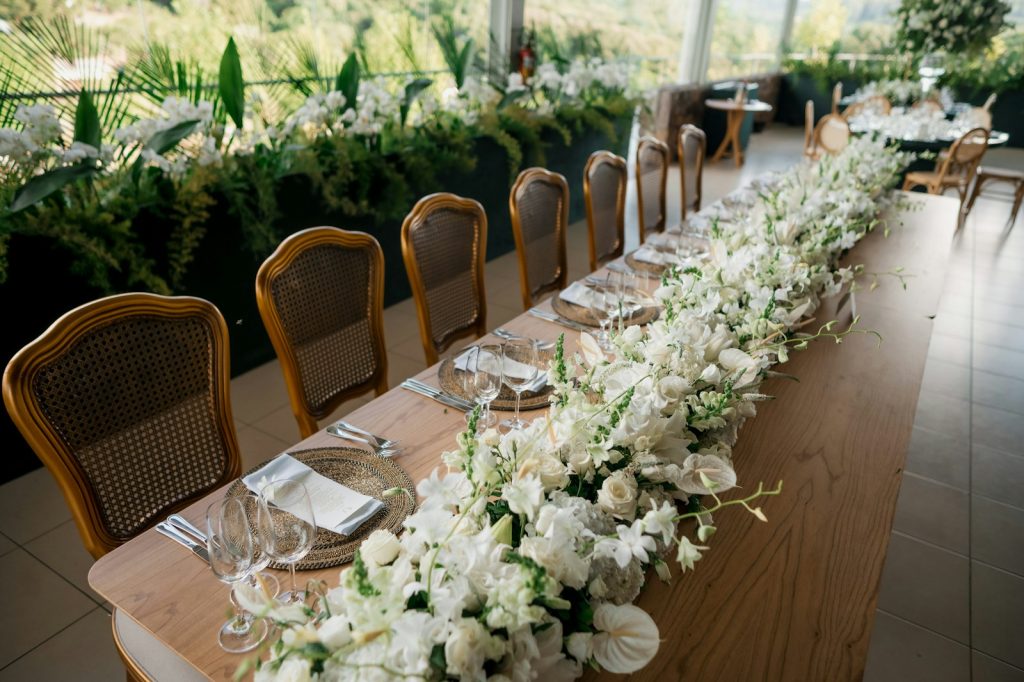
The welcome dinner at a Sumba wedding almost always happens the evening before the ceremony, and at a property like Nihi Sumba — currently the only fully-verified destination-wedding venue on the island — the setting does significant work on its own. Clifftop platforms, open-air pavilions, and the long private beach all offer genuinely different dinner configurations. The choice matters.
A clifftop or elevated terrace dinner catches the sunset over the Indian Ocean. Sumba’s south and southwest coast faces west-southwest, which means sunset light in the dry season (June through September) is long and warm. The catch: the Australian SE monsoon brings consistent wind June through August, and on exposed positions that wind is not gentle. It flaps tablecloths, knocks over arrangements, and makes candlelit tables more aspirational than practical. Any welcome dinner on an open clifftop or exposed beach in this period needs wind-weighted decor, storm glass holders instead of tapers, and a backup plan for the floral installation.
A sheltered garden or internal pavilion dinner trades the panoramic view for controllability. For couples with elderly guests or guests not accustomed to strong ocean wind, this is often the right call. The resort can usually provide both options and advise based on the week’s conditions — ask them specifically about wind exposure by name of the site, not just in general terms.
Format and Pacing
Open the evening with a 45-to-60-minute cocktail hour — passed canapés, local palm-sugar drinks alongside the alcohol, a few scattered seating clusters rather than one formal row. This absorbs the staggered arrivals naturally. Move to a seated dinner once the majority are present. Keep the programme light: a brief welcome toast, perhaps a short introduction to the schedule of the weekend, and then conversation. Sumba evenings in dry season cool to around 22–25°C, often lower than guests expect after the 30–32°C afternoon. A light wrap or shawl on every chair is a small gesture guests remember.
A Beach or Savannah Cocktail Hour
If the welcome dinner itself is a sit-down affair indoors or under cover, consider separating out a short pre-dinner cocktail hour on the beach or, if the venue position allows, at the edge of a savannah viewpoint. Between June and October the grass is golden-brown — that is the Sumba colour most couples see in photographs, and it is genuinely that colour, the product of a semi-arid climate that receives markedly less rain than Bali. The visual impact of people gathered at a savannah edge in late afternoon light, with a wooden bar set among the dry grass, is memorable in a way that no indoor reception matches.
The practicalities: this is typically a 45-to-90-minute event before the dinner, not a standalone evening. Keep it moving — the heat of late afternoon (often 30–33°C until after 5 p.m. in the peak dry season) is real, and guests do not want to stand in direct sun for two hours. Provide shade structures, cold towels on arrival, and something non-alcoholic that is not just water. The transfer from cocktail location to dinner site should be factored into timing; if it requires vehicles, build that margin in.
Cultural Welcome Elements: What Is Genuine and What Is Not
Sumba has a living traditional culture — Marapu, the indigenous animist and ancestral belief system, still shapes daily life alongside Christianity, and the island’s textiles, music, and village life are not museum pieces. Couples often want to incorporate a cultural welcome element, and that desire is understandable and can be honoured well.
But the line matters. A genuine Sumbanese blessing arranged through the property, facilitated by a Rato (a village priest and ritual authority), is a meaningful, real offering that the couple and their guests carry for life. A staged mock ceremony with rented costumes is not. Reputable resorts on Sumba understand this distinction and will only offer genuine cultural programming — if a venue is proposing something that sounds like a theme-park cultural moment, push back or ask what the actual arrangement with the community is.
What a Respectful Cultural Welcome Can Include
- Sumbanese traditional music on arrival — bamboo flute, drum, or percussion welcome as guests step off vehicles at the resort entrance. This is a real and common offering at quality properties; confirm with the resort that performers are from a neighbouring community and that they are paid appropriately.
- Traditional dance or storytelling — arranged through the property with a genuine village group. This should be short (20–30 minutes), not a marathon performance. Ask the resort coordinator whether the group has a direct relationship with the property and whether the performance is one they give regularly.
- A Rato blessing of the couple before or during the welcome dinner — this is a meaningful ceremony element that some couples incorporate as part of the evening. It requires advance arrangement with the resort and with the Rato; it is not something that can be booked two weeks out.
- Tenun ikat display or demonstration — Sumba’s resist-dye ikat weaving is national intangible-heritage listed and a genuine point of pride, particularly in East Sumba. A weaver or a curated display of cloths (not for cutting, not for use as props — this matters; do not appropriate sacred cloths for decor) can be a quiet, respectful cultural touch on welcome tables or as part of a lounge area.
Defer the deeper context — the significance of the Marapu faith, the role of ikat in marriage exchanges, the meaning of Pasola — to the cultural pages of this guide. Welcome night is not the right moment for a lecture; it is the right moment for an experience that opens a door.
A Guided Excursion: Kampung Adat or Waterfall Visit
For couples running a multi-day wedding weekend rather than a single ceremony day, a guided group excursion on the afternoon before the welcome dinner is one of the most effective ways to build the sense of shared adventure that Sumba offers. It also means guests arrive at dinner already connected — they have stood together at a waterfall, navigated a rocky path, or walked through a traditional village with the same guide. That shared experience changes the texture of the table conversation.
The options in West and Southwest Sumba (the area closest to Tambolaka airport and the major luxury properties) include traditional villages with megalithic tombs — Ratenggaro and Wainyapu are among the coastal ones, Prai Ijing and Tarung are near Waikabubak — and waterfall sites like Lapopu. These are real places with real communities living in and around them.
Doing It Respectfully
A kampung adat visit requires preparation that most couples cannot arrange independently on short notice. The resort or a local guide arranges an introduction to the village head, ensures a contribution is paid to the community, and sets expectations for behaviour: no climbing on the megalithic tombs, no photographing people without asking first, modest dress for sacred areas, and no drones without permission from the village leader. Groups of 20 or more require additional coordination — a single large group descending on a small village can overwhelm a community that exists to live its life, not perform for visitors. Break into smaller groups if numbers exceed roughly fifteen per cluster.
Transfer time from West Sumba resort areas to these villages is typically thirty to sixty minutes on roads that are unpaved or partially paved in sections. Build that in. An excursion that requires guests to board vehicles at 1 p.m. and returns by 4:30 p.m. leaves time for a rest before the welcome dinner cocktail hour — that rhythm works. One that runs until 5:30 p.m. and deposits guests straight onto a beach cocktail lawn, travel-sweated and sandy, is harder to manage.
The Morning-After Recovery Brunch
The ceremony day itself absorbs all the planning energy. What is often overlooked is the morning after: guests are usually not leaving immediately (there is nowhere to rush to on Sumba), they are mildly tired, and they are emotionally full from the previous day. A casual guest welcome party in the Sumba sense can take the form of this recovery morning — a long, informal poolside or garden brunch where no one is required to be anywhere at a specific time, the coffee is strong, and the couple can move table to table without a schedule.
This format also solves the practical problem of guests who could not attend the pre-ceremony welcome dinner due to late arrival. They join the weekend fully at this point, catch up on what they missed, and the weekend feels complete rather than truncated.
Most resort catering can accommodate a long brunch format — Indonesian staples alongside Western options, fresh fruit in the kind of abundance that Sumba’s growing seasons support, and a juice or mocktail station for those who celebrated too enthusiastically the night before. Cost is by quote from the resort; rough catering brackets and what remote-logistics premiums look like in practice are covered in the full cost guide. Request itemised estimates rather than per-head package figures, since the breakdown reveals where the real variables are.
Ready to start planning the specifics? Use our enquiry form or reach us on WhatsApp at 6281139414563 and we can help you think through the sequencing, the cultural etiquette, and what to ask your venue about each of these formats. We do not charge couples for this guidance; if you proceed with a venue or vendor through our recommendations, they may pay us a referral fee at no extra cost to you.
Logistics at a Glance
| Event | Typical Timing | Key Logistics Consideration | Suggested Lead Time |
|---|---|---|---|
| Sunset cocktail hour (beach or savannah) | Day before ceremony, 5–6:30 p.m. WITA | SE monsoon wind Jun–Aug; guest transfer from rooms; shade structures | 4–8 weeks with venue |
| Welcome dinner (sit-down, covered or open) | Day before ceremony, 7–10 p.m. WITA | Plan for staggered arrivals; fly-in vendor meals may need advance ordering | 3–6 months for full-buyout setup |
| Cultural music or dance welcome | Arrival moment or dinner opening | Community arrangement through venue only; genuine performers, not staged | 3–6 months minimum |
| Rato blessing | During welcome dinner or pre-ceremony | Elder coordination via venue; deeply sacred — no last-minute requests | 6+ months |
| Kampung adat or waterfall excursion | Afternoon before ceremony, 1–4:30 p.m. WITA | Village permission; groups of ≤15 per cluster; rough-road transfer margin | 6–12 weeks |
| Recovery brunch (morning after ceremony) | Day after ceremony, 9 a.m.–noon WITA | Casual, flexible format; schedule around guest departure transfers | 4–8 weeks with venue |
Frequently Asked Questions
How many days before the wedding should the welcome dinner be scheduled?
The evening immediately before the ceremony is standard — that is the night most of your guests will have arrived and settled. If you have guests flying long-haul from Europe or the Americas, consider building in an extra buffer day and holding a casual first-night gathering as well, so exhausted travellers do not have their only relaxed social time right before the ceremony-day programme begins. Sumba’s limited flight schedule means you cannot predict exact arrival windows; design for flexibility rather than a fixed 7 p.m. start.
Can the resort arrange a genuine Sumbanese cultural blessing for the welcome evening?
Reputable properties that work with local communities regularly can arrange a real blessing by a Rato (village priest) or authentic traditional music and dance through neighbouring villages. The key word is arrange: this is not an on-demand service. It requires advance planning, community coordination, and respect for the ritual context. Confirm with your venue coordinator at least three to six months out, and clarify exactly who performs, what the community arrangement is, and how the performers are compensated. If a venue cannot answer those questions specifically, that tells you something worth knowing.
What is the best time of year for outdoor welcome events on Sumba?
Mid-June through late August is the driest and most reliable window — clear skies, low humidity, and predictable conditions. The drawback is the SE monsoon wind, which is strongest in July and August on exposed south-coast and cliff sites. May and early June offer slightly greener landscape and lighter wind. September is generally dry but can feel very hot (daytime 30–33°C or higher) and the first storms of the wet season can arrive late in the month. For outdoor welcome events where wind matters — tablescapes, open-flame candles, fine floral arrangements — the sheltered-position question is worth asking your venue explicitly, regardless of the month you choose.
Is a rehearsal dinner the same as the welcome dinner in the Sumba context?
Not quite. A traditional rehearsal dinner implies a formal run-through of ceremony logistics with the wedding party — officiant, family principals, processional order. Sumba resorts can facilitate a brief walk-through of the ceremony site if the couple wants it, but the evening gathering most couples hold the night before is really a guest welcome party rather than a rehearsal in the formal sense. Most ceremonies are intimate enough (Sumba’s cap is roughly 70 adults at a single property for a full-buyout) that a short orientation on the morning of the ceremony or a pre-ceremony briefing works just as well. Use the evening before for pleasure and connection rather than logistics review.
How do we handle guests who arrive after the welcome dinner has started or finished?
Plan for it deliberately. Brief the resort coordinator on the latest expected arrival time and ask that a simple late-arrival supper or welcome plate be available in the villa or room for guests who miss the main dinner. Keep a message thread — a group chat or a note left at the front desk — that tells late arrivals where people will be gathering informally after dinner. Sumba is not large or complicated once you are inside a single property; people find each other. What they appreciate is knowing the couple thought of them despite the logistics.