Sumba Destination Wedding is an independent editorial guide to getting married on Sumba Island, eastern Indonesia. That is the short answer to what this site is. The longer answer matters just as much: we are not a wedding planner, not a venue, not a booking platform, and not a package seller. Nobody has paid to appear here, and no venue or operator can buy a better write-up. What we do is curate, research, and honestly assess the options available to couples who are drawn to one of the most dramatically remote, privately intimate, and genuinely uncommercialized islands in Southeast Asia — and we are candid about what Sumba cannot do as readily as we are clear about what it does extraordinarily well.
What This Guide Covers and What It Does Not
Every page on this site targets a specific question couples actually ask: Which venues can host a wedding here? How many guests can realistically attend? What does a Sumba wedding actually cost? What are the legal requirements for foreigners? What is the best time of year, and what happens if you get the season wrong?
We cover all of that, but we cover it as editors, not as service providers. We do not sell packages, book venues, arrange vendors, or process payments. When couples read something here and want hands-on professional help to execute it, we route that enquiry to a single vetted local planning partner. If you proceed to work with that partner, they may pay us a referral fee — at no extra cost to you. No one can pay us to change what we publish. That distinction is the foundation of this site’s usefulness, and we want it stated plainly up front rather than buried.
If you would like to start a conversation now, reach us via our enquiry form or on WhatsApp at +62 811 3941 4563. We respond in English and Indonesian.
Our Editorial Standard
The wedding media landscape around Sumba is thin and heavily skewed. A single ultra-luxury resort dominates search results with its own branded editorial. Marketplace directories list venues without verifying capacity. Bali-focused wedding law articles get republished as if they apply word-for-word to Sumba’s regency civil registry offices in Waingapu and Tambolaka — they do not.
We built this guide because the information gap is real and couples pay for it, sometimes literally, by planning for a guest count a venue cannot accommodate, or by arriving without the right documents for East Nusa Tenggara’s specific registry requirements.
Our editorial rules are these:
- Venue and capacity claims are verified with the property, or flagged. If we have not been able to confirm a detail directly, we mark it [VERIFY] or note it as unconfirmed. We do not invent room counts or guest maximums from secondary sources.
- Prices are ranges, never fixed quotes. Wedding costs on Sumba are negotiated individually and shift with exchange rates, vendor availability, and production scope. We present cost bands (for example, the kind of per-head catering or resort-buyout investment a couple should budget for) rather than stating a price that will be wrong by the time you read it. All cost figures are rough estimates unless we indicate otherwise.
- Legal and health material is information, not advice. Indonesia’s marriage law framework, visa requirements, and health considerations for eastern Indonesia are genuinely complex, and the rules change. We describe what the framework looks like based on embassy and government sources, and we direct readers to the relevant embassy, the local civil registry (Catatan Sipil), and qualified legal or medical professionals for decisions. We are not lawyers and we are not doctors.
- Content is dated and reviewed. Each page carries a publication date and a last-reviewed date. When we update a page substantially, we note what changed and why. Wedding regulations and venue offerings shift; a guide that was accurate in 2024 may need correction by 2026.
Why Sumba? And Why Honest About Its Limits?
Sumba is a limestone-hill savannah island about 10,910 square kilometres in area, sitting in East Nusa Tenggara province roughly 600 km southeast of Bali — about a 50-minute turboprop flight from Denpasar on Wings Air or Garuda. The island has two commercial airports: Lede Kalumbang (TMC) near Tambolaka in the southwest, and Umbu Mehang Kunda (WGP) at Waingapu in the east. Those are the only scheduled-flight entry points. There is no train. The road between the two airports is roughly 250 to 300 kilometres and takes six to eight hours in good conditions.
That geography shapes everything about a Sumba wedding. It is the reason vendors routinely fly in from Bali, adding a meaningful logistics premium to every element of production — flowers, audio-visual equipment, makeup artists, photographers, décor rentals. It is the reason the island’s most developed wedding venue caps its guest list at around 70 adults. It is the reason we spend as much editorial space on access planning and realistic cost expectations as we do on ceremony aesthetics.
None of that is a reason not to choose Sumba. For a certain kind of ceremony — one where genuine remoteness, dramatic cliff-top or white-sand beach settings, living Sumbanese cultural traditions, and absolute privacy matter more than convenience and vendor depth — this island is hard to match. The dry season runs roughly from June through September, with mid-June to late August offering the most reliably clear skies and comfortable temperatures. The savannah turns a characteristic golden-bronze through July and August; earlier in the year it is greener. South-coast beach venues face strong southeast-monsoon winds from June through August, which is worth knowing before you commit to an exposed clifftop setup.
We say all of this because a couple who arrives expecting Bali’s vendor depth, guest-list flexibility, and package-wedding infrastructure will be disappointed. A couple who arrives understanding Sumba on its own terms — intimate, raw, culturally alive, logistically demanding but richly rewarding — tends to say it was the best decision they made.
The Sumba Wedding Editorial Team
Three editors run this guide, each with a clearly defined lane. We keep lanes separate on purpose: Sumba weddings require local cultural knowledge, logistics fluency, and an outsider’s honest read of the legal system, and those skill sets rarely sit in one person.
Ratih Dewanti — Lead Editor, Weddings & Venues
Ratih leads venue curation, capacity research, and cost-band modeling across the site. She has spent more than a decade covering destination weddings and boutique hospitality in eastern Indonesia, with a particular focus on how low-density, infrastructure-sparse islands like Sumba diverge from the packaged, vendor-rich experience of Bali. Her editorial beat is every page that touches venue selection, ceremony setup, seasonal planning, photography and floral logistics, and the real economics of a Sumba wedding. She is the editor responsible for ensuring every guest-count figure on this site is verified with the property directly or clearly flagged as unconfirmed.
Marcus Lindgren — Editor, Logistics & Legal
Marcus covers the material that most wedding guides treat as an afterthought: how to actually get yourself and your guests to Sumba, what the Indonesian marriage law framework means for a foreign couple, and what the practical difference is between a legally registered Indonesian marriage and a symbolic ceremony in a destination country. He approaches these topics from the perspective of a foreigner navigating an unfamiliar bureaucracy — because that is exactly what most couples on this island are doing. His pages on Indonesia’s Marriage Law No. 1 of 1974, the Certificate of No Impediment process, the same-religion requirement, and the civil registry offices in East Nusa Tenggara draw directly from embassy guidance (US, Australian, Dutch) and are reviewed each time we are aware of regulatory changes. His flight and transfer content reflects the actual airport codes and route realities: TMC and WGP, the 50-minute Denpasar connection, the absence of any verified stable direct Lombok–Sumba route.
Umbu Tamora — Local Editor, Sumbanese Culture
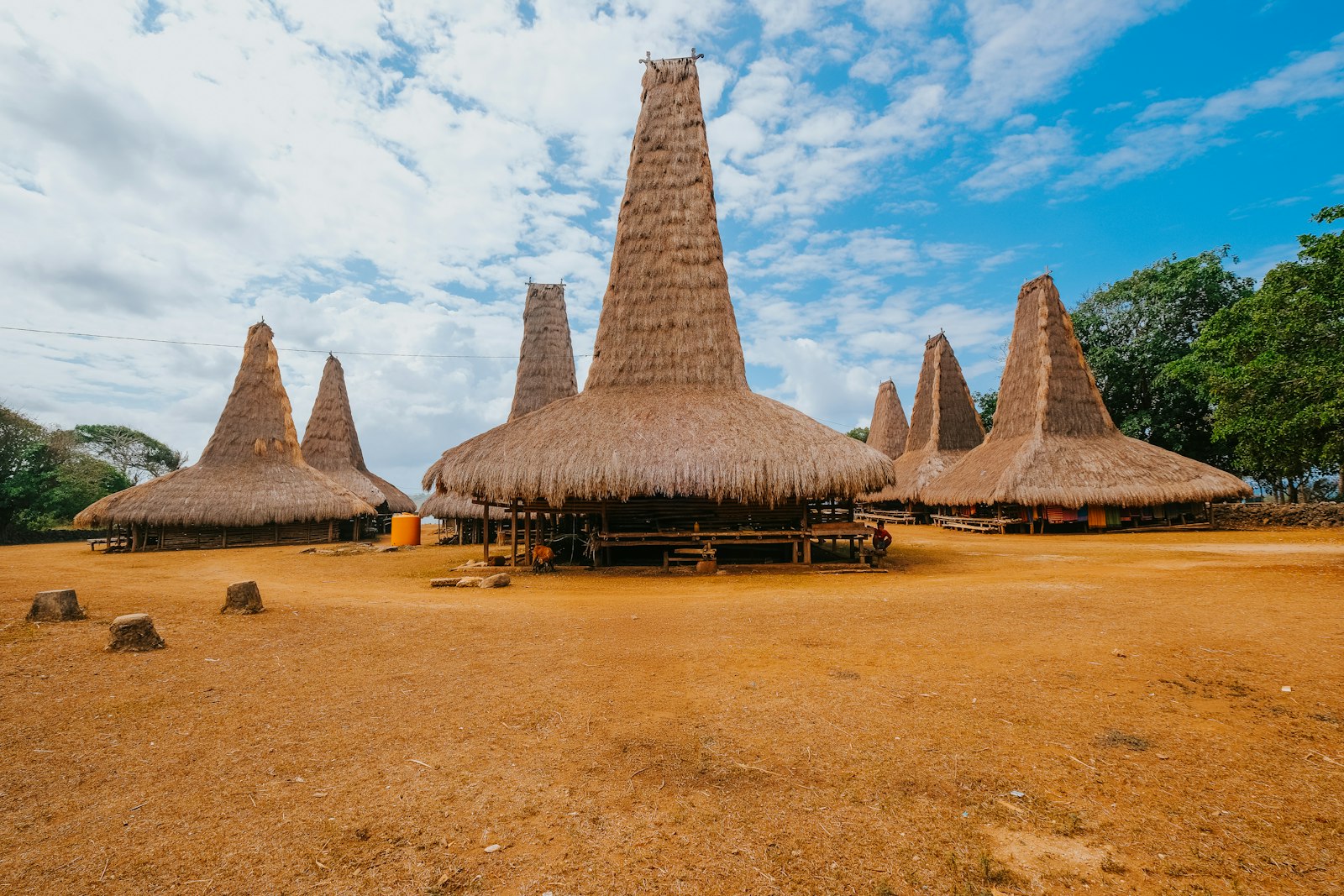
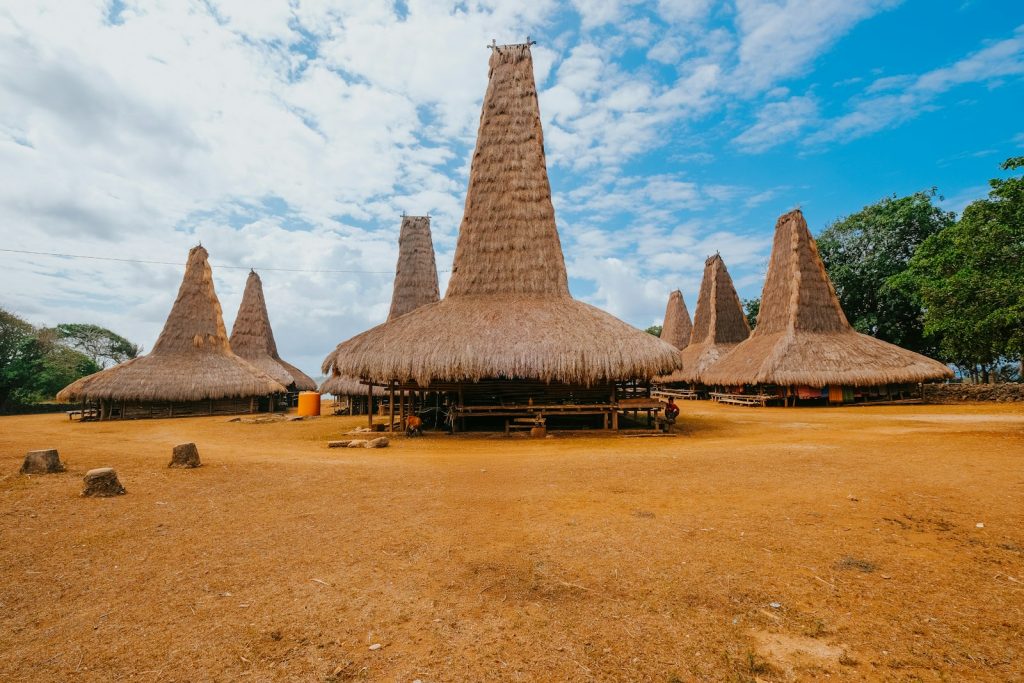
Umbu is Sumbanese, from West Sumba, and his role is to keep the rest of us honest about the island we are writing about. He reviews every page that touches Sumbanese cultural practices — the tenun ikat textile traditions (the resist-dye cloths integral to ceremonial exchange, a nationally listed intangible heritage), the Marapu ancestral belief system still actively practiced alongside Christianity, the Pasola mounted-spear ritual tied to the lunar calendar in West and Southwest Sumba each February or March, and the protocols for visiting traditional kampung adat villages with their peaked thatched uma houses and megalithic stone tombs. Umbu’s guidance is the reason this site carries practical cultural protocols — ask permission before photographing people or sacred sites, do not climb or sit on tombs, do not schedule events that clash with local ritual calendars — rather than treating those traditions as scenic backdrop for wedding photographs.
How We Research
For venue pages, we contact properties directly. We ask for current capacity figures, wedding program details, buyout requirements, and any minimum spend or package terms. Where a property has not responded, or where we cannot confirm a specific detail, that is disclosed on the relevant page. We do not republish a competitor’s figure as fact.
For legal and regulatory content, we draw on official embassy publications (the US Embassy in Jakarta, the Australian Embassy, the Dutch Embassy) and government sources. We cross-check conflicting sources and flag the conflicts rather than silently picking one. Indonesian marriage law is not straightforward for foreigners — the requirement that both partners share the same recognized religion (Islam, Protestantism, Catholicism, Hinduism, Buddhism, or Confucianism) catches many couples by surprise, as does the role of the local Catatan Sipil rather than a national registry. We describe these frameworks, cite our sources, and recommend professional guidance for the actual execution.
For cost modeling, we build ranges from multiple inputs: publicly available industry benchmarks for Indonesian destination weddings, property-level intelligence where venues share general investment levels, and the known cost drivers of remote-island logistics (vendor airfare, freight, accommodation for supplier teams, reduced local competition). We do not publish fixed prices for any specific property, because no property has authorized us to do so and because those figures change. Our cost bands are planning anchors, not quotes.
For cultural content, Umbu reviews final copy and flags anything that flattens or distorts Sumbanese practice. His standard: the site should be as useful to a Sumbanese person reading it as to a couple arriving from Amsterdam or Sydney.
What We Are Not
We want to be direct about this, because the line between an editorial guide and a commercial service can get blurry in destination-wedding media.
We are not a wedding planner. We do not manage timelines, coordinate vendors, or stand on-site to handle day-of logistics. The partner we refer couples to does that work; we do not.
We are not affiliated with any venue. A venue cannot pay to improve its listing here or remove a critical observation. Nihi Sumba appears in our pages because it is the most fully developed destination-wedding venue on the island, with a dedicated program and a verified guest-capacity ceiling of around 70 adults — not because of any commercial relationship. Cap Karoso and Lelewatu Resort Sumba appear as candidates worth investigating, with an honest note that their wedding-specific programs have not been fully verified and couples should contact the properties directly.
We are not an official or government-accredited body. We are an editorial team. We carry no government endorsement and claim none.
We are not a booking platform. We do not process payments, hold availability, or issue confirmations. When you make a booking through a partner we recommend, you are contracting with that partner, not with us.
Reach Us
Editorial questions, corrections, and new-venue tips are welcome. If you have first-hand experience with a Sumba wedding property we have not reviewed, or if you have found an error in our content, please tell us — we update promptly.
For couple enquiries — choosing a venue, planning a timeline, understanding logistics for your guest count — start with our enquiry form or WhatsApp us at +62 811 3941 4563. We respond in English and Indonesian, typically within one business day. Enquiries about very small, very large, or very logistically complex weddings are particularly welcome: those are the ones where this guide’s honest-limitation posture is most useful.
Frequently Asked Questions
Is Sumba Destination Wedding a wedding planner or a booking service?
No. We are an independent editorial guide: we research, curate, and honestly review options for couples planning a wedding on Sumba Island. We do not sell packages, book venues, or manage logistics. When couples want hands-on professional help, we connect them with a vetted planning partner and may receive a referral fee for that introduction, but that relationship does not influence what we publish.
How many guests can realistically attend a Sumba wedding?
Sumba is fundamentally an intimate-wedding destination. The island’s most developed venue, Nihi Sumba, has verified capacity for around 70 adults across its rooms. Other upscale properties — Cap Karoso, Lelewatu — are boutique-scale with low room counts, and their wedding programs are not yet fully confirmed. Very large weddings of 150 or more guests are not realistically achievable on Sumba with existing infrastructure; couples planning at that scale should consider Bali or Lombok instead.
Do we need to legally marry in Indonesia, or can we hold a symbolic ceremony?
Indonesia’s Marriage Law No. 1 of 1974 requires that any legally recognized marriage be performed according to one of the country’s six recognized religions, with both partners sharing the same faith. For most foreign couples — particularly interfaith couples or those from countries with a straightforward civil registry — the practical path is to marry legally at home and hold a symbolic blessing or commitment ceremony on Sumba. This is the approach most destination-wedding planners in Indonesia recommend. Our legal pages cover this in detail; for decisions with legal effect, consult your own embassy in Indonesia and a qualified local professional.
When is the best time of year for a Sumba wedding?
The core dry season runs from June through September, with mid-June to late August offering the most reliable weather — clear skies, low humidity, temperatures between roughly 30 and 33°C during the day. Bear in mind that the southeast-monsoon wind is strongest in July and August, which affects exposed south-coast ceremony sites; if you are planning a beach or clifftop ceremony, ask the venue about wind shelter. The savannah is characteristically golden from July onward; if you prefer lush green hillsides, late April to early June is the transition window, though rain risk rises.
Does a Sumba wedding cost more than a Bali wedding?
For comparable production quality, yes — typically more. The cost premium comes from Sumba’s remote logistics: vendors (photographers, florists, hair-and-makeup, audio-visual) usually fly in from Bali and need accommodation on the island; freight costs for décor and equipment are higher; and the limited local vendor pool means less price competition. We present all wedding cost figures as rough planning ranges, not fixed quotes, because individual negotiations vary widely. Our cost guide pages go into more detail by format — elopement, intimate gathering, and full-resort buyout.