How to read this: Sumba Destination Wedding is an independent wedding-curation guide — we research and compare cliffside, beach, resort and intimate settings on Sumba, then route your enquiry to a vetted planning partner. We are not a wedding planner, venue, resort or booking platform, and any property named (including well-known names) is a neutral example only, not a claim of endorsement or affiliation. Legal marriage requirements for foreigners in Indonesia are complex — this is general information, not legal advice; always verify current rules with the relevant authorities. Costs are by quote and vary by season, party size and logistics; figures here are indicative ranges only.
A Sumba destination wedding FAQ is a collection of honest, direct answers to the questions that couples most urgently need before committing to this remote eastern Indonesian island as their wedding destination. In short: Sumba is a genuinely extraordinary place for an intimate wedding of 20 to 70 guests, but it demands more logistical preparation, more budget, and more tolerance for uncertainty than almost any other Indonesian option. If those conditions fit your vision, few places on earth compare. If they don’t, that’s worth knowing early.
What follows are the sumba wedding questions I hear most often — from couples researching this island from abroad, from guests trying to figure out flights, from families quietly worried about malaria and ATMs. I’ve answered them as plainly as I can, grounded in verified facts rather than marketing copy. Where something is legally or medically sensitive, I flag it clearly as information, not advice, and I tell you exactly who to ask instead.
Is Sumba Good for a Wedding?
For the right couple and the right guest count: yes, strongly yes. For the wrong couple or an oversized guest list: honestly, no.
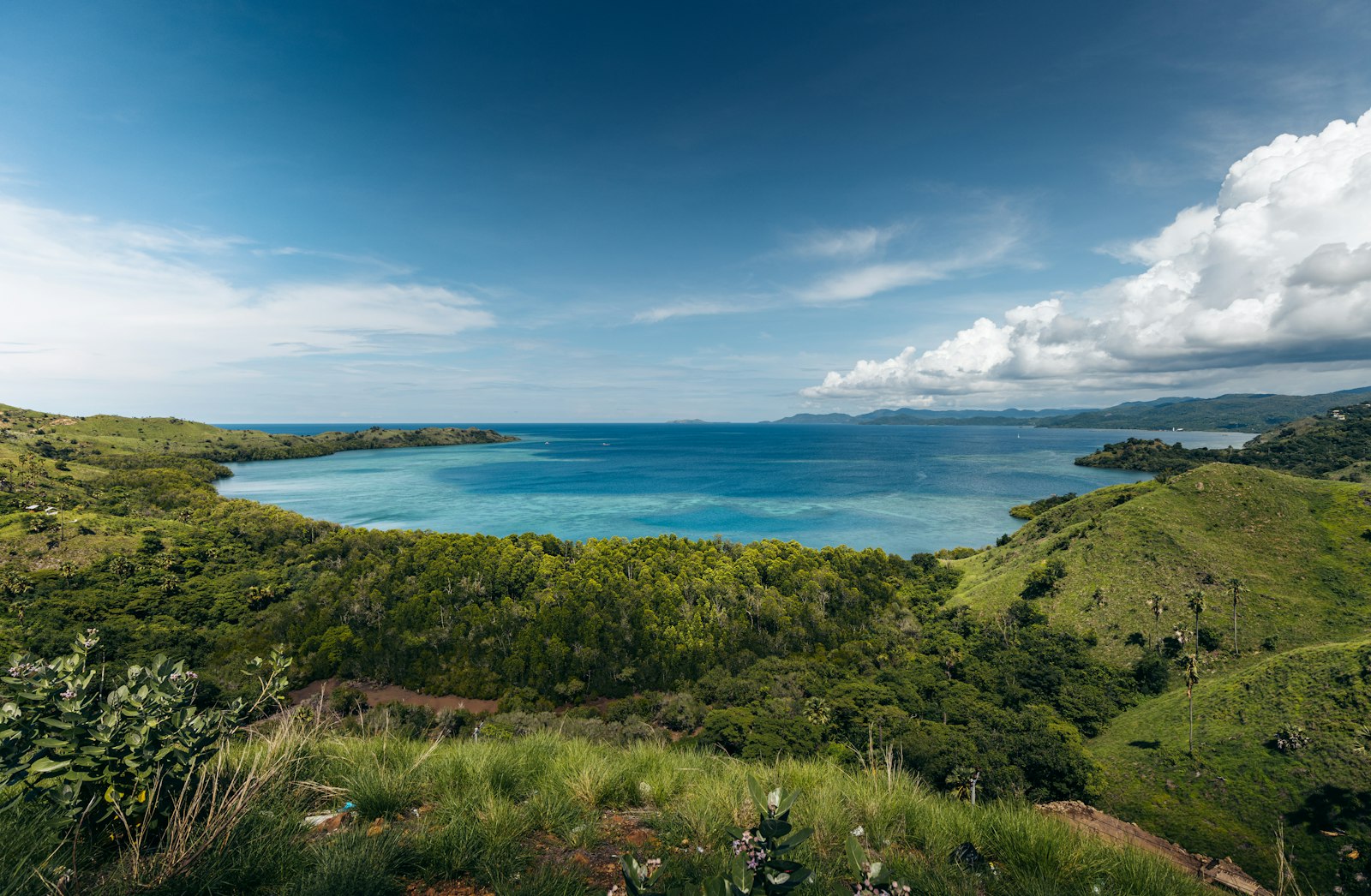
Sumba’s appeal is specific and real. The island sits roughly 600 km southeast of Bali — a short turboprop hop that crosses into a completely different world. Limestone savannah rolls to clifftop bluffs above the Indian Ocean. The dry-season light from mid-June through late August turns everything amber and gold. There are no resort strips, no traffic jams, no generic beach-club backdrops. A ceremony on the southwest coast at Nihi Sumba, the island’s only confirmed full-service destination-wedding venue, is genuinely unlike anything available in Bali or Lombok.
The constraints are equally specific. Sumba is a remote island in East Nusa Tenggara province. Roads are rough, ATMs are scarce, medical facilities are limited to basics, and mobile data is patchy outside towns. The two commercial airports — Tambolaka (TMC) in the southwest and Waingapu (WGP) in the east — are served by turboprop aircraft on routes that operate on regional schedules. There is no mega-resort hotel on this island. The largest single-property wedding capacity is approximately 70 adults.
That last figure is the deciding one for most couples. If your vision is 100, 150, or 200 guests gathered in one place, Sumba cannot accommodate you cleanly. If your vision is 30 close friends and family at a clifftop venue with a real Sumbanese blessing ceremony and horses on the beach at sunset, Sumba has almost no competition anywhere in the region. This is a destination for couples who value intimacy, authenticity, and visual drama over scale and convenience.
Is It Legal to Get Married in Indonesia as a Foreigner?
This section is information only, not legal advice. Marriage law is complex, changes over time, and varies by nationality, religion, and local jurisdiction. Confirm all requirements with your own embassy or consulate in Indonesia and with the local civil registry office.
Legal marriage in Indonesia is genuinely complicated for foreign couples, and it is important to understand the framework clearly before you begin planning.
Indonesia does not recognise civil or secular marriage. Under Marriage Law No. 1 of 1974 — the legal basis cited by the US, Australian, Dutch, and other major embassies — every legal marriage must be performed according to one of the state-recognised religions. Those religions are Islam, Protestant Christianity, Catholicism, Hinduism, Buddhism, and Confucianism (the count in older sources is five; newer administrative practice lists six — confirm with current official sources).
Both partners must share the same recognised religion. If you do not, and wish to marry legally in Indonesia, one partner would need to convert. This is a significant personal decision that no planning guide should simplify. The Dutch government, among others, notes a specific legal provision for Muslim male citizens marrying non-Muslim women — but such details are flagged as legally sensitive, require expert guidance, and are subject to change.
Beyond the religion requirement, a foreign national wishing to marry legally in Indonesia must obtain a Certificate of No Impediment (CNI) — or its equivalent by nationality — from their own embassy or consulate in Indonesia before the ceremony can proceed. The US Embassy issues this from Jakarta or Surabaya; the Australian Embassy from Jakarta or Denpasar; the Dutch Embassy from Jakarta. Non-Muslim couples must then register the marriage at the Indonesian Civil Registry (Catatan Sipil) after the religious ceremony, receiving an Akta Perkawinan (marriage certificate). Non-Muslim couples are also typically required to file a Notice of Intention to Marry at least ten working days before the ceremony. Planning-practice sources suggest arriving in Indonesia approximately seven to ten working days before the ceremony to allow time for CNI processing and the notice period — but confirm exact timelines with the relevant offices, as requirements vary by regency. Sumba’s civil registry offices are in Waingapu and Waitabula (near Tambolaka), not in Bali, which is a detail often overlooked in generic destination-wedding guides.
The Practical Reality: Most Destination Couples Marry Legally at Home
The most widely used and reliably practical approach — recommended consistently by experienced destination-wedding planners throughout Indonesia — is to complete your legal marriage in your home country before or after the trip, and hold a symbolic, blessing, or commitment ceremony in Sumba. A symbolic ceremony in Indonesia carries no Indonesian legal effect, but it faces none of the religion requirements, none of the CNI paperwork, and none of the jurisdictional complexity. For most couples coming from Australia, the UK, the US, Canada, or Europe, this route is simpler and carries far less risk of a document problem delaying or disrupting the event.
No tourist visa is required beyond the standard Visa on Arrival or e-Visa on Arrival to host a symbolic ceremony as a tourist — but confirm that what you are planning falls within tourist activity with your embassy and local immigration. A legally recognised Indonesian marriage may trigger additional requirements. Paid commercial work by foreign vendors (photographers, performers) is a separate question from tourist ceremony attendance.
Same-sex marriages and interfaith marriages between non-recognised religion combinations are not legally possible in Indonesia. If you are a same-sex couple or an interfaith couple, the symbolic-ceremony-plus-legal-at-home path is the only viable route for a Sumba wedding.
How Much Does a Sumba Wedding Cost?
All figures below are rough planning estimates. Costs vary significantly based on guest count, vendor choices, season, and negotiation. No single operator’s prices are published here — contact properties and vendors directly for quotes.
Sumba weddings cost more than equivalent Bali weddings. That is accurate, consistent, and worth stating plainly. The reasons are structural: vendors — photographers, florists, HMUA artists, AV crews, planners — typically fly in from Bali. Freight for décor and specialist equipment adds cost. There is less local vendor competition, which limits downward price pressure. Accommodation is concentrated in boutique and luxury-tier properties with no mid-range international chain hotels to absorb overflow guests at a budget nightly rate. And any contingency — for flight delays, weather, supply chain disruption — costs more to manage from a remote island than from Bali.
- Per-head catering (rough estimates only)
- Budget tier: approximately USD 25–40 per person. Mid-range: approximately USD 40–80. Luxury: approximately USD 80–150 and above. Bali mid-market base for comparison is roughly USD 35–60.
- Wedding planner fee
- Typically quoted industry-wide at approximately 10–15% of the total wedding budget. In a remote logistics environment like Sumba, the effective management burden — and sometimes the cost — runs higher. Get this in writing before signing.
- Resort buyout (ultra-luxury, Nihi-style)
- Full-resort-buyout weddings at a property like Nihi Sumba are inquiry-only, priced on the specific dates and configuration requested. A rough planning orientation: think in terms of USD 50,000 to USD 200,000 or above for a full buyout event — but that is a wide informed estimate, not a sourced or published figure, and should not be treated as anything other than a starting orientation before you make contact with the property.
- Bali comparison
- A simple Bali destination wedding can be executed from roughly USD 1,500–10,000. A mid-range resort or villa wedding runs approximately USD 10,000–40,000. A luxury multi-day Bali event reaches USD 40,000–150,000 or above. Sumba sits above Bali at each tier, with the gap growing larger for more complex productions.
If cost is the primary deciding factor, Bali will offer more for less across nearly every production category. If Sumba’s specific character — the seclusion, the savannah light, the Sumbanese cultural elements, the sheer remoteness from anywhere — is the reason you’re planning this trip, that trade-off is often worth it to the couples who choose it.
Ready to think through numbers for your specific vision? Use our enquiry form or reach us on WhatsApp (+62 811-3941-4563) to be connected with a vetted planning partner who works on Sumba. No one can pay to change what we publish; if you proceed with a partner through our introduction, they may pay us a referral fee at no extra cost to you.
How Do Guests Get to Sumba?
This is one of the most underestimated logistical challenges for Sumba weddings, and it deserves a straight answer.
Sumba has two commercial airports. Tambolaka (TMC) — now formally named Lede Kalumbang Airport — serves the southwest of the island and is the gateway for Nihi Sumba and most western venues. It lies about 5 km from Tambolaka town and roughly 40 minutes from Waikabubak. Waingapu (WGP), officially Umbu Mehang Kunda Airport, serves East Sumba.
The primary route for international guests is through Bali (Ngurah Rai International Airport, DPS). Direct flights from DPS to TMC are operated by Lion Air Group (Lion Air / Wings Air) and at times Garuda Indonesia, using ATR turboprop aircraft. Typical block time is approximately 75 to 90 minutes — a verified Wings Air service, for example, departs DPS at 09:10 and arrives TMC at 10:35, an 85-minute flight. The route covers roughly 400 to 450 km.
There is no stable, verified direct route between Lombok and Sumba in publicly available scheduling databases — do not plan on one without checking live schedules. Connections from Kupang (KOE) to Tambolaka are confirmed on Garuda, and a Surabaya–TMC connection has been reported, though from a single source. Flight frequency and schedules change seasonally; always verify live timetables close to your travel dates rather than relying on any guide, including this one.
Transfer times from Tambolaka airport to accommodation in the western and southwestern parts of the island vary. The road quality is rough by international standards, and guests — especially older guests, or those with mobility limitations — should be informed clearly before they commit. A cross-island drive from Tambolaka to Waingapu covers roughly 250 to 300 km and can take six to eight or more hours by road, so guests do not casually combine a western ceremony with eastern sightseeing in a single day.
The practical advice that experienced Sumba planners consistently give: build buffer nights at both ends of the trip, tell your guests about the turboprop leg and the road conditions before they book, and ensure that anyone with serious mobility challenges or medical needs has spoken with their doctor and, if necessary, their travel insurer about evacuation coverage.
When Is the Best Time to Have a Sumba Wedding?
The clearest answer is mid-June through late August. This is the heart of Sumba’s dry season, when rainfall is very low, skies are reliably clear, and daytime temperatures sit in the comfortable 30 to 33°C range with nights cooling to around 22 to 25°C. The savannah takes on its classic golden-brown character from July through September — the visual that defines most destination-wedding imagery from Sumba.
May and early September are also reasonable. Late September starts to carry risk of early storms and can be very hot (the pre-rainy-season October–November period is consistently the hottest, reaching 35 to 36°C in East Sumba).
One condition worth planning around: the dry season is also the season of the southeast monsoon winds. June through August brings strong southerly winds along the south coast. For ceremonies on exposed clifftop or south-facing beach settings, this has practical implications for floral structures, canopies, and hair and makeup. A good venue-coordinator will advise on wind-proofing, and west-facing or north-coast sites are typically more sheltered. South-coast seas are also too rough for swimming through much of July to September.
If you want Sumba green and lush — think glossy hillsides, waterfalls at full volume, vivid tropical colour — late April through early June offers that, with lower rain risk than January through March. The trade-off is that the classic savannah-gold aesthetic belongs firmly to the dry season. Neither is better in absolute terms; it depends what your photographs and memories should look like.
How Many Guests Can Sumba Realistically Accommodate?
The honest answer is: fewer than most couples initially imagine.
Nihi Sumba, the island’s only verified full-service destination-wedding venue, accommodates approximately 70 adults across its 36 or so rooms and villas (Nihi’s own published materials list slightly varying figures — confirm directly with the property when planning). A full-resort wedding at Nihi is by definition a buyout event. No other property on Sumba has been publicly confirmed as operating an active destination-wedding programme at comparable scale.
Cap Karoso and Lelewatu Resort are real, upscale properties in the western and southwestern regions of Sumba, and each may be capable of hosting weddings — but neither has a verified, publicly active wedding programme as of this writing. Contact them directly. Other establishments on the island range from mid-range hotels to eco-lodges, with no large international chain property in any category. There are no 200-room Marriotts or Hyatts on Sumba.
The practical ceiling for a Sumba wedding at a single luxury property is approximately 40 to 80 guests. Larger groups would require splitting accommodation across multiple properties and managing substantial transfer logistics on rough roads — a meaningful additional complexity and cost. Sumba is, structurally and geographically, an intimate-wedding destination. If your vision is 100 guests or more at one venue, Sumba will push back.
Do We Need Malaria Precautions for Sumba?
This section is health information only, not medical advice. Consult a qualified travel-medicine doctor or clinic, ideally several weeks before your departure.
Yes, malaria precautions should be taken seriously for travel to Sumba. The island, as part of Nusa Tenggara in eastern Indonesia, is routinely included in the malaria-risk zone of the Indonesian archipelago. This is different from Bali, which is generally considered low or no malaria risk. The specific level of risk on Sumba varies by location, season, and altitude, and guidance changes as transmission data is updated — all the more reason to speak with a travel-medicine professional rather than relying on a destination guide.
Other health considerations for a Sumba trip include dengue fever (transmitted by day-biting mosquitoes — bite prevention measures apply around the clock, not just at dusk), and standard traveller concerns around food and water safety. Tap water on Sumba is not safe to drink; rely on bottled or boiled water and discuss food-safety arrangements with your caterer, particularly for canapé service and anything prepared with ice.
Medical facilities on the island are basic. Serious medical incidents would require evacuation to Bali or Jakarta. Comprehensive travel insurance with medical evacuation cover is strongly recommended for all guests, and is worth making an explicit note in your wedding information materials.
What About ATMs, Power, and Connectivity?
These are common questions and worth answering plainly:
- ATMs: Limited on Sumba, and not always stocked or online. Withdraw sufficient Indonesian rupiah (IDR) in Bali or at your departure hub. Bring two different bank cards. Many places outside the wedding venue are cash-only.
- Power: Indonesia runs on 220V at 50Hz. Plug types are C and F — the standard two-round-pin European style. Bring a universal travel adapter. Power cuts in rural or semi-rural parts of the island do occur; a power bank for phones is practical.
- Mobile data: Patchy outside of towns. Your venue will have internet connectivity, but guests exploring the island should not assume reliable mobile coverage away from the main settlements.
- Timezone: Sumba operates on WITA (Waktu Indonesia Tengah), UTC+8 — the same as Bali and Singapore, one hour ahead of Jakarta. This matters for coordinating supplier arrivals and flight logistics from different Indonesian cities.
None of these are reasons not to come. They are reasons to brief your guests properly — ideally in a guest information document sent well before travel — so that the practical realities do not become surprises that distract from the occasion itself.
Are Same-Sex or Interfaith Weddings Possible in Sumba?
Not legally in Indonesia. Same-sex marriage has no legal recognition anywhere in the Indonesian legal system, and interfaith marriages between couples whose religions are not both within Indonesia’s recognised list face the same-religion requirement described in the legal section above.
The path that same-sex and interfaith couples consistently take is to legalise their marriage in a country where it is fully recognised — their home country, or a country with accessible marriage registration — and then hold a symbolic ceremony in Sumba. The symbolic ceremony is the celebration: the venue, the vows, the people, the light, the Sumbanese blessing if you choose it. The legal document comes from elsewhere. This is not a workaround; it is the honest, practical reality, and it is the same path taken by many heterosexual couples of the same religion who simply prefer to avoid Indonesian marriage paperwork.
If this describes you, Sumba is fully open to a symbolic celebration. The island and its culture ask for respect, not for conformity to a legal structure that was not designed for you.
Should We Hire a Local Planner or Fly One In?
The short answer: you need someone with real Sumba experience, and that person may be based in Bali and travel in, or they may have genuine on-island roots. What matters is that they have worked on Sumba specifically — not just on Indonesian destination weddings in general. The logistical reality of flying vendors in, managing turboprop schedules, handling road-transfer timing, sourcing local cultural elements through the right community connections, and building contingency buffers on a remote island is meaningfully different from running a Bali wedding. Ask any planner you consider about their Sumba-specific track record.
Vendors — photographers, videographers, hair and makeup artists, florists, AV teams — typically fly in from Bali, arriving one to two days ahead of the ceremony to buffer against the risk of flight delays or aircraft swaps. This is standard practice and a real additional cost line. Build it into your budget expectations from the beginning.
To be connected with planning partners who know this island’s specifics: submit an enquiry or message us on WhatsApp (+62 811-3941-4563). We’re independent — no venue or planner can pay to be recommended here — but if you proceed with a partner through our introduction, they may pass along a referral fee at no cost to you.
Sumba Wedding Common Questions: Five More Honest Answers
Can you have a traditional Sumbanese cultural element in the ceremony?
Yes, and for many couples this is the most meaningful part of a Sumba wedding. Nihi Sumba’s celebrations programme explicitly offers a village-elder Rato blessing, betel-nut ritual, and traditional horse or water-buffalo procession as elements that can be woven into a ceremony. These are grounded in Sumba’s Marapu tradition — an ancestral, animist spiritual system that coexists with Christianity across much of the island — and they deserve genuine respect, not decoration. Work with your venue and local cultural contacts to understand what you are being offered, who is conducting it, and whether it is presented with community consent rather than staged as a performance. Done right, this kind of ceremony integration is authentic and moving. Done carelessly, it is appropriation and it reflects poorly on everyone involved.
Is a tourist visa on arrival sufficient for the wedding trip?
For most nationalities, yes — Indonesia’s Visa on Arrival (or e-VoA, applied for online at evisa.imigrasi.go.id) grants 30 days of stay, extendable once for an additional 30 days, at a fee of 500,000 IDR (approximately USD 30–35 at current rates). The extension is applied for at the local immigration office at least one week before the initial 30 days expire. A symbolic ceremony as a tourist activity falls within VoA scope. Paid commercial work by foreign nationals — performing, photographing for payment — is a different category. Confirm your specific situation with your embassy and check current rules close to your travel dates, as visa regulations change.
What is the savannah like, and does it look like the photos?
In the dry season, genuinely, yes — perhaps more so in person than in photographs. Sumba’s terrain is limestone-based, not volcanic, which creates a different kind of landscape from most of the Indonesian islands visitors know: sweeping grass plains, low rolling hills, limestone cliff formations dropping to the ocean, all in tones that shift from copper to amber as the afternoon light falls. The savannah is golden-brown from roughly July through October. Earlier in the year, April to June, it turns greener following the rains. The western and southwestern parts of the island — where the main wedding venues are concentrated — are the more fertile, populated, and culturally rich areas. East Sumba has a drier, more open character with wider plains.
How do we handle guests who cannot manage the turboprop or rough roads?
With honest, advance communication and, where necessary, honest advice that Sumba may not be the right choice for specific guests. A turboprop flight from Bali is a short, safe commercial service — not a charter or adventure-aviation proposition — but it is physically different from a jet flight, and some people find the lower cabin altitude and smaller aircraft uncomfortable. The roads from Tambolaka to western venues are sealed but rough in places, and the journey takes time. Build extra travel days into guest accommodation bookings, advise guests with mobility needs or health conditions to speak with their own doctors in advance, and make your wedding information materials clear and specific rather than reassuringly vague. Your guests will thank you for that honesty far more than they would for discovering the road quality on arrival.
How far in advance should we start planning a Sumba wedding?
Significantly further ahead than most destination-wedding guides suggest. At a venue like Nihi Sumba, peak dry-season dates (July and August especially) sell out well in advance, and a full resort buyout is a complex commercial negotiation requiring time on both sides. Beyond the venue: CNI paperwork for a legal Indonesian marriage requires lead time at your own embassy; experienced Sumba planners have full calendars; photographers with Sumba portfolios book out for peak season. A realistic minimum planning horizon is twelve to eighteen months for a peak-season wedding at a resort venue. Shorter timelines are occasionally possible for smaller, simpler events or for off-peak dates, but they carry more risk of your first-choice elements being unavailable. Start earlier than feels necessary. On a remote island, the buffer is never wasted.