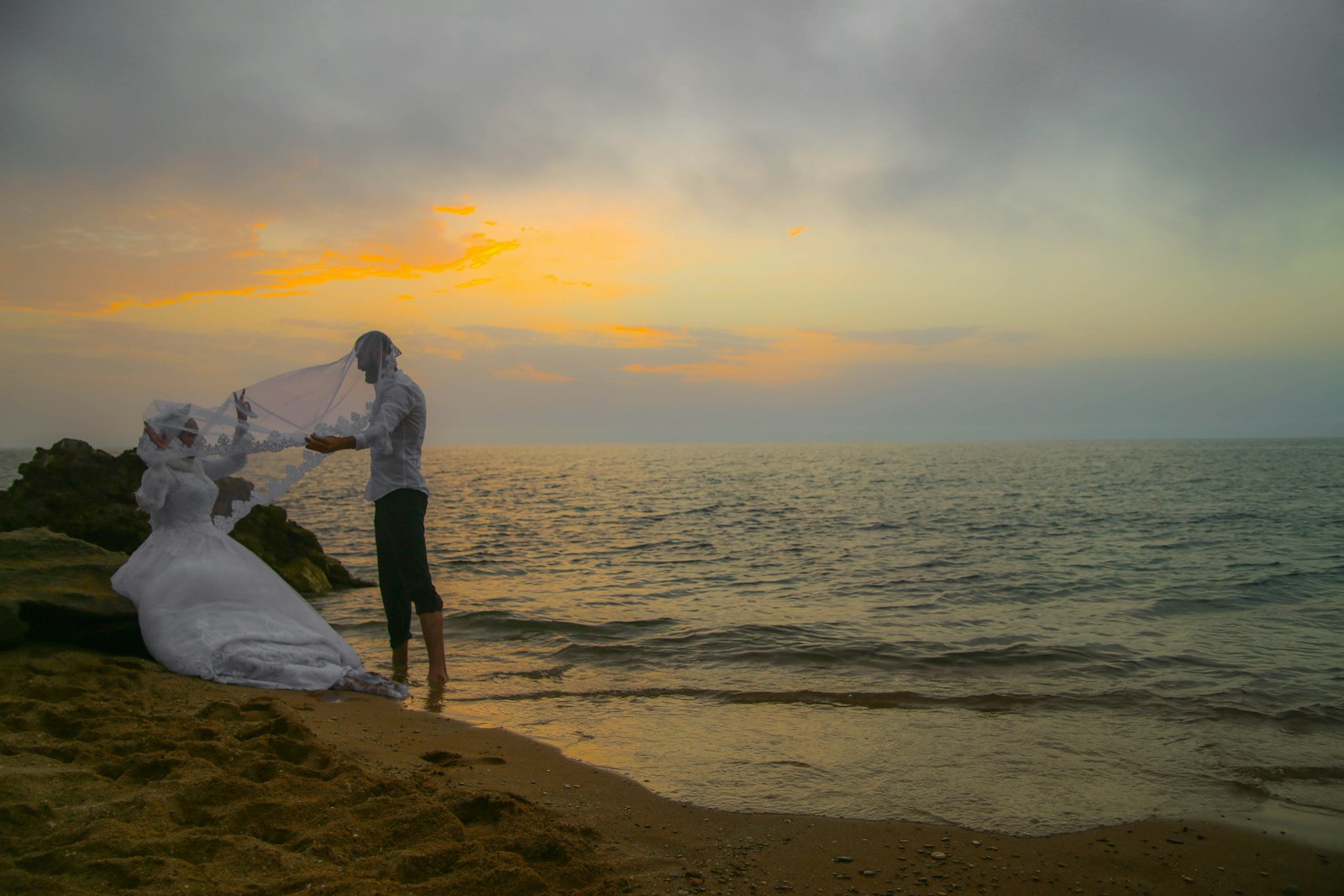
How to read this: Sumba Destination Wedding is an independent wedding-curation guide — we research and compare cliffside, beach, resort and intimate settings on Sumba, then route your enquiry to a vetted planning partner. We are not a wedding planner, venue, resort or booking platform, and any property named (including well-known names) is a neutral example only, not a claim of endorsement or affiliation. Legal marriage requirements for foreigners in Indonesia are complex — this is general information, not legal advice; always verify current rules with the relevant authorities. Costs are by quote and vary by season, party size and logistics; figures here are indicative ranges only.
Sumba wedding photography is among the most distinctive in Indonesia — and among the most logistically demanding. The island offers cliff-top light that Bali cannot replicate, savannah that reads gold in high dry season and deep green in the wet months, waterfalls that thunder from limestone escarpments, and ancestral villages where megalithic tombs anchor the landscape to centuries of Sumbanese life. But the same remoteness that makes Sumba extraordinary also shapes what is realistic: local photographers specialising in weddings are very few, the terrain between photo spots can involve rough unpaved roads and multiple hours of driving, and photographing people or sacred sites requires genuine permission, not assumed licence.
This guide covers where to shoot, how to read the light across the island’s seasons, who to hire and how to source them, the cultural protocols that govern photography in living communities and sacred sites, and the practical logistics of moving between locations. It is aimed at couples arriving with a photographer from outside the island — which is the standard approach — and at anyone planning a sumba prewedding photoshoot as part of a broader wedding week.
Why the Standard Practice Is to Fly Your Photographer In
Searching for a dedicated sumba wedding photographer based on the island returns very limited results. Bridestory’s Sumba section lists mostly venues; the handful of photographers listed are largely Bali- or Java-based practitioners who travel to Sumba for projects. This is not a gap in the directory — it reflects reality. Sumba’s population of roughly 852,000 across 10,909 square kilometres is spread across four regencies, and the professional wedding photography market that has grown in Bali over the past decade has not yet developed a deep equivalent here.
The accepted solution is straightforward: fly a photographer and videographer in from Bali’s Denpasar (DPS) airport. The direct Wings Air or Garuda turboprop to Tambolaka (TMC) takes around 85 minutes — confirmed on the IW1832 service. Most photographers familiar with destination weddings in eastern Indonesia will quote a travel package covering their own flights, 1–2 extra nights as a flight-delay buffer (Sumba’s schedule has limited daily frequency and connections are not always reliable), accommodation during the event, and a per diem. That buffer day is not optional padding — it is genuine risk management. A photographer who misses the only morning flight from Denpasar and arrives the afternoon of your ceremony is a crisis, not an inconvenience.
Budget the travel and accommodation costs as a distinct line item separate from the photography fee itself. Ranges vary widely by photographer and event scale; frame it in your vendor conversations as a logistics pass-through at cost, and confirm what is included in the quote before signing. [VERIFY current rates with prospective photographers directly — these costs shift with airline pricing.]
Local vs Fly-In: What to Weigh
- Fly-in photographer from Bali
- Broader portfolio of destination wedding work; easier to review their editorial style before booking; familiar with the demands of remote-location shoots. Travel adds cost. Needs a day to get oriented to specific Sumba locations. Standard and recommended for most couples.
- Local Sumba-based photographer
- Deep knowledge of light and road conditions specific to the island; no flight logistics; lower travel cost. Very limited pool — quality and style will vary significantly. If you find one whose portfolio matches your vision, ask detailed questions about their wedding-specific experience and drone licensing. [VERIFY credentials locally.]
Whatever route you take, make sure your photographer has seen your specific ceremony venue before the wedding day — either in person or via detailed video walkthroughs. The difference between a west-facing cliff at 4 p.m. and an east-facing garden at the same hour is the difference between backlit gold and flat shadow. Sumba rewards preparation.
If you need help connecting with vetted photographers who have worked on the island, reach out via WhatsApp at +62 811-3941-4563 or use our enquiry form and we can make an introduction to partners familiar with Sumba’s specific logistical demands.
The Best Photo Spots for a Sumba Wedding
Sumba’s shooting locations fall into distinct landscape types, each with its own character, access considerations, and best season. The island is not a small circuit — the cross-island drive between Tambolaka in the southwest and Waingapu in the east covers roughly 250–300 kilometres on roads that can take six to eight hours or more. Treat east and west Sumba as separate shooting zones unless you are building in proper overnight stays between them.
Cliffs and Ocean
The limestone cliffs of southwest Sumba are arguably the island’s defining photographic setting. The drop from plateau to ocean, the scale of the rock faces, and the quality of late-afternoon sidelight hitting pale stone against a dark sea — it is a genuinely rare combination. Nihi Sumba’s position on this coast, with its 2.5-kilometre private beach backed by cliffs and savannah, has made it the most photographed wedding setting on the island. That said, the imagery most people associate with Nihi — horses on the beach, waves crashing at the base of the cliffs — should not be assumed on demand. The horses are part of the local Sumbanese landscape and occasionally move along the shoreline, but a wild-horse tableau is not a guaranteed setup. Photograph what is genuinely there; if horses appear, that is a gift, not a standard backdrop.
For cliff-top ceremony and portrait work, be aware that the Australian SE monsoon runs hard from June through August. On exposed south-facing positions, wind can topple light stands, scatter petals, and make long-exposure shots impractical without significant stabilisation. It is worth scouting whether your specific cliff position has a lee side or natural windbreak, and planning the shoot direction to keep wind out of faces during portrait work. The payoff for managing the wind correctly is light that is simply extraordinary: clean, directional, warm at golden hour, with zero humidity haze in the dry season.
Savannah
The savannah look — bleached golden grasses, limestone hills, a wide open sky with no competing structures — is the image that appears in every feature on Sumba. This landscape is at its most photographic from roughly June through October, peaking in July and August when the dry season is fully established. The colour is warm gold shading to tawny brown; the light in the two hours before sunset is directional and rich.
From January through early June, the savannah is green. That is a meaningfully different aesthetic — lush rather than spare, tropical rather than semi-arid. It is not inferior, but it is not the look that most couples choose Sumba to achieve. If the golden savannah is part of why you are planning a sumba prewedding photoshoot or building your ceremony visuals around this landscape, confirm your dates land in the dry season. There is no way to have both the green hills and the golden grasses — they are two different seasons.
The savannah around Puru Kambera in East Sumba is a well-regarded shooting area for its open scale. Access from the east means flying into Waingapu’s Umbu Mehang Kunda Airport rather than Tambolaka. Note the long drive between the two airports; do not try to combine east savannah shoots with west-coast ceremonies on the same day.
Waterfalls: Lapopu, Waimarang, and Tanggedu
Sumba’s waterfalls are dramatic on the island’s scale, fed by the limestone plateau catchment. Lapopu Waterfall in West Sumba is accessible and relatively well-known; its two-tiered drop into a clear pool makes it a natural portrait location. Waimarang and Tanggedu are in East Sumba and involve more road time — Tanggedu in particular has gained attention for its multi-tier cascade. Both are at their most impressive in and just after the wet season, when flow is at full volume.
The seasonal trade-off is real. Waterfalls in July and August — the best months for outdoor ceremonies — are running at reduced flow compared to February or April. They are still photogenic, but couples who have seen peak-wet-season images of Lapopu should manage expectations for what those falls look like in the dry. If your ceremony is in the prime window and you want a waterfall session, plan it as a separate prewedding or post-wedding excursion, factor in the road time, and brief your photographer on what to expect.
Access roads to Tanggedu in particular can be rough — a four-wheel-drive vehicle and an hour or more of unpaved track. Do not schedule a waterfall shoot on the same day as an event that requires clean, formal presentation. Mud happens.
Weekuri Lagoon
Weekuri is a saltwater lagoon in West Sumba, separated from the open sea by a narrow limestone bar. The water is a clear blue-green that photographs distinctly from ocean or pool settings. It is a known prewedding location — calm water, soft reflected light, accessible from the southwest coast. The light here is best in mid-morning before overhead sun flattens the contrast in the water. Access involves a drive on roads that are sealed in parts and unpaved in others; [VERIFY current road condition locally before including it in a tight shoot schedule].
Megalithic Villages
This is where photography intersects directly with cultural responsibility, and where I want to be very clear about what is and is not appropriate.
The traditional villages of West Sumba — Ratenggaro, Wainyapu, Praijing (Prai Ijing), and Tarung near Waikabubak, among others — are living communities. People reside in the peaked thatched uma houses. The megalithic stone tombs in the village centres are the resting places of ancestors and the physical expression of Marapu, Sumba’s indigenous ancestral religion, which continues to be practiced alongside Christianity across the island. These are not heritage sites managed for tourism. They are homes and sacred ground.
Photography in these settings is possible and, done respectfully, welcomed. But it requires explicit permission from the village headman or appropriate community leaders before a single frame is taken. Arriving with cameras and shooting freely is not acceptable — even if other visitors appear to be doing so. Village contributions (a customary offering or fee, typically modest and arranged through your local guide or coordinator) are standard and appropriate. Dress modestly: shoulders covered, knees covered, remove shoes when entering uma. Never climb or sit on the megalithic tombs. Not for a dramatic portrait composition, not for a quick moment. These are graves of ancestors who are still spiritually present according to Marapu belief. Treating them as photography props is a serious cultural transgression, regardless of how a photograph might look.
Similarly, if your visit coincides with any ritual activity — a blessing, a textile exchange, a ceremony of any kind — do not assume that proximity means permission to photograph. Ask. If the answer is no, or even hesitant, stop. The image is not worth the intrusion.
For couples who want to incorporate village settings into their wedding photography, the correct approach is to arrange access through a local cultural guide or coordinator who already has an established relationship with the village. This takes planning — it cannot be improvised on the day. Done properly, the resulting images reflect genuine welcome and context; they look and feel different from images taken without permission, and they are.
Drone Photography: Permits, Restrictions, and Cultural Constraints
Aerial footage of Sumba’s cliffs, savannah, and lagoons is spectacular on a screen. Getting it legally and respectfully requires navigating several layers of permission that go beyond the usual Indonesian aviation regulations.
Indonesian airspace regulations require drone operators to comply with DGCA (Directorate General of Civil Aviation) rules: drones above 250g require registration, pilots must hold appropriate certification, and flights near airports — including within certain radii of Tambolaka (TMC) and Waingapu (WGP) — require explicit airspace clearance. [VERIFY current DGCA thresholds and restricted zones with a licensed drone operator close to your event date — regulations in Indonesia have evolved and continue to evolve.]
Beyond the regulatory layer, flying a drone over a kampung adat (traditional village) or at a sacred site requires the explicit consent of the local village leader. This is not a formality — in communities where Marapu is practiced, aerial intrusion over sacred ground without permission is culturally serious. Some sites may refuse permission entirely, and that refusal should be respected without argument. Do not assume that because a site is visible from a public road, it is available for aerial documentation.
On exposed cliff-top sites in the dry season, wind can push even a well-stabilised drone into recovery mode or create significant footage stabilisation challenges. Factor this into your shot planning. A drone that needs to fight a 30-knot SE monsoon crosswind is not going to deliver the smooth, cinematic sequences you are picturing.
The practical approach: hire a photographer or videographer who already has Indonesian drone certification and has operated in East Nusa Tenggara before. Ensure they handle all regulatory clearances as part of their engagement. Budget additional time — drone setup at a new location on unfamiliar terrain always takes longer than the optimistic estimate.
Reading Sumba’s Light Across the Year
The dry season gives Sumba a quality of light that is genuinely unusual for a tropical island. Low humidity means minimal atmospheric haze. The SE monsoon keeps the sky clean. In the two hours before sunset — roughly 4 to 6 p.m. depending on the month — the light becomes warm and angled in a way that flatters landscapes and portraits alike. This is your golden hour, and it lands at a predictable time each day during the dry season. Plan your ceremony timing and any portrait sessions to take advantage of it.
Midday light in June through August is harsh and high. Shoot in shade, near water, or under natural overhangs during the 11 a.m. to 3 p.m. window if you must. Most experienced destination photographers know this, but worth confirming that your chosen photographer has thought about the specific midday angles at your Sumba venue.
The wet season offers different light: diffuse, soft, and low-contrast during overcast days, but also the dramatic shaft-through-cloud and post-storm golden light that can produce extraordinary images when it cooperates. The unpredictability is the problem — not the light quality when it appears, but the inability to rely on it for a ceremony timeline.
The green Sumba of January through May shoots very differently from the golden Sumba of July through October. If you are planning a prewedding shoot in Sumba before your wedding date, consider whether the seasonal landscape will match the aesthetic you have already committed to for your ceremony photographs. Consistency across your image set matters for albums and wall prints; a green prewedding against a golden ceremony looks disconnected on the page.
Permits, Contributions, and Practical Protocol at a Glance
| Location Type | Permission Required | Contribution / Fee | Dress Code | Key Restrictions |
|---|---|---|---|---|
| Private resort grounds (e.g. Nihi Sumba, Cap Karoso) | Venue coordinator approval — usually included if shooting your own wedding | Included in venue package or vendor day-rate [VERIFY] | As per event | External photographer day-rate may apply; confirm vendor policy |
| Public cliffs and beaches | None formally required; check if land is adjacent to private or village land | None typically; tip local guides appropriately | No restriction | Wind management; no access guarantees on unmarked paths |
| Weekuri Lagoon | Entry fee / local village levy [VERIFY current arrangement] | Modest entry contribution [VERIFY locally] | No restriction | Confirm road access and operating hours |
| Waterfalls (Lapopu, Waimarang, Tanggedu) | Entry fee at managed sites; local guide recommended | Entry fee [VERIFY]; guide tip | No restriction | Road condition; wet-season flow vs dry-season reduced flow |
| Megalithic villages (kampung adat) | Village headman permission — mandatory before any photography | Customary village contribution — arrange through coordinator or local guide | Modest — shoulders and knees covered; remove shoes in uma | No climbing/sitting on tombs; no photographing rituals without specific consent; no drone without leader’s explicit approval |
| Airspace (drone use, anywhere on island) | DGCA registration + pilot certification; additional airspace clearance near airports; village/leader consent near sacred sites | Registration / certification cost covered by licensed operator | N/A | SE monsoon wind significant in dry season; [VERIFY current DGCA rules] |
Never Stage a Mock Ritual for the Camera
This point deserves its own section because the temptation can arise naturally from conversations with well-meaning guides or coordinators who want to give you a memorable image.
Marapu rituals — blessings by the Rato (ritual authority), betel-nut ceremonies, ceremonial processions linked to marriage or harvest — carry genuine sacred weight in Sumbanese culture. They are not separable from their context. Staging a version of a Marapu ritual as a photography backdrop, even with costuming or props, treats a living spiritual practice as decoration. It causes real harm: to the dignity of the practice, to community members who observe their sacred forms being performed without proper authority, and ultimately to Sumba’s reputation as a place where culture is met honestly.
This does not mean cultural elements cannot appear in your wedding photography. If a Rato provides a genuine blessing as part of your ceremony — arranged through proper channels, with full understanding and consent from the ritual authority — then of course that can be documented. The distinction is between documenting something real and real-ly authorised versus manufacturing an approximation of it for visual effect. The first is an honour. The second is appropriation.
Ask your coordinator directly: has this ritual element been arranged with the appropriate local authority? What is their name, and what is their community role? A vague answer or an inability to name the person suggests the arrangement has not been made properly.
Travel Between Shooting Locations: Road Reality
Sumba’s landscape is spread across a large island with limited sealed road infrastructure. The drive from the southwest coast to East Sumba’s savannah and waterfalls is not a comfortable half-day trip — it is a 250–300 kilometre journey on roads that include stretches of unsealed track, river crossings in some areas, and sections that become genuinely challenging in wet conditions.
For a photography day that combines multiple location types — cliff, lagoon, village — keep all locations within the same geographic zone. West and southwest Sumba offers the most concentration of settings accessible within a half-day circle: the coastal cliffs, Weekuri Lagoon, nearby traditional villages, and savannah plains are all reachable from the Tambolaka or Nihiwatu area without multi-hour transits. East Sumba’s savannah and waterfalls (Tanggedu, Waimarang, Walakiri’s mangrove beach) form their own logical zone around Waingapu.
Build generous road time into every schedule. What looks like 45 kilometres on a map can take 90 minutes on an unpaved coastal track. A wedding morning that starts with a long rough drive is not a good morning. Use the day before or after your ceremony for location shoots; keep the event day itself clean of logistics.
Planning Your Photography Package for Sumba
The best approach we have seen couples take is to think of Sumba photography as three distinct components: the ceremony and reception coverage (the event itself), the portrait session (golden-hour work either on the wedding day or a separate day), and any dedicated prewedding content (which can be shot during a pre-trip or as part of the wedding week). Each has different location needs and timing requirements, and trying to compress all three into a single event day usually means sacrificing at least one.
Budget the photographer’s full cost including travel, and communicate clearly about which specific locations matter most to you before they arrive. A photographer who has scouted Weekuri Lagoon once will get better frames there than one arriving cold on the morning of the shoot. If there is a specific village that is meaningful to your story — perhaps you visited it on a prior trip to Sumba — that context should be in the brief, and the permit arrangement should be made weeks in advance, not hours before.
For vendor connections and permit-arrangement support through local coordinators who know the relevant village channels, reach us via our enquiry form or on WhatsApp at +62 811-3941-4563. We do not charge for the introduction; if you proceed with a partner through our referral, they may pay us a fee at no extra cost to you.
Frequently Asked Questions
How do we find a sumba wedding photographer who has actually worked on the island?
The most reliable route is to ask for referrals from your Sumba-based planner or the weddings coordinator at your venue — they will have worked with photographers on previous events and can tell you honestly who delivered strong results. Alternatively, search wedding film and photography portfolios on Instagram with Sumba-specific tags and reach out directly to see whether the photographer has island experience or is willing to travel. Make sure any photographer you book has a clear plan for the flight-delay buffer (arriving 1–2 days early) and knows the specific locations you have in mind. If you need a starting point, contact us at our enquiry form and we can connect you with partners who have a track record on the island.
Do we need a permit to take wedding photos in a traditional village in Sumba?
Permission is required — not a formal government permit in the bureaucratic sense, but explicit consent from the village headman or appropriate community leader before any photography takes place. This is arranged through your local guide or coordinator, typically with a customary community contribution. Arriving without this arrangement and assuming you can photograph freely is not appropriate, regardless of what you may see other tourists doing. Work with a coordinator who already has a relationship with the specific village. The permission process is straightforward when handled properly and in advance.
Can we use a drone for our sumba wedding photos?
Drone photography is possible on Sumba but involves several layers of compliance. Indonesian DGCA regulations require drones above 250g to be registered and pilots to hold appropriate certification; airspace near Tambolaka (TMC) and Waingapu (WGP) airports has additional restrictions. Over traditional villages and sacred sites, explicit consent from local community leaders is required separately from the regulatory clearances. Hire a drone operator with Indonesian certification who has worked in East Nusa Tenggara and can handle the permit paperwork as part of their service. Also factor in the SE monsoon wind during June–August, which can be strong on exposed cliff positions and will affect flight stability and footage quality.
What are the best photo spots for a sumba wedding in the dry season?
The dry season — mid-June to late August especially — gives you the golden savannah, clear skies, and the warm directional light that defines Sumba’s visual identity. Top locations for this period: the limestone cliffs and 2.5-kilometre beach along the southwest coast, Weekuri Lagoon for calm water and reflected light, the savannah plains for golden-grass portraits, and traditional megalithic villages (with proper permission) for culturally grounded documentary frames. Waterfalls are accessible but running at reduced flow compared to the wet season. All are best shot during the two hours before sunset. For east Sumba’s savannah and Tanggedu waterfall, plan a separate overnight rather than a same-day transfer from the west.
Is it culturally acceptable to photograph people and ceremonies in Sumba villages?
People, yes — with their individual permission, asked directly before any photograph. Pointing a camera at someone without asking is not respectful anywhere; in a community defined by strong ancestral values and Marapu belief, it is particularly important to take the moment to ask. Ceremonies and rituals are a different matter: these require specific permission from the ritual authorities (the Rato and village leadership), not just a general nod from bystanders. If you arrive during a ceremony you did not know was happening, observe respectfully from a distance and ask before raising any camera. The answer may well be yes; it also may be no. Accept either gracefully.