How to read this: Sumba Destination Wedding is an independent wedding-curation guide — we research and compare cliffside, beach, resort and intimate settings on Sumba, then route your enquiry to a vetted planning partner. We are not a wedding planner, venue, resort or booking platform, and any property named (including well-known names) is a neutral example only, not a claim of endorsement or affiliation. Legal marriage requirements for foreigners in Indonesia are complex — this is general information, not legal advice; always verify current rules with the relevant authorities. Costs are by quote and vary by season, party size and logistics; figures here are indicative ranges only.
A Sumba resort wedding is, in plain terms, the only practical path to a fully serviced ceremony on this island. Sumba has no event-company district, no network of specialist bridal vendors, and no strip of competing venues. What it has is a small number of extraordinary properties — most prominently Nihi Sumba, and a handful of upscale boutique resorts further along the southwest coast — that can absorb a wedding entirely on their grounds and supply the hospitality infrastructure couples elsewhere take for granted. Understanding that structure, and what it costs, is the first thing any couple should do before they fall in love with the Instagram image of the cliffside ceremony.
This is an independent guide. We curate venues and share what we know, including the parts operators rarely lead with. No property can pay to change what we publish; if our free guidance helps and you proceed through a partner, they may pay us a referral fee at no extra cost to you.
Why Sumba Works as a Resort Wedding, Not a Vendor Market
In Bali, couples build a wedding from dozens of moving parts sourced locally: a separate venue, a local florist, a local photographer pool, a catering company, a band. The vendor infrastructure is dense. Sumba has almost none of that. Search “Sumba” on a marketplace like Bridestory and you get a handful of entries — mostly venues, with a thin scattering of specialists who are, in most cases, Bali-based photographers or planners who travel in. That is not a complaint; it is a structural fact about a remote island of roughly 10,900 km² and a population under one million. The island is sparse by design, and that sparseness is exactly why couples choose it.
The practical implication is that a resort buyout wedding in Sumba is not a luxury add-on — it is the wedding format the island is built for. The resort provides venue, accommodation, food and beverage, and a framework. You import the creative specialists. Knowing where that line falls, for each property, is what separates a smooth event from a logistical nightmare.
Nihi Sumba: The Only Fully Verified Wedding Resort on the Island
Nihi Sumba — formerly Nihiwatu — sits on the southwest coast of the island, in the Hoba Wawi area near Nihiwatu Beach. The property spans approximately 560 acres and holds a 2.5-kilometre private beach. It is, as of the time of writing, the sole full-service five-star resort on Sumba with a dedicated weddings program and published brochure, verified third-party coverage of real ceremonies, and a marketplace listing that notes increased wedding focus from 2025 onward.
Nihi markets its wedding capability under the banner of “Celebrations,” with ceremony types ranging from an intimate symbolic ceremony for two to a full resort buyout for a larger party. Ceremony options include a Protestant symbolic blessing conducted in English, or a traditional Sumbanese blessing led by a village priest known as a Rato. The Rato blessing typically incorporates betel-nut chewing, a ritual with deep meaning in Sumbanese ancestral tradition. Cultural extensions can include a ceremonial procession with horses, fire dancers, and Sumbanese garments — elements the resort sources through its connection to the surrounding community.
What Nihi Provides In-House
When you book a wedding at Nihi, the resort’s own team handles a specific and clearly bounded set of services:
- Ceremony sites: clifftop, beachfront, garden, and private villa settings, all within the property
- Full food and beverage: catering, bar service, and all front-of-house staffing are Nihi’s own
- On-site events coordinator: a dedicated coordinator who manages the resort side of the event; not a full external wedding planner
- Local cultural elements: the Rato blessing, Sumbanese music and dance, ceremonial horses on the beach — arranged through the resort’s community relationships
- Basic sound: simple PA setup for vows and speeches
- Guest accommodation: all guests stay on property, which is integral to the buyout model
What You Must Bring In
This list is longer than most couples expect, and it is important to know it before you set a budget:
- Photography and videography: Nihi does not supply a wedding photographer. This is the single item couples most frequently underestimate in terms of total cost. A Bali-based photographer travelling to Sumba for a three-day engagement (travel day, shooting day, buffer day) carries significant costs beyond their day rate alone — flights, accommodation at or near the resort, excess baggage for equipment.
- Full floral and décor design: fresh-flower arrangements for a Sumba ceremony are not assembled locally. A floral designer travels from Bali; specialty blooms are freighted or sourced through established floral networks, sometimes airfreighted via Denpasar. The logistics premium on Sumba florals versus a Bali ceremony is real and material.
- Bridal hair and makeup: professional bridal HMUA must travel from Bali or, for some international couples, from their home country. Build in a trial-day or early-arrival day for this.
- Advanced AV, lighting, and entertainment: if you want anything beyond Nihi’s basic PA — a DJ set, a live band, theatrical lighting, uplighting, a ceremony arch with built-in speaker arrays — the equipment and the operator come from outside the island.
- External wedding planner: Nihi’s coordinator manages the property side. An independent planner who manages vendor logistics, timelines, supplier contracts, and contingencies is a separate engagement. For a resort buyout of this scale, it is not optional in practice.
The Buyout Model: What “Exclusive Use” Actually Means at Nihi
This is where couples most often encounter a surprise, and where we want to be direct with you.
Nihi Sumba has a guest capacity of approximately 70 adults across roughly 25 to 30 villas. (Nihi’s own pages cite conflicting figures — one source says 27 villas plus 38 rooms, another says 70 adults across 36 rooms. Until the property clarifies this publicly, treat any precise room count as [VERIFY with Nihi direct]. What is consistent across sources is the 70-adult ceiling.) For a wedding in the 40-to-70 guest range, accommodating all guests means occupying the entire resort. That is a full buyout by definition, and it carries the full room inventory at Nihi’s published room rates — all nights of the wedding block.
Nihi does not publish wedding packages or pricing. This is standard for ultra-luxury resorts operating at this level. What we can offer is an informed planning band, as an estimate only: a full resort buyout wedding at a property of Nihi’s calibre in remote eastern Indonesia — covering room inventory, F&B, ceremony coordination, cultural elements, and the resort’s own minimum commitments — sits in a range most planners would describe as starting well above $50,000 and running to $200,000 or beyond for larger parties with extensive creative production. This is a planning estimate, not a sourced Nihi figure. We will never quote a fixed Nihi price because Nihi does not publish one; the actual number is arrived at through direct inquiry and depends entirely on party size, nights, F&B selections, and any cultural programming.
The minimum-nights concept is also common practice at this tier. Most ultra-luxury island resorts impose a minimum room-night commitment for any event that occupies their ceremony infrastructure during peak season. This is not a published “Sumba rule” — it is how resorts of this type protect their revenue around their highest-demand dates. Expect to encounter it and negotiate accordingly.
Cap Karoso and Lelewatu: The Next Tier Worth Watching
Two other upscale properties in southwest Sumba appear consistently in wedding venue conversations, and both deserve attention — with a clear caveat.
Cap Karoso is a real upscale design and eco-resort on Karoso Beach, near Tambolaka in the southwest of the island, and it appears in marketplace wedding listings at the higher price tier. However, as of our last research pass, Cap Karoso does not publish a dedicated wedding page or a formal celebrations program. That absence does not mean they will not host your event — it means the conversation starts with direct inquiry rather than a packaged offer. Flag this as [VERIFY with Cap Karoso direct] before building it into your planning.
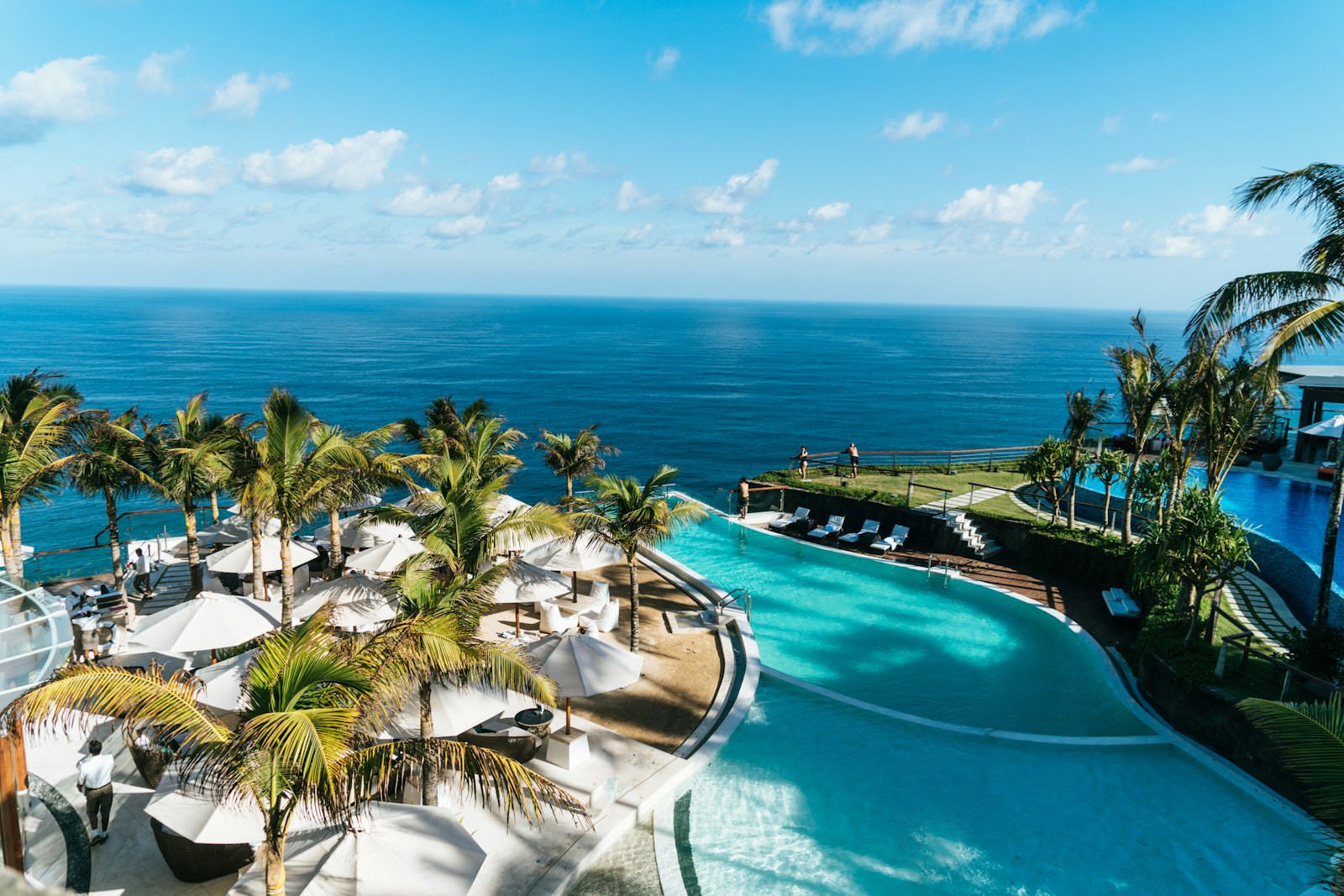
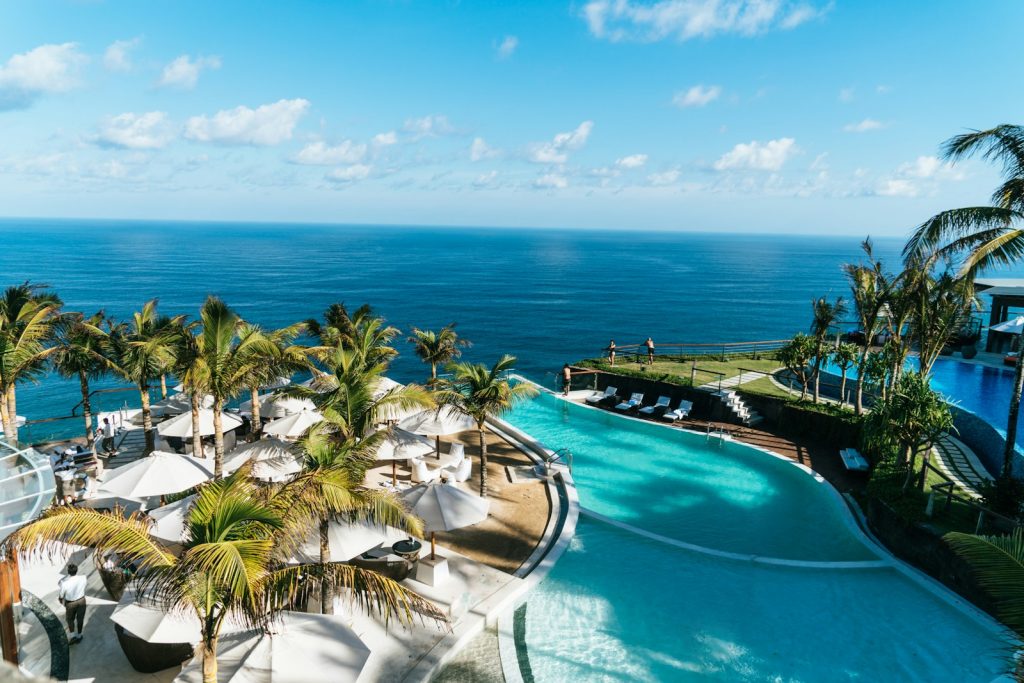
Lelewatu Resort Sumba is a clifftop luxury property near Waikabubak, positioned primarily for honeymoon and intimate retreat stays. The setting is visually extraordinary by any measure — clifftop pool villas, southwest coast views, a serene and quiet atmosphere. It could work as a wedding venue for a very small party. A formal wedding program has not been verified. Again: [VERIFY with Lelewatu direct].
Both properties, if they can be confirmed as event-capable, would likely suit micro-weddings and elopements with small parties of fewer than 20. Neither approaches Nihi’s total infrastructure or cultural programming depth, but for couples prioritizing intimacy and visual drama over full-service event production, they are worth a direct conversation.
Private Villa Weddings on Sumba: The Honest Picture
A private villa wedding in Sumba is not the same proposition as a private villa wedding in Bali. In Bali, a private villa is a platform: you rent the space and then plug in a dense local vendor market for catering, florals, entertainment, staffing, equipment, and coordination. That market is minutes away.
In Sumba, a private villa is the starting point for importing nearly your entire wedding. Catering staff, kitchen equipment, tableware, linens, generators for reliable power, furniture, sound equipment, florals, a photographer, a planner, a HMUA team — almost everything that is not the villa walls themselves must arrive from outside the island. Each vendor adds flights from Bali (DPS to Tambolaka’s Lede Kalumbang Airport, a roughly 85-minute turboprop flight), a buffer day for travel delays, accommodation on-island, and often a per-diem. That cost structure is not prohibitive for couples who choose it knowingly; it is genuinely prohibitive for couples who discover it mid-planning.
Private villas are a viable route for couples who want absolute exclusivity, who have an experienced destination-event planner already engaged, and who have built a budget that accounts for all-in logistics. They are not a budget option relative to a resort buyout — the absence of a room-inventory commitment is offset, sometimes exceeded, by the cost of building infrastructure from zero.
Rough Cost Bands to Anchor Your Planning
These are estimates based on the structure of remote-island destination weddings in eastern Indonesia. They are not quotes, not Sumba-sourced price lists, and not guarantees. Use them for early planning only; firm numbers require vendor conversations.
- Elopement / micro-ceremony (2–10 guests)
- Lowest-cost Sumba format. Couples still carry vendor travel costs. Estimate: from the mid-five figures in USD for a quality-produced event with photographer, coordinator, florals, and one or two nights. Much lower if truly bare-bones, but “bare-bones” on Sumba still means flights, accommodation, and someone managing the logistics.
- Intimate resort wedding (20–40 guests, partial resort occupancy)
- Occupies a portion of a resort like Nihi. Still likely pushes toward full buyout depending on dates and guest count relative to room inventory. Add per-head catering in the $80–$150+ USD range at ultra-luxury tier, plus all the fly-in vendor costs above.
- Full resort buyout (40–70 guests)
- The Nihi model at full scale. Planning estimate range: $50,000–$200,000+ depending on nights, creative scope, entertainment, and the room rate block. This is the band most experienced destination wedding planners reference for a full-service ultra-luxury buyout in remote eastern Indonesia. Not a fixed price. Treat it as a sanity-check number, not a budget ceiling.
Guest Logistics and Capacity: What Sumba Cannot Do
Sumba is an intimate-wedding destination. That is not editorial softening — it is a physical constraint. The island has no mega-resort with 200-plus rooms. The island has no convention hotel. Single-property luxury capacity naturally caps at roughly 40 to 80 guests. If your list runs to 150 or more, Sumba will not accommodate it as a single-venue, single-property event. You would need multiple properties, which creates a multi-resort coordination challenge and significant transfer logistics on roads that are not uniformly smooth.
Getting guests there also takes planning. The western gateway is Lede Kalumbang Airport (Tambolaka, TMC), served by Lion Air Group and at times Garuda Indonesia on ATR turboprops from Denpasar. Flight time is approximately 85 minutes. The eastern gateway is Umbu Mehang Kunda Airport (Waingapu, WGP). Expect some guests to require a Bali connection; there is no reliable stable direct Lombok-to-Sumba route, and international guests will almost always route through Bali. Budget a full transit day for guests who are connecting from Singapore, Australia, or Europe. Flight schedules on these routes are schedule-dependent and can shift seasonally — confirm live schedules close to your event date.
Medical infrastructure on Sumba is basic. For serious cases, evacuation to Bali or Jakarta is the standard protocol. Travel insurance with medical evacuation coverage is not optional for a wedding party with older guests or guests with health considerations. Brief your guests accordingly.
When to Hold Your Sumba Resort Wedding
The island’s climate makes timing critical in ways Bali does not. Sumba runs hotter and drier than Bali overall, with a pronounced wet season from roughly November through April (longer in the west, shorter in the east). The core dry season — June through September — is reliably clear and comfortable. Mid-June through late August is the ideal window for a resort wedding, combining the lowest rain probability with manageable daytime temperatures in the 30–32°C range and cooler nights.
One nuance: the southeast monsoon wind in June, July, and August can be strong on the south-facing coast, and south-coast seas are too rough to swim in July and September. If your ceremony setting is an exposed clifftop or south-facing beach, your floral and décor team needs to design for wind. Weighted arrangements, lower profile structures, and wind-tested fabric choices are not overengineering — they are the difference between a beautiful event and a disrupted one.
The savannah is golden and visually iconic from June through October. If you want the lush green landscape that shows in some editorial photographs, you are looking at late April into early June — lower rain risk than the full wet season, but the chance of afternoon showers requires a covered contingency plan.
The Legal Reality for Couples Marrying on Sumba
Almost all destination-wedding couples on Sumba hold a symbolic or blessing ceremony, not a legally recognised Indonesian marriage. Indonesian marriage law requires a religious ceremony performed under one of the six recognised religions, with both partners sharing the same faith. There is no civil or secular marriage option. The paperwork is filed through the local civil registry (Catatan Sipil) in Waingapu or the relevant regency office — not through Bali. Requirements include a Certificate of No Impediment from your home embassy and can involve a ten-day notice period before the ceremony.
The practical reality is that most couples legally marry at home, then come to Sumba for a symbolic blessing ceremony, which carries no legal obligation or Indonesian paperwork. This is accurate, widespread, and entirely appropriate. Your resort coordinator and any reputable planner will confirm this immediately. The symbolic ceremony has no legal effect in Indonesia and no documentation requirement beyond what the resort or officiant needs for their own records. That simplicity is, genuinely, one of the reasons the format works so well in a remote location.
If you want a legally recognised ceremony on Sumba specifically, engage a local lawyer and your country’s embassy in Jakarta well in advance. Requirements vary by nationality and religion; do not rely on general blog guidance for the specifics.
Frequently Asked Questions
Does a Sumba resort wedding cost more than a comparable Bali resort wedding?
Yes, for any given level of production quality. The gap is driven by logistics: vendor travel from Bali, freight costs for imported florals and equipment, vendor accommodation on the island, and fewer competitive alternatives among suppliers. The raw beauty of the setting does not reduce costs — it adds to them through remoteness. Couples choosing Sumba do so knowing this and prioritising the experience over price efficiency.
Can we use Nihi Sumba for the ceremony without booking out the whole resort?
For small parties of fewer than roughly 20 guests, a partial buyout may be possible depending on when other bookings sit. But as guest numbers rise toward the 40-to-70 range, the guest accommodation requirement and the resort’s capacity converge: there simply is not room for non-wedding guests alongside a meaningful wedding party. In practice, most weddings of 30 guests or more at Nihi resolve into a full resort commitment. Nihi’s own team will clarify the exact threshold for your dates and numbers during inquiry.
What is the minimum notice or lead time for a resort buyout wedding on Sumba?
Nihi Sumba’s peak-season dates (June to August, particularly) are in demand well in advance. Twelve to eighteen months of lead time is a realistic working assumption for any full resort buyout. Shorter timelines occasionally work for off-peak or last-availability dates, but they add pressure to every part of the vendor pipeline, including securing a photographer and planner who can travel on short notice. The remote-island logistics buffer alone argues for as much runway as possible.
Are there private villa options on Sumba beyond the main resorts?
Private villas exist but are not plentiful, and none that we have verified comes with a built-in wedding vendor network. A private villa on Sumba means importing essentially your entire event: catering, equipment, lighting, florals, staffing, entertainment, and an on-site coordinator. It is a viable format for couples who want total exclusivity and have an experienced event planner managing the logistics. For most couples, the resort framework at Nihi or a comparable property is a more reliable structure, particularly if the team has never produced a remote-island event.
Is it realistic to integrate genuine Sumbanese cultural elements into a resort wedding?
Yes, authentically so — and this is one of the genuine differentiators of a Sumba resort wedding over other Indonesian destinations. Nihi Sumba has longstanding relationships with the surrounding villages and can arrange a Rato blessing, traditional music, ceremonial horses on the beach, and Sumbanese textiles as genuine elements, not staged recreations. The appropriate approach is to discuss the cultural elements your coordinator proposes with respect for their sacred origins, follow all guidance about dress and behaviour during traditional elements, and resist the temptation to adapt or remix elements you do not fully understand. Sumba’s Marapu ancestral tradition and the role of the Rato carry real weight in the community. Approached honestly, these elements give a Sumba ceremony a depth that no Bali setting can replicate.