How to read this: Sumba Destination Wedding is an independent wedding-curation guide — we research and compare cliffside, beach, resort and intimate settings on Sumba, then route your enquiry to a vetted planning partner. We are not a wedding planner, venue, resort or booking platform, and any property named (including well-known names) is a neutral example only, not a claim of endorsement or affiliation. Legal marriage requirements for foreigners in Indonesia are complex — this is general information, not legal advice; always verify current rules with the relevant authorities. Costs are by quote and vary by season, party size and logistics; figures here are indicative ranges only.
Sumba wedding guest count capacity tops the list of questions every couple asks before anything else — venue style, flowers, photographer. The honest answer, grounded in the island’s actual accommodation stock: Sumba is a destination for intimate weddings, typically 20 to 70 guests. That is not a preference or a trend; it is a structural fact. There are no mega-resorts, no large chain hotels, no 200-room blocks on this island. That shapes every decision that follows.
If your list runs to 150 or 250 people, I will not waste your time pretending Sumba can absorb it without serious strain. It almost certainly cannot — not at the experience level that makes a destination wedding worth the cost. Bali exists. Bali handles large weddings gracefully and at lower per-head cost. But if your list is 20 to 80 people and you want something that feels genuinely remote, dramatically beautiful, and entirely yours, Sumba may be exactly the right place. Let me walk through the numbers and explain why they matter.
Why the Island Sets the Ceiling
Sumba covers roughly 10,900 square kilometres of grassland plateau, limestone cliffs, and semi-arid savannah. It is sparsely populated — around 850,000 people spread across four regencies — and its infrastructure reflects that reality. The road between Tambolaka in the west and Waingapu in the east takes an estimated six to eight hours by road. Flights connect the two airports via Bali, not directly across the island.
What this means for a wedding is that your guests do not land in a compact resort hub. They arrive at a regional airport, transfer 30 to 60 minutes to a venue, and stay wherever their accommodation is. On a small island with limited room supply, the accommodation question quickly becomes the defining constraint on how many guests a Sumba wedding can realistically support.
Nihi Sumba — the island’s only confidently-verified, fully operational destination-wedding resort — holds approximately 70 adults across roughly 36 rooms. That figure comes from Nihi’s own publications, though their pages show some inconsistency between “36 rooms” and “27 villas plus 38 rooms.” I flag that honestly: the safe working number is around 70 adults in a full-buyout configuration. Other upscale properties — Lelewatu Resort and Cap Karoso among them — are smaller boutique operations. Neither has a verified, active wedding programme as of this writing; both are worth contacting directly if your timing and style might suit them. [Verify with properties before building plans around them.] Beyond these three, the island’s remaining accommodation is mid-range and limited in volume.
The simple arithmetic of Sumba wedding guest count capacity: one luxury property can host the entire wedding party when the list stays between 30 and 70. Above that, you start dividing guests across multiple properties — and that is where costs and logistics jump sharply.
The Full-Buyout Model: Why 40 to 70 Is the Sweet Spot
The way most serious Sumba weddings work is a full-resort buyout. Rather than blocking a portion of a property’s rooms, the couple takes the entire resort for the duration. Every guest stays in the same place. Every meal, every ceremony, every piece of service is coordinated by one team in one location. No transfer logistics. No guests navigating roads in the dark after a dinner that ran long.
A full buyout at a property of Nihi’s scale naturally lands you around 40 to 70 adults. That ceiling is not arbitrary — it is what fills the rooms. For couples with tighter lists, smaller villas or partial-resort arrangements are possible, though pricing structures at ultra-luxury properties still tend to reflect minimum revenue thresholds. All pricing at this level is quote-only and varies by season, configuration, and what the couple brings in from outside. Our honest cost guide covers the structural cost drivers in detail; as a rough planning bracket, ultra-luxury resort buyouts on Sumba are generally discussed in the range of $50,000 to $200,000 and above, though that figure is an informed planning estimate, not a published tariff.
Below the 40-guest mark — elopements through to around 30 guests — costs per head can actually increase, because fixed buyout thresholds do not scale down. A couple spending $100,000 with 20 guests pays $5,000 per head; spread across 70, the economics shift considerably. That is the nature of remote destination weddings at this tier, and it is why Sumba tends to attract couples who are prioritising depth of experience over per-head economy.
What Happens When You Go Above 80 Guests
This is where the conversation requires real candour. Accommodating more than 80 guests on Sumba in a coherent, luxury-grade experience is possible in theory. In practice, it means coordinating across multiple properties, daily transfers on roads that are rough by any international standard, and a logistical overhead that multiplies cost without multiplying beauty. The island does not compress into a convenient hub when the wedding is large. It remains what it is: vast, unhurried, and logistically demanding.
Running two or three properties simultaneously — some guests at Nihi, others at Lelewatu (if available and confirmed wedding-capable), others at mid-range hotels — fragments the experience that makes a Sumba wedding worth choosing. The ceremony might be magnificent. But the group dinner on night two, when half the guests spent an hour in a vehicle to get there, is a different event from the one you imagined. Weather, road quality, driver availability — all of these become points of failure at scale.
Maximum wedding size on Sumba is therefore less a hard number than a quality threshold. Around 80 to 100 guests is where the planning complexity starts costing more than the result is worth — for most couples, on most budgets. If your list is genuinely non-negotiable at 150 or more, please do not pay for a Sumba experience that the island cannot deliver. The Bali grid — with its deep vendor pool, multiple 200-room resorts, decades of destination-wedding infrastructure — exists precisely for that wedding.
Where Intimacy Becomes an Asset
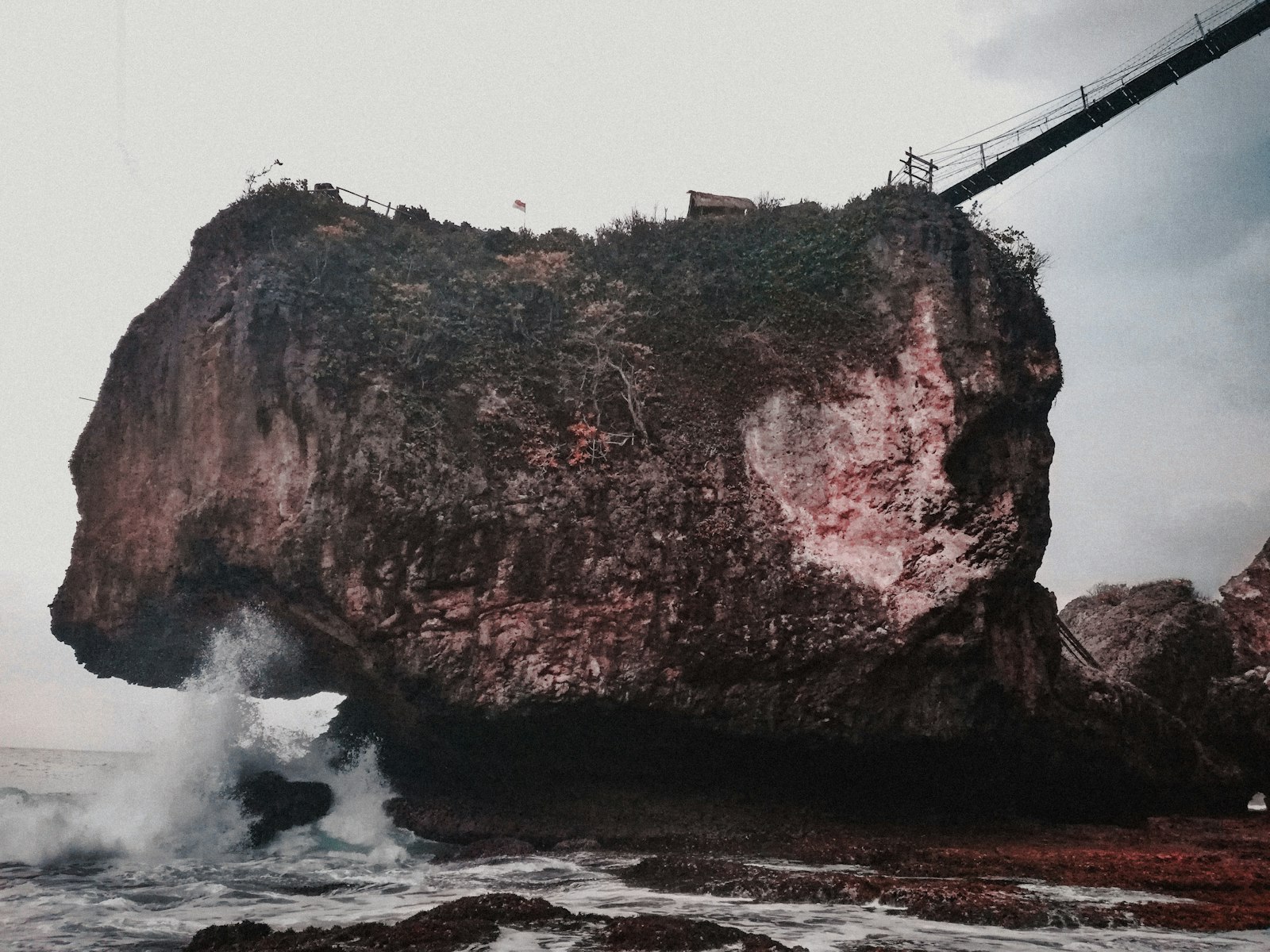
The couples who have the best Sumba weddings tend to be the ones who stopped treating the guest-count ceiling as a problem to be solved and started treating it as a design feature. The fact that you cannot invite 180 people means you choose 40 or 50 with real intention. The ceremony on the cliff — salt air, savannah stretching inland, the sound of the Indian Ocean below — lands differently when the group around you is small enough that everyone fits into a single frame and everyone knows each other’s name.
Privacy is structural, not manufactured. A full resort buyout means the only guests on the property are your wedding guests. No strangers at breakfast. No other couples in the pool. No ambient resort noise bleeding through your first morning as a married couple. This is what Nihi’s model has built its reputation on, and it is genuinely what the island is best suited to offer.
Dramatic settings require intimacy to function at full effect. A savannah sunset ceremony with 60 people gathered on a hillside is one of the most affecting things a wedding can be. The same ceremony with 250 people, a PA system audible for half a kilometre, and shuttle logistics running for an hour beforehand is a different event with a different emotional register. The island’s character — remote, raw, deeply itself — intensifies with fewer people rather than more.
If your instinct is that more guests equals a more significant celebration, Sumba will probably not convert you. If you have started to wonder whether a smaller, deeper, more fully present wedding might be the point, Sumba is worth very serious consideration.
Ready to talk through your specific numbers? Use our enquiry form or message the concierge on WhatsApp at +62 811-3941-4563 — a short conversation about your guest count and timeline usually clarifies within minutes whether Sumba is a realistic fit.
Practical Framing: How to Right-Size Your List for Sumba
Here is how I would approach the guest-count conversation if you are seriously considering Sumba.
Start with your accommodation anchor
Identify the property you want as your primary venue — realistically, this is Nihi Sumba if you are at the ultra-luxury tier, or Cap Karoso and Lelewatu if a mid-range boutique property suits you better (once confirmed as wedding-capable). That property’s room count defines your functional guest ceiling. Build your list from there, not the other way around.
Treat the transfer question as a hard filter
Any guest who cannot handle a 30 to 60-minute transfer on rough roads, a regional turboprop flight from Bali, and limited mobile connectivity for several days is going to struggle on Sumba regardless of how many people are at the wedding. The island demands a certain kind of traveller. Factor that into who makes the final list — not just whether they can afford the trip, but whether the logistics will diminish their enjoyment of it.
Model your overflow accommodation early
If some guests are not staying at the wedding property, identify where they will stay before you finalise invitations. Sumba’s accommodation options beyond the two or three upscale properties are limited. Our guest accommodation guide maps what is available and how far each option sits from the main venue clusters. Do not discover the accommodation gap after invitations have gone out.
The logistics cost jump is real and steep
Every additional property in play adds vehicle hire, driver coordination, scheduling buffers, and communication overhead. On a rough-road island where arrival windows are genuinely unpredictable, those buffers must be substantial. Budget models that assume Bali-style transfer costs are significantly wrong for Sumba. Build in a contingency line that reflects the actual ground situation.
| Guest Band | Typical Model | Properties Needed | Complexity | Notes |
|---|---|---|---|---|
| Elopement (2–10) | Private villa or partial buyout | 1 | Low | Highest per-head cost; most immersive; minimum revenue thresholds may apply |
| Intimate (20–50) | Partial or full resort buyout | 1 | Moderate | Sweet spot for Sumba; single-property experience achievable |
| Standard (50–80) | Full resort buyout | 1–2 | Moderate–High | Nihi capacity ceiling ~70 adults; overflow guests need secondary property |
| Large (80–150) | Multi-property | 2–3+ | High | Experience fragmentation begins; transfer costs and logistics multiply significantly |
| Very large (150+) | Not realistically viable | — | Not advised | Consider Bali; accommodation stock and infrastructure cannot support this at Sumba quality tier |
Capacity figures: Nihi Sumba verified at approximately 70 adults across roughly 36 rooms; island-wide figures are inference based on known property stock. Complexity assessments are estimates — verify with your planner and each property directly.
Sumba vs. Bali: The Honest Comparison on Scale
Bali has resorts with 200, 300, even 400 rooms. It has a vendor pool — photographers, florists, sound engineers, planners — numbering in the hundreds, with competed pricing and genuine depth of experience. It has multiple airports, daily direct international connections from Australia, Europe, and Asia, and a destination-wedding infrastructure built over thirty years. For a wedding of 120 or 200 people at a competitive per-head budget, Bali is not a compromise. It is genuinely the right answer.
Sumba is the right answer when scale is not the point. When what you want is the kind of privacy that cannot be purchased on a busy island — because the island itself is not busy. When you want your guests to be changed by the place, not just impressed by it. When a list of 60 feels like a freedom rather than a restriction.
Our Sumba vs Bali comparison page goes into more detail on cost, vendor logistics, weather, and the planning experience for each island. Worth reading before you commit in either direction.
Frequently Asked Questions
How many guests can you realistically have at a Sumba wedding?
For a single-property experience at the luxury tier, the practical ceiling is around 70 adults — based on the verified capacity of Nihi Sumba, the island’s primary destination-wedding resort, at approximately 70 adults across roughly 36 rooms. Smaller boutique properties like Cap Karoso and Lelewatu will hold fewer. Wedding groups of 20 to 50 guests represent the most workable range for a fully immersive, single-property experience on Sumba. Going beyond 80 to 100 requires coordinating multiple properties and significant transfer logistics, which adds cost and complexity without proportional gains in experience quality.
Is a large wedding on Sumba possible?
Technically possible up to a point — very difficult above 100 to 120 guests. There are no mega-resorts or large chain hotels on Sumba. Accommodation stock is limited and spread across a large, sparsely developed island with rough road connections between properties. A guest list of 150 or more is not realistic at the experience standard that makes a Sumba wedding worth the logistics and cost. Couples with lists that size are consistently better served by Bali, which has the infrastructure to handle them well.
What is the maximum wedding size at Nihi Sumba?
Nihi Sumba states a capacity of approximately 70 adults, associated with around 36 rooms in a full-resort buyout configuration. Note that Nihi’s own published materials show some inconsistency — their venue page says 70 adults across 36 rooms, while a separate editorial page references 27 villas plus 38 rooms. The safe working figure for planning purposes is 70 adults. Contact Nihi directly for current room count and confirmation for your specific dates. Pricing is quote-only and not published anywhere.
Why does intimacy make financial sense on Sumba?
On Sumba, the largest cost drivers are largely fixed regardless of guest count — resort buyout minimums, vendor flights from Bali, planner fees, imported décor and flowers, accommodation for service staff. Spreading those fixed costs across 60 guests versus 20 guests lowers the per-head figure significantly. Couples who stretch to bring more guests within the single-property ceiling (up to roughly 70) often achieve better overall value than smaller parties who bear the same fixed base costs with fewer people. The economics shift badly once a second property and its associated transfer infrastructure enters the picture.
Can guests stay outside the main wedding resort on Sumba?
Yes, though options are limited. Mid-range hotels exist in Tambolaka and Waingapu, and a small number of guesthouses and villa rentals are available in the west. The challenge is transfer time and road quality — guests staying 45 minutes away on rough roads are meaningfully separated from the wedding hub, and scheduling across that distance adds complexity to every event. Our guest accommodation guide covers what is available, approximate distances from key venue areas, and how to structure overflow accommodation without fragmenting your group. For parties where some guests must stay off-property, this planning step is not optional — do it early, before invitations go out.
Still working out whether your guest count and budget align with what Sumba can offer? Send us your details via our enquiry form or reach the concierge on WhatsApp at +62 811-3941-4563. We will give you a straight answer. No one can pay us to change what we publish; if you proceed with a property or vendor through our guidance, they may pay us a referral fee at no extra cost to you.