How to read this: Sumba Destination Wedding is an independent wedding-curation guide — we research and compare cliffside, beach, resort and intimate settings on Sumba, then route your enquiry to a vetted planning partner. We are not a wedding planner, venue, resort or booking platform, and any property named (including well-known names) is a neutral example only, not a claim of endorsement or affiliation. Legal marriage requirements for foreigners in Indonesia are complex — this is general information, not legal advice; always verify current rules with the relevant authorities. Costs are by quote and vary by season, party size and logistics; figures here are indicative ranges only.
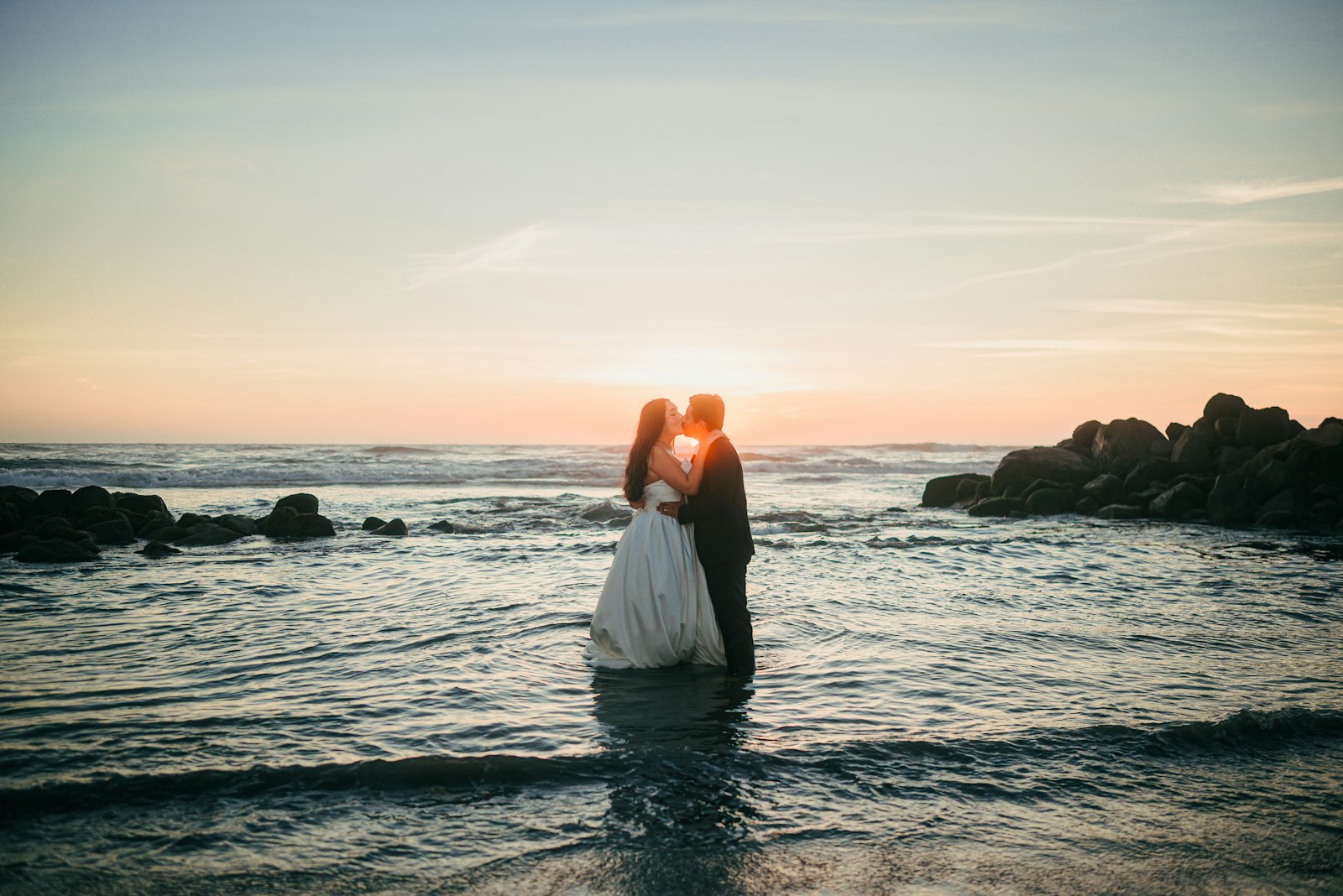
A symbolic wedding in Sumba, with your legal marriage completed at home, is the path that almost every destination-wedding planner recommends for this island — and for good reason. In this model, the couple finalises their legally binding marriage through their own country’s registry or civil authority before they fly to Indonesia; the Sumba ceremony then carries no Indonesian legal effect, but it is the celebration, the ritual, the cliffside moment that brought you ten thousand kilometres in the first place. Understanding exactly how and why this works is the starting point for planning anything here.
What follows is information for planning purposes. It is not legal advice. Marriage law is jurisdiction-specific, changes over time, and varies by nationality, religion, and local registry office. Confirm every legal step with your own embassy, your home-country civil authority, and — if you pursue an Indonesian legal marriage — a qualified Indonesian legal professional and the relevant local civil registry in Sumba.
Why the Legal-at-Home Route Exists: Indonesia’s Marriage Law in Plain Language
To understand why essentially every international destination couple on Sumba chooses a symbolic ceremony, you need to understand what Indonesian marriage law actually requires of you. The framework is set by Marriage Law No. 1 of 1974, and its requirements are confirmed by the US, Australian, and Dutch embassies, among others.
Three constraints apply to foreigners seeking a legally recognised marriage in Indonesia:
- No civil-only or secular marriage
- Every legal Indonesian marriage must be performed according to one of the state-recognised religions. There is no registry office, no civil ceremony, no secular option. If you are not religious in any recognised sense, you have no pathway to a legal Indonesian marriage.
- Same religion, both partners
- Both partners must share the same recognised religion at the time of the ceremony. If you and your partner belong to different faiths — or one of you has no religion — one partner must convert before a legal Indonesian marriage can proceed. This is not a technicality. Embassies flag it explicitly.
- Six recognised religions only
- The recognised religions under Indonesian law are Islam, Protestant Christianity, Catholicism, Hinduism, Buddhism, and Confucianism. Marriages outside these faiths cannot be registered as legal Indonesian marriages. Note: some older sources list five religions; Indonesian law has evolved and the current count is six, though this is an area where official guidance should be verified close to your travel date.
On top of the religion requirements, a legal Indonesian marriage for foreigners involves obtaining a Certificate of No Impediment (CNI) from your own embassy or consulate in Indonesia — which may only have offices in Jakarta, Surabaya, or Denpasar — plus a notice of intention to marry filed with local authorities at least ten working days in advance, plus a civil registration process after the religious ceremony at the relevant Catatan Sipil (civil registry) office. In Sumba, that office is in either Waingapu (East Sumba) or one of the Southwest Sumba regency offices near Tambolaka — not in Bali.
In practice, this means arriving on Sumba roughly seven to ten working days before the ceremony, coordinating with an embassy hundreds of kilometres away, satisfying the religious requirement, and navigating a provincial civil registry that sees very few foreign applications. For a remote island with limited transport connections, this is a significant operational undertaking — and the risk of a single document delay cascading into a missed ceremony is real.
The result: most destination couples skip this entirely, marry legally at home, and bring only their celebration to Sumba.
The Playbook, Step by Step
Step 1 — Complete Your Legal Marriage at Home
This is the foundation of the non legal wedding Sumba approach. Before anything else is booked on the island, the couple should confirm how marriage works in their home jurisdiction and schedule accordingly.
For most couples, this means a registry office appointment, a civil ceremony, or a formal signing in the weeks or months before the Sumba trip. The specific requirements vary significantly:
- Australia: couples must give notice of intended marriage at least one month before the ceremony; a civil celebrant or registered minister performs and registers the marriage, and you receive an official marriage certificate from the state registry.
- UK: notice is given at a register office; a civil ceremony can follow, often very brief if you want just the legal formality; a separate blessing or symbolic ceremony the same day or later is entirely common.
- United States: requirements vary state by state — most require a marriage licence, a brief waiting period, and a ceremony performed by an authorised officiant. Some couples use a courthouse ceremony as their legal event.
- EU and the Netherlands and others: each country has its own civil process; many European systems explicitly separate the civil registrar appointment from any religious or symbolic celebration.
The key output at this stage: your official marriage certificate from your home country. Keep both the original and certified copies. You will want this for name changes, visa applications, insurance, and all the other administrative knock-ons that follow a wedding — none of which are affected by having your celebration abroad.
One practical note: check whether your home country requires any specific timing relative to the Sumba trip. A few jurisdictions have rules about how recently a marriage must have been solemnised before a spouse can be listed on travel documents. Confirm with your civil authority.
Step 2 — Decide on Your Symbolic Ceremony Style
Once the legal foundation is settled, the creative work begins. On Sumba, couples have broadly two approaches to the blessing ceremony, and they can be combined.
Option A: Sumbanese Blessing Ceremony
This is the option that makes Sumba genuinely different from Bali, Lombok, or any other Indonesian island. A traditional Sumbanese blessing is facilitated by a Rato — a ritual authority and cultural elder in the Marapu tradition, which is Sumba’s indigenous ancestral and animist belief system, still practiced widely alongside Christianity on the island. The blessing may include the chewing of betel nut (a ritual act of welcome and connection), spoken invocations to ancestors, and offerings that hold meaning within the local cosmology.
Venues with deep community ties — Nihi Sumba, on the southwest coast near Hoba Wawi, is the clearest example with a formally documented cultural program — can facilitate access to a Rato and the associated protocols. This is not something you arrange independently through a hotel booking engine. It requires a venue or planner who has an ongoing, respectful relationship with local cultural authorities, and the blessing must be conducted on terms set by the Rato and the community, not reverse-engineered from a mood board.
Cultural sensitivity here is not optional politeness. Marapu is a living spiritual tradition. The ceremony elements that may be offered to couples are those the community is willing to share. Sacred sites — particularly the megalithic stone tombs found in traditional villages like Ratenggaro and Praijing — are not ceremony backdrops. If your plan involves any interaction with traditional villages or cultural sites, ask your venue how they handle community permissions, and follow their guidance exactly.
Option B: Celebrant-Led Symbolic Ceremony
The second option is a celebrant-led ceremony that draws on personal vows, the couple’s own story, and whatever visual or atmospheric elements the location provides. This is sometimes called a commitment ceremony, a blessing ceremony, or simply a symbolic ceremony. It carries no Indonesian legal effect. The celebrant is not an Indonesian civil authority — they are a professional who helps structure and host a meaningful personal ceremony.
On Sumba, celebrants almost always fly in from Bali or from the couple’s home country. Local availability is essentially zero. Plan for the celebrant to arrive one to two days before the ceremony to allow for flight delays, which are a real consideration on ATR turboprop routes into Tambolaka (Lede Kalumbang Airport, serving Southwest Sumba) or Waingapu (Umbu Mehang Kunda Airport, serving East Sumba).
Combining Both
Many couples choose both: a brief, intimate Sumbanese blessing led by the Rato as the ceremonial opening, followed by a celebrant-led exchange of personal vows. The two can occupy the same ceremony space or be separated — a cliff-top blessing at sunset followed by an evening dinner and vow exchange, for example. Talk to your venue about what is culturally appropriate and logistically feasible.
Step 3 — Book Your Venue and Vendors with Fly-In Lead Time
Sumba is remote in ways that have direct consequences for event production. There is no wedding-vendor strip here as there is in Seminyak or Ubud. Almost every vendor beyond the venue itself — photographers, videographers, hair and makeup artists, florists, decorators, lighting technicians, bands or DJs — flies in from Bali, typically arriving one to two days before the event to buffer for schedule disruptions.
The two airports are both served by Lion Air Group (Lion Air and Wings Air) and at times Garuda Indonesia, operating ATR turboprops from Bali’s Ngurah Rai (DPS). The Bali to Tambolaka route runs roughly 85 minutes in the air, covering about 400 to 450 kilometres. That is the easy part. Ground transfers from Tambolaka to venues in the west of the island, or from Waingapu to points further afield, can run 40 minutes to several hours on roads that are genuinely rough — not just country roads.
What this means for booking and budgeting:
- Vendors charge for travel days, accommodation, per diems, and often excess baggage fees for equipment. This is standard industry practice for remote-island weddings, and your planner will already have this baked in.
- Your venue coordinator or planner should have established vendor relationships and know which Bali-based professionals regularly work in Sumba. Do not try to source vendors independently from a Bali wedding directory and assume they are comfortable with the logistics.
- Build schedule contingency. If a vendor’s morning flight from Bali is delayed or cancelled, your afternoon rehearsal may shift. Have a plan.
For accommodation, Sumba has no large chain hotels or resort complexes in the 200-room range. The island is fundamentally an intimate-wedding destination. Properties like Nihi Sumba are small and buyout-based for larger groups — roughly 70 adults across around 36 rooms, depending on configuration. Other upscale properties such as Cap Karoso (on the Karoso Beach coast, near Tambolaka) and Lelewatu Resort (clifftop position near Waikabubak) are boutique in scale. If your guest list exceeds around 40 to 60, you are looking at multiple-property accommodation with transfer logistics between them. This is manageable, but it changes the planning calculus significantly.
The best wedding months on Sumba are mid-June through late August — the core dry season, with reliable sunshine, low humidity, and clear conditions. May and September are acceptable. The hills shift from lush green in the earlier months to golden savannah by July, which is the colour that most Sumba wedding photography trades on. Strong southeast monsoon winds do run June through August, and south-facing coastal locations can be genuinely windy; discuss wind-proof decor and ceremony orientation with your venue before committing to a particular viewpoint.
Ready to start mapping your guest list and vendor team? Use our enquiry form or reach our planning concierge directly on WhatsApp at +62 811 3941 4563 — we help couples think through the logistics before committing to a venue deposit.
Step 4 — Understand the Visa Picture for a Symbolic Ceremony
This is one of the cleanest parts of the symbolic-ceremony model, and it is worth stating clearly: attending or holding a symbolic ceremony on Sumba as a tourist requires no special visa beyond the standard tourist entry.
Most eligible nationalities — including US, UK, Australian, New Zealand, Canadian, and most EU passport holders — can enter Indonesia on a Visa on Arrival (VoA) or e-VoA. As of current Indonesian immigration rules, the fee is 500,000 IDR (roughly USD 30 to 35), the stay is 30 days, and a single extension is available for an additional 30 days (60 days total) at the same fee, processed at a local immigration office at least a week before expiry. The e-VoA can be obtained online at evisa.imigrasi.go.id before departure, with a 90-day entry window from issue. Confirm eligibility and fees close to your travel date — immigration rules change, and the list of eligible nationalities is not static.
A tourist entering Indonesia for their own wedding celebration, where no commercial transaction is made in Indonesia by that tourist, falls within tourism activity. The symbolic ceremony itself is a personal event.
However — and this matters — the picture changes for some vendors and participants. Foreign nationals performing paid commercial activity in Indonesia require a working visa or appropriate permit, not a tourist visa. A foreign photographer accepting payment, a foreign celebrant charging a fee, a foreign band performing commercially: these are different categories under Indonesian immigration law. This flag is raised here as information; the practical handling is typically managed by your planner and the relevant vendors, but it is worth understanding the distinction so you are not caught off guard.
If you are pursuing a legally recognised Indonesian marriage — not the symbolic route — that may trigger additional requirements at the civil registry and potentially different considerations around document status. That is a separate, more complex process, and the advice above about consulting your embassy and a qualified Indonesian legal professional applies firmly there.
The Full Picture: Legal Indonesian Marriage vs. Legal at Home
Below is a side-by-side summary of the two paths, as a quick reference:
| Factor | Legal Indonesian Marriage | Legal at Home + Symbolic Sumba Ceremony |
|---|---|---|
| Religion requirement | Both partners must share one of six recognised religions | None — any couple, any background |
| CNI / Certificate of No Impediment | Required from your embassy in Indonesia | Not required for the Sumba ceremony |
| Pre-ceremony arrival | Roughly 7 to 10 working days for CNI plus notice period | Arrive when it suits your travel plans |
| Local civil registry (Catatan Sipil) | Required, in the relevant Sumba regency office | Not applicable |
| Visa required (tourist) | VoA plus possibly additional permits during process | Standard tourist VoA or e-VoA suffices |
| Legal validity of marriage | Recognised under Indonesian law | Recognised under your home country’s law (completed before you flew) |
| Risk of document delay | High — one missing document can postpone the ceremony | Low — your legal marriage is already done |
| Ceremony style flexibility | Must fit within the recognised religious framework | Any style: vow exchange, Sumbanese blessing, both combined |
| Suitable for | Couples meeting all religion and document requirements who specifically want Indonesian legal recognition | Virtually all destination couples, interfaith couples, secular couples, same-sex couples |
The legal-at-home route is not a workaround or a compromise. For most international couples, it is the sensible approach: your home country’s marriage certificate is what your government, your bank, your insurance company, and your HR department recognise. The Indonesian symbolic ceremony is not a lesser version of the real thing — it is the celebration, conducted on one of the most singular islands in the archipelago, with no paperwork hanging over it.
Blessing Ceremony Sumba Steps: A Practical Checklist
To consolidate the playbook into a working sequence:
- Confirm home-country marriage law — check notice periods, licence requirements, and celebrant or registrar availability in your home jurisdiction.
- Schedule the legal ceremony at home — at least a few weeks before the Sumba trip, ideally months before, to allow for any administrative delays and to give yourself the certificate in hand before you travel.
- Obtain the marriage certificate — request certified copies; you will need them for name changes and administrative updates after the trip.
- Book your Sumba venue — Nihi Sumba requires full-resort buyout for larger ceremonies and books well in advance; contact properties like Cap Karoso or Lelewatu Resort directly to understand their event capacity and approach (dedicated wedding programs are verified only at Nihi based on current research). Verify with any property what they can offer and confirm cultural ceremony facilitation if relevant.
- Engage a planner familiar with Sumba logistics — the island’s remoteness makes a good planner a practical necessity, not a luxury. They manage vendor fly-in coordination, transfers, accommodation overflow, and community-permission processes for cultural elements.
- Book fly-in vendors early — photographers, celebrants, and HMUA with Sumba experience book out. Confirm travel-day accommodation and contingency plans for flight delays.
- Sort visas — obtain e-VoA before departure if available to your nationality; confirm entry requirements via evisa.imigrasi.go.id close to travel.
- Health preparation — Sumba sits in an area with ongoing malaria transmission risk, unlike Bali. Consult a travel-medicine clinic several weeks before travel; discuss prophylaxis, dengue prevention, routine vaccinations, and food-safety precautions. This is medical information only — see a qualified doctor.
- Ceremony briefing — if incorporating a Sumbanese cultural element, work with your venue on the protocol. Understand what is appropriate to photograph, what garments or offerings may be involved, and what the Rato’s role and requirements are.
- Travel practicalities — carry sufficient IDR cash (ATMs on Sumba are limited and may be offline); pack a universal adapter for 220V and 50Hz type C or F sockets; bring a power bank; build road-transfer time into every schedule. Serious medical emergencies require evacuation to Bali or Jakarta — adequate travel insurance with medical evacuation cover is not optional on this island.
What the Ceremony Itself Can Look Like
This is often the part couples picture most clearly, and yet it is the part least defined by rules. A symbolic Sumba ceremony has no legal script, no mandatory elements, no religious requirements. Within whatever cultural protocols the Sumbanese blessing may set, the ceremony structure is yours to shape with your planner and celebrant.
In practice, Sumba ceremonies tend to have a quality that is hard to achieve in more developed destination-wedding markets. The island’s scale means your 30 or 40 guests are not sharing a resort with 200 other holidaymakers. The scenery — limestone savannah, south-coast cliffs, private beach stretches, the particular quality of light on a July afternoon — is not manufactured. When Nihi Sumba’s celebrations page describes horses on the beach or fire dancers and Sumbanese garments, those are not resort-branded shows; they are cultural elements that the property has developed a genuine protocol for presenting. That is a distinction worth understanding.
The short version: you are not buying a Bali-style package transplanted to a different island. You are going to a place that is genuinely remote, genuinely different, and genuinely compelling — and the ceremony reflects that if you let it.
For couples who want to cross-reference the legal material: our full legal requirements guide covers CNI processing by nationality, the religion rule in detail, and the civil registry process for those who do pursue an Indonesian legal marriage. Our cultural ceremony guide covers the Marapu tradition, textile exchange, and respectful integration of Sumbanese elements in more depth.
A Note on Independence
This guide is published independently. No venue or vendor can pay to change what we write. If you use our free planning help and proceed with a partner or operator we have mentioned, they may pay us a referral fee at no extra cost to you. That arrangement does not change our editorial position, which is to give you the most accurate picture of what planning a Sumba ceremony actually involves — including the parts that are complicated, expensive, or genuinely uncertain.
Ready to take the next step? Send us your details via our enquiry form, or WhatsApp our planning concierge at +62 811 3941 4563. We are happy to talk through timing, venue shortlists, and the questions that do not have obvious answers on a first search.
Frequently Asked Questions
Does a symbolic ceremony in Sumba make us legally married in Indonesia?
No. A symbolic or blessing ceremony in Indonesia has no Indonesian legal effect. It is a personal, cultural, or celebrant-led celebration. Your legal marriage is the one completed through your home country’s civil authority before you travelled. That certificate is what your government, bank, and employer recognise. Some couples find this liberating — it removes all the document pressure from the Sumba ceremony itself.
Do we need a special visa to hold a symbolic wedding ceremony in Sumba?
Not for the couple. Most eligible nationalities enter on the standard tourist Visa on Arrival or e-VoA (500,000 IDR, 30 days, extendable once). A symbolic ceremony attended as tourists falls within tourism activity. The situation is different for foreign vendors performing paid commercial work in Indonesia — they need appropriate work permits, not tourist visas. Your planner handles this for their team. Confirm current visa requirements via evisa.imigrasi.go.id before you travel, as rules change.
How far in advance should we book a Sumba venue for a symbolic ceremony?
For peak dry-season dates — mid-June through August — expect to need twelve to eighteen months for venues with small capacity and high demand. Nihi Sumba, for example, operates on a full-resort buyout model for larger events and has roughly 36 rooms for approximately 70 adults. That capacity fills. Other properties including Cap Karoso and Lelewatu Resort should be contacted directly to understand their current event calendar and programming. Fly-in vendors — photographers especially — book out early for Sumba dates because the logistics require them to block multiple travel days.
Can a same-sex or interfaith couple hold a blessing ceremony in Sumba?
The symbolic ceremony path is available to any couple regardless of religion, faith combination, or partnership type, because it has no Indonesian legal standing to satisfy. Indonesia does not recognise same-sex marriages legally, and interfaith couples face the same-religion requirement for a legal Indonesian marriage. A symbolic ceremony sidesteps all of that: it is a personal celebration, not a legal act. The relevant legal recognition for same-sex couples comes from their home country. If your home country legally recognises your marriage, you arrive on Sumba already married in the eyes of your own law.
Can we incorporate a Sumbanese blessing even if we completed the legal marriage months earlier at home?
Yes, and this is precisely the standard model. The Sumbanese blessing is a cultural and spiritual act, not a legal one — there is no requirement that it coincide with or precede a legal ceremony. Couples who married at a city register office months earlier and fly to Sumba later for the blessing ceremony are not doing anything unusual; that sequence is effectively the template. The Rato’s blessing is offered on its own terms, as a welcome and a wish for the couple’s life together, independent of when or where your legal papers were signed.