How to read this: Sumba Destination Wedding is an independent wedding-curation guide — we research and compare cliffside, beach, resort and intimate settings on Sumba, then route your enquiry to a vetted planning partner. We are not a wedding planner, venue, resort or booking platform, and any property named (including well-known names) is a neutral example only, not a claim of endorsement or affiliation. Legal marriage requirements for foreigners in Indonesia are complex — this is general information, not legal advice; always verify current rules with the relevant authorities. Costs are by quote and vary by season, party size and logistics; figures here are indicative ranges only.
A 30-guest Sumba wedding budget typically sits in a range of roughly USD 18,000 to USD 60,000+ for a mid-range to luxury celebration — and that figure can climb considerably further for ultra-premium resort buyouts. Every number in this piece is a rough planning estimate only; actual costs vary widely by property, season, and specific requirements. A true budget comes only from a vetted venue and an experienced destination wedding planner who knows Sumba.
Nobody publishes real figures for a Sumba wedding. Resort websites say “enquire now.” Planning blogs quote Bali price bands and quietly hope readers don’t notice. That gap is exactly what this piece tries to fill. If you have been searching for the cost of a small wedding in Sumba and finding only silence, what follows is a line-by-line illustrative breakdown — grounded in how Sumba weddings are actually produced — so you can walk into a first planner call knowing roughly what you’re dealing with.
Why 30 Guests Is the Sweet Spot on Sumba
Sumba is not Bali. There are no mega-resorts here, no conference wings that convert into ballrooms, no strip of competing caterers bidding each other down. The island’s wedding-capable properties are intimate by design and by necessity. Nihi Sumba — the only confidently verified, fully operational destination-wedding venue on the island — caps at approximately 70 adults across roughly 36 rooms [verify with the property; their own published pages cite different figures]. Other upscale properties like Cap Karoso and Lelewatu Resort Sumba are real and appealing but do not have formally published wedding programs as of our last research [contact each property directly to verify current capacity and offering].
What this means practically: a guest list of 30 sits comfortably within what a single property can absorb. It is large enough for a real celebration and small enough to feel genuinely personal — the kind of wedding Sumba’s landscape actually suits. Trying to bring 100 guests to Sumba requires multiple properties, complex inter-site transfers on rough roads, and a logistical overhead that defeats the purpose of coming here in the first place. Thirty is not a compromise. It is an alignment.
The Big Caveat Before We Look at Numbers
Every cost range below carries the same disclaimer: these are rough planning estimates, not quotes, not published tariffs, not guarantees. Sumba wedding costs are driven by a set of structural factors — remote logistics, fly-in vendors, imported materials, staff accommodation, less market competition — that make every event quote-dependent. The same ceremony that costs USD 25,000 in an off-peak month can land at USD 40,000 in peak dry season with a more demanding décor brief.
Use these numbers to frame your expectations and have an intelligent first conversation. Do not use them to compare venues or negotiate with suppliers. For that, you need a planner on the ground and direct quotes from each property. If you’d like help connecting with a vetted partner, our enquiry form can point you in the right direction.
Intimate Sumba Wedding Cost Breakdown: Category by Category
1. Venue and Accommodation
This is the biggest line item and the one with the widest variance. At the luxury end, a full resort buyout at a property like Nihi Sumba — which is necessary for larger intimate weddings because the resort will not permit outside guests to occupy only a fraction of rooms while others remain open — runs in a planning band of roughly USD 50,000 to USD 200,000+ for the accommodation component alone [FLAG: this is an informed planning estimate, not a sourced Nihi price; actual cost is quote-only, enquiry-only]. That band reflects room rates, minimum stay requirements, and buyout premiums, not the ceremony and catering costs layered on top.
For 30 guests you may not need a full resort buyout, depending on the property’s room count and policy. If the property has, say, 15 rooms and your 30 guests occupy all of them, a buyout may actually be structurally similar to a standard group booking with a venue-hire component on top. The distinction matters for budgeting — confirm the structure with the property before assuming.
At a smaller boutique property, a venue hire fee for the ceremony and reception space can range from roughly USD 2,500 to USD 10,000+ [estimate only], with accommodation charged separately at rack or group rates. The challenge on Sumba is that “smaller boutique” rarely means cheaper when you account for the per-night rates these properties command.
Rough accommodation planning bands for 30 guests (15 rooms × 3 nights, illustrative):
| Tier | Per-room per-night estimate (USD) | 15 rooms × 3 nights (illustrative) |
|---|---|---|
| Mid-range boutique | ~$150–$300 | ~$6,750–$13,500 |
| Upscale design resort | ~$300–$600 | ~$13,500–$27,000 |
| Ultra-luxury (Nihi-tier) | ~$800–$2,000+ | ~$36,000–$90,000+ |
These are rough illustrative figures. Actual rates differ by season, by specific villa category, and by what the property includes in a group-booking arrangement. [VERIFY with each property; these are planning estimates only.]
2. Per-Head Catering and Beverage
Catering on Sumba is not a plug-and-play line item. Most upscale properties manage their own food and beverage in-house; you cannot bring in an independent caterer and use the resort’s kitchen. What varies is the package structure — whether it is a set dinner menu, multiple courses, whether open bar is included, and how many hospitality events (welcome drinks, day-after brunch) are bundled.
General industry catering estimate bands for destination weddings in remote eastern Indonesia:
- Budget / simpler set menu
- ~USD 25–40 per head per meal service [estimate]
- Mid-range, good quality multi-course
- ~USD 40–80 per head [estimate]
- Luxury, premium ingredients, full beverage package
- ~USD 80–150+ per head [estimate]
For 30 guests at a single wedding dinner, budget roughly USD 1,200 to USD 4,500 for the food component at mid-range, before beverages. Add a welcome cocktail event and a day-after brunch and you are looking at additional F&B spend. At luxury per-head rates, a full wedding weekend of food and beverage for 30 can reach USD 7,500 to USD 15,000+ for the catering component alone.
One cost Sumba adds that Bali often does not: ingredient sourcing. Fresh seafood and some produce are available locally. Premium proteins, imported wine, and specialty ingredients require freight from Bali or Jakarta, and that freight cost is typically passed through to the client directly or baked into a higher per-head rate. Ask about this explicitly when you request a catering proposal.
3. Décor, Florals, and Styling
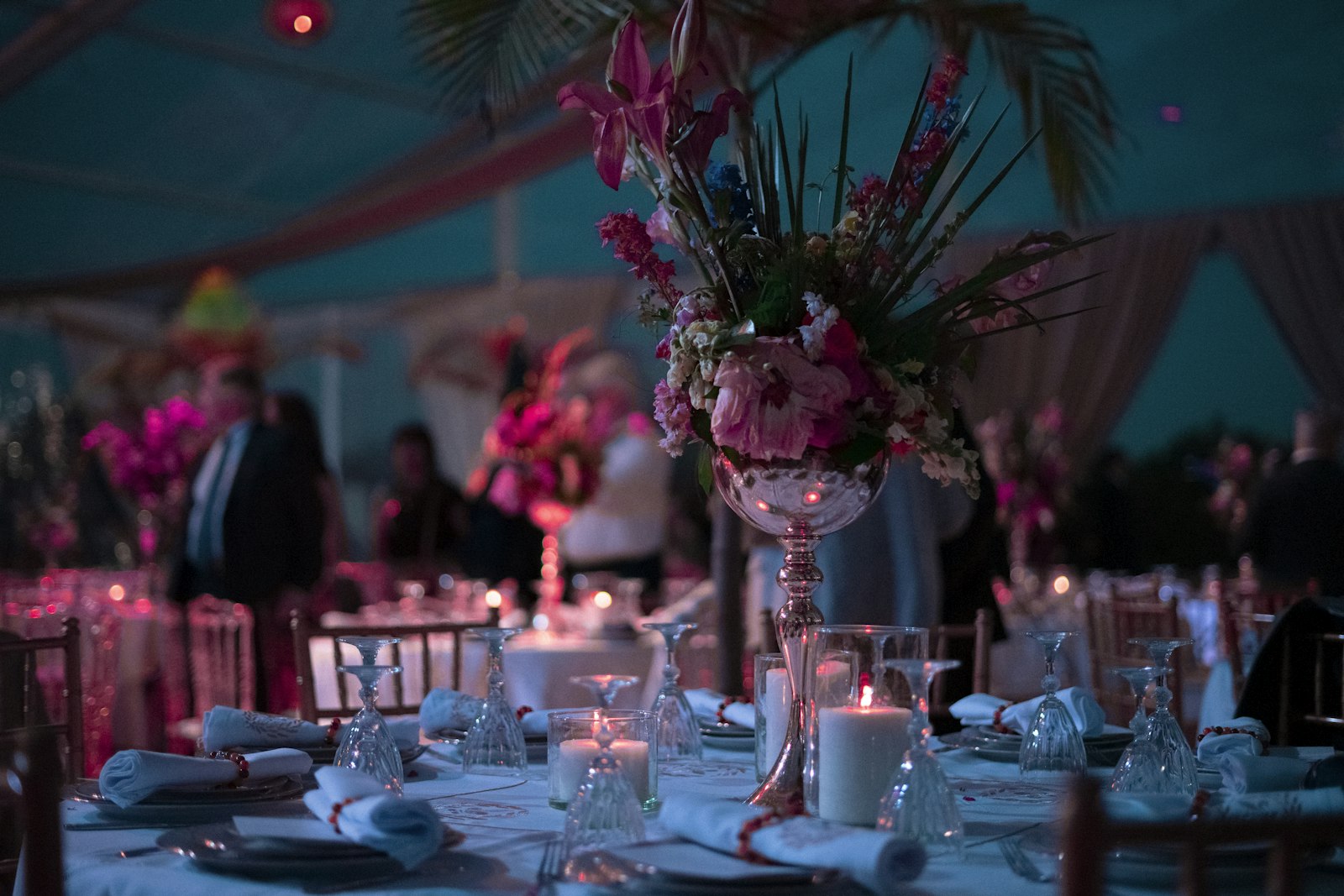
This is where the remoteness premium hits hardest. There is no wholesale flower market in Tambolaka. There is no local event-rental company with a warehouse of draping, candelabras, and lounge furniture. What you see at a beautifully styled Sumba wedding — the arrangements of tropical blooms, the woven-rattan accents, the linen draping — came from Bali, sometimes via two flights and a cargo van.
Florists who work on Sumba typically fly in from Bali (DPS→TMC is an approximately 85-minute turboprop flight on Wings Air / Lion Air Group or at times Garuda Indonesia). Rental items travel as checked excess baggage or air freight. The freight premium on a modest décor package can add USD 800 to USD 3,000+ to the décor budget before you have bought a single stem.
Rough illustrative décor ranges for a 30-guest ceremony and reception:
| Décor scope | Estimated budget (USD) — excluding freight | With Sumba freight premium |
|---|---|---|
| Simple, local-materials-forward | ~$2,000–$5,000 | ~$3,000–$7,000 |
| Mid-range styled ceremony + reception | ~$5,000–$12,000 | ~$7,000–$15,000 |
| Full florals, custom design, multiple setups | ~$12,000–$30,000+ | ~$15,000–$40,000+ |
A word on what “local-materials-forward” can mean on Sumba: woven palm, hand-cut wood, locally foraged tropical leaves, and handwoven Tenun Ikat textiles used as table runners or ceremony accents can be genuinely beautiful and meaningfully cheaper than importing Bali florals. The caveat is sourcing these responsibly — Tenun Ikat is woven by women artisans across East and West Sumba and carries deep ritual significance in the culture, including in traditional marriage exchanges. Do not treat a sacred cloth as a tablecloth without understanding what it is. If you are interested in integrating local textiles, a planner who knows the island can source these properly and ensure the artisans are paid fairly.
4. Fly-In Vendors: Photography, Video, HMUA, Entertainment
The local vendor pool on Sumba is thin — a brief look at Bridestory’s Sumba listings returns mostly venue entries and a handful of suppliers who are, in practice, Bali-based and fly in for events. This is simply the reality of a remote island with limited wedding volume. It is not a complaint; it just means budgeting for it honestly.
Every vendor you bring to Sumba from Bali or Java incurs:
- Return airfare — DPS→TMC at roughly USD 60–180 per person each way, depending on timing and airline [estimate; check current fares]
- Accommodation — vendors typically arrive 1–2 days before the event to buffer against flight delays; they need a room for 2–4 nights
- Per diem / meals — particularly when they are staying at a property where meals are not included or are at resort pricing
- Excess baggage and equipment freight — a photographer with studio lighting gear, a florist with boxes of product, a band with instruments: each adds freight cost
A realistic vendor travel overhead for one person (airfare, 3 nights accommodation, per diems) sits in the range of roughly USD 600 to USD 2,000 per vendor depending on the accommodation tier [estimate]. For a typical 30-guest wedding team — photographer, second shooter, videographer, hair and makeup artist, and perhaps a DJ — that is USD 3,000 to USD 10,000+ in travel overhead alone, before any service fees.
Photography and videography fees themselves are separate and entirely dependent on the photographer. Reputable destination wedding photographers typically charge USD 3,500 to USD 15,000+ for a full wedding day package, with travel above that [general market estimate; not a Sumba-sourced figure]. Hair and makeup for the couple runs roughly USD 300–800+ per person for the day [estimate]. A live band will cost more than a DJ, and transporting instruments to Sumba requires advance planning.
5. Ceremony Officiating and Legal Structure
This deserves its own line because it affects both the budget and the planning timeline in ways couples often underestimate.
Indonesia’s Marriage Law No. 1 of 1974 requires that legal marriage be performed according to a recognized religion, and that both partners share the same religion. There is no civil-only or secular marriage under Indonesian law. For many international couples — particularly those of different faiths or same-sex couples — a legally recognized Indonesian ceremony is not available.
The practical and widely-used solution: marry legally in your home country before coming to Sumba, then hold a symbolic blessing or commitment ceremony on the island. A symbolic ceremony carries no Indonesian legal effect but is entirely valid as a meaningful celebration. Most couples who hold destination weddings in Indonesia use this route — it avoids the same-religion requirement, the Certificate of No Impediment (CNI) process at your embassy, and the Catatan Sipil civil registry paperwork. This is general information, not legal advice; confirm your specific situation with a lawyer and your country’s embassy in Indonesia.
For couples pursuing a legal ceremony in Indonesia, costs include officiating fees, CNI processing at your embassy (fees vary by nationality), translation and legalization of documents, and registration fees. Budget an additional USD 500 to USD 2,000+ for legal ceremony documentation costs [rough estimate; vary significantly by nationality and required documents].
If you want a Sumbanese cultural element — a blessing by a local ritual elder (Rato), or a betel-nut ceremony — this is a meaningful addition. Some properties can arrange this. The cost is typically modest, but the logistics and cultural protocols matter more than the fee. [VERIFY with the property or a Sumba-based planner; do not arrange this independently without local guidance.]
6. Wedding Planner Fees
A planner is not a luxury on Sumba. It is a structural necessity. The vendor ecosystem is sparse, the logistics are complex, the roads are rough, the flight schedules are thin, and an experienced planner has relationships with properties and suppliers that a couple researching from overseas simply cannot replicate in time.
General industry estimate for destination wedding planners: roughly 10–15% of total budget, or a flat fee structure [this is a general industry figure, not a Sumba-sourced rate; FLAG]. For a USD 35,000 wedding, that means a planner fee in the range of USD 3,500 to USD 5,250+. Because remote logistics are more time-intensive, Sumba-experienced planners may charge above that range. Some charge a fixed project fee rather than a percentage.
What you are paying for: coordination with a property that will not always respond quickly to email, sourcing and briefing fly-in vendors, managing freight logistics, having a backup plan when the Tuesday flight from Bali is delayed and your florist is stuck at DPS, knowing which roads wash out in certain months, and being physically present when things do not go exactly as planned — which they rarely do, anywhere, at any wedding.
Do not try to plan a Sumba wedding without a planner. The island is not set up for couples who want to DIY the logistics from a laptop in Amsterdam or Sydney.
7. Weather, Transport, and Contingency Buffer
Sumba’s best wedding months are mid-June through late August — the core dry season when rain is rare and the light is extraordinary. May and September are generally reliable but carry more uncertainty at the edges. The wet season runs roughly November through March or April in the west and southwest of the island, with East Sumba having a slightly shorter wet period. Rain in the wet season is not a drizzle; it can be sustained and heavy for days.
What couples planning dry-season weddings often underestimate is the wind. The Australian monsoon SE trades run strong through June, July, and August. On exposed south-coast clifftop venues, this wind can affect ceremony setups — tall floral arrangements, draping, free-standing structures — in ways that photographs from perfect-weather days do not communicate. A good planner will build wind-proofing into the décor brief. A good venue will have a backup ceremony configuration.
The contingency buffer is not optional here. Build at minimum 10–15% of your total budget as a contingency reserve. That figure accounts for:
- Vendor flight delays requiring an extra night’s accommodation
- Last-minute freight and logistics changes
- Exchange-rate movement if you are budgeting in IDR and paying from USD, GBP, AUD, or EUR
- Weather-related décor or setup modifications
- Road condition changes that require chartering different transport for guests
On a USD 35,000 event, a 12% contingency reserve is USD 4,200. That is not wasted money; it is the buffer between a wedding that runs beautifully and one that ends in a stressful scramble.
Why Sumba Costs More Than Bali for the Same Production
This is a fair question, and couples deserve an honest answer rather than vague resort marketing language.
Bali has a highly developed wedding industry. Hundreds of florists, photographers, caterers, AV companies, and planners compete for business within a 30-minute radius of each other. Supply is abundant; prices are kept honest by competition. Freight is local. Staff live nearby. Rental warehouses exist.
Sumba has none of that infrastructure. Every vendor who is not employed by the venue itself must travel roughly 85 minutes by turboprop from Bali, plus the time to connect in Bali if coming from elsewhere. Every specialty ingredient, every non-standard rental item, every piece of AV equipment that the property does not own in-house must be freighted or carried as excess baggage. Staff employed for a day’s event may need to be accommodated for two or three nights to buffer against flight unreliability.
The gap between Sumba and Bali costs is modest at the simple end — a beach-symbolic-ceremony-with-catering will not cost dramatically more in Sumba than in a comparable remote Bali beach location. At the luxury styled end, the gap is significant. A premium full-day production in Bali that costs USD 25,000 might run USD 35,000 to USD 45,000+ in Sumba once remote logistics are factored in [estimate; varies by scope].
That premium buys you something real: a backdrop that genuinely cannot be replicated elsewhere in Indonesia. No resort on Bali will give you a clifftop above a two-kilometre private beach on a low-density island where your 30 guests are the only people in sight. The tradeoff is honest. Whether it is worth it depends entirely on what you value.
Illustrative All-In Budget Summary for a 30-Guest Sumba Wedding
The table below is an illustrative only planning summary. These are rough estimates — not quotes, not fixed prices. Treat them as a starting framework for a conversation with a planner and property, not as confirmed costs. All figures are in USD. [VERIFY all figures with your planner and vendors; costs vary widely by property, season, and scope.]
| Category | Conservative estimate | Mid-range estimate | Premium estimate |
|---|---|---|---|
| Venue hire + 3-night accommodation (30 guests) | ~$12,000 | ~$22,000 | ~$50,000+ |
| Catering and beverage (dinner + welcome event) | ~$2,500 | ~$6,000 | ~$12,000+ |
| Décor, florals, styling (with freight premium) | ~$3,500 | ~$9,000 | ~$20,000+ |
| Photography and videography (incl. travel overhead) | ~$4,500 | ~$8,000 | ~$15,000+ |
| HMUA (bridal party, travel overhead) | ~$1,200 | ~$2,000 | ~$4,000+ |
| Entertainment (DJ or live, travel overhead) | ~$1,500 | ~$3,000 | ~$8,000+ |
| Wedding planner fee (~12% of total) | ~$2,000 | ~$4,500 | ~$9,000+ |
| Ceremony officiation and legal/symbolic admin | ~$500 | ~$1,000 | ~$2,000+ |
| Contingency buffer (~12%) | ~$2,000 | ~$4,500 | ~$10,000+ |
| Illustrative total (30 guests) | ~$29,700 | ~$60,000 | ~$130,000+ |
The conservative column reflects a simplified celebration at a mid-range boutique property with a talented but non-celebrity vendor team and a modest décor brief. The premium column reflects a luxury property at buyout-adjacent pricing with a fully produced ceremony and reception, a top-tier photography team, and elaborate florals. Neither column is padded. Neither is guaranteed. Both require real quotes to validate.
Guest flights and accommodation travel costs are not included in the above — those are borne by guests individually. If you are considering subsidising guest travel as part of the wedding gift, add that line separately.
What This Budget Does Not Include
A few costs that surprise couples when they first see a full proposal:
- Your own travel and pre-wedding site visit. A site visit to Sumba before committing to a venue is strongly advisable. That is an additional trip — flights, accommodation, ground transport — that belongs in your personal budget but not in the wedding budget itself.
- Travel insurance with medical evacuation. Medical facilities on Sumba are basic. Serious health events require evacuation to Bali or Jakarta. Travel insurance with adequate medical evacuation cover is not optional here. This is general information, not medical or insurance advice; consult your insurer.
- Malaria prophylaxis and pre-travel health preparation. Sumba is in an area with ongoing malaria transmission, unlike Bali. Consult a travel medicine clinic several weeks before travel. Not medical advice; consult a qualified physician.
- Guest transfers and ground transport. Roads in Sumba are rough and travel times are long. Transferring 30 guests from Tambolaka airport to a venue on the west coast is a meaningful logistics exercise — multiple vehicles, multiple trips, real coordination. Budget for this per head or as a venue service, and confirm what the property includes.
- Wedding bands, gifts, and personal items. These are yours to budget separately.
If you are beginning to scope a real budget, our concierge service can help connect you with planners and properties who will provide actual quotes. Reach us through our enquiry form or on WhatsApp at +62 811 3941 4563. There is no charge for the connection; if you proceed with a partner, they may pay us a referral fee at no extra cost to you.
Is a 30-Guest Sumba Wedding Worth the Cost Premium?
That question only you can answer. But here is how we think about it editorially.
A 30-guest Sumba wedding costs more than a comparable 30-guest Bali event. That is simply true. It also produces something categorically different. Bali is beautiful and has a world-class wedding industry; if ease and vendor access are priorities, Bali is the right call. Sumba is for couples who want the ceremony to feel like a discovery — who are willing to accept the complexity of getting there, the premium of remote logistics, and the honest limitations of a low-density island in exchange for a landscape and a sense of place that most of their guests will have never experienced and may never experience again.
Thirty guests sitting at dinner on a clifftop in SW Sumba as the sun drops over 2.5 kilometres of private beach below — there is no packaged version of that. You cannot buy it off a venue menu. That is part of what the premium pays for: the irreproducibility of the setting, and the intimacy that a small island with limited rooms enforces rather than merely offers.
Whether USD 35,000 or USD 80,000 is the right number for your version of that experience depends on your brief, your property choice, and the scope of the production. Get actual quotes. Work with a planner who knows the island. Come with eyes open about the logistics. The result can be extraordinary — and the word extraordinary is doing honest work there, not marketing work.
Frequently Asked Questions
How much does a 30-guest Sumba wedding cost on average?
There is no reliable average because Sumba wedding costs depend entirely on venue tier, vendor scope, and logistics complexity. A rough mid-range planning estimate for 30 guests — covering venue, catering, décor with freight premium, fly-in vendors, and a planner — sits somewhere around USD 40,000 to USD 80,000 before contingency. That range could be lower for a simplified celebration at a boutique property, and considerably higher for a full luxury resort production. These are planning estimates only; actual cost comes only from quotes provided by a venue and a planner who know your specific requirements.
Why does a Sumba wedding cost more than a similar Bali wedding?
Sumba’s remoteness adds structural costs that Bali simply does not have. Vendors must fly from Bali (~85 minutes by turboprop), which adds airfare, accommodation, and per diem costs on top of their service fee. Décor, rental items, and specialty ingredients must be freighted from Bali or Jakarta. There are far fewer local vendors competing for business, which means less price pressure. Staff who are not employed by the venue may need to be accommodated for extra nights to buffer against flight delays. All of this adds up to a meaningful premium over Bali for the same production scope — a premium that grows with event complexity.
Can I legally get married in Sumba as a foreigner?
Legally recognized marriage in Indonesia requires a religious ceremony under one of Indonesia’s recognized religions (Islam, Protestant Christianity, Catholicism, Hinduism, Buddhism, or Confucianism), and both partners must share the same religion. There is no civil-only or secular marriage available, and same-sex marriage is not legally recognized. For most international couples, the practical and widely recommended route is to marry legally in your home country first and then hold a symbolic blessing or commitment ceremony in Sumba — which carries no Indonesian legal effect but is fully meaningful as a celebration. This is general information only, not legal advice; consult your country’s embassy in Indonesia and a qualified lawyer for your specific situation.
What are the best months for a 30-guest wedding in Sumba on a set budget?
The core dry season — mid-June through late August — is the most reliable for ceremony weather and offers the iconic golden-savannah landscape that makes Sumba so distinctive. May and September are generally workable but carry slightly more uncertainty at the edges. Shoulder-season months (April, October) may offer some pricing flexibility, though the weather risk rises. The wet season from November through March or April brings heavy and sustained rain, particularly in West and Southwest Sumba where most venue-capable properties are located — this period is not recommended for outdoor ceremonies. Whatever month you choose, build a weather contingency plan into your event brief.
Do I need a wedding planner for a 30-guest Sumba wedding?
Yes — unequivocally. Sumba’s local vendor ecosystem is sparse. Almost every specialist supplier (photographer, florist, HMUA, AV) must be sourced and flown from Bali, which requires real coordination, freight management, and backup plans for flight delays. Road conditions on the island can be unpredictable. Property response times for overseas couples can be slow without a local intermediary. A planner who knows the island is not a luxury here; it is the mechanism by which the whole event functions. Expect a planner fee in the region of 10–15% of budget as a general industry estimate, possibly higher for a Sumba-experienced specialist — and consider it among the most important investments in the whole budget.