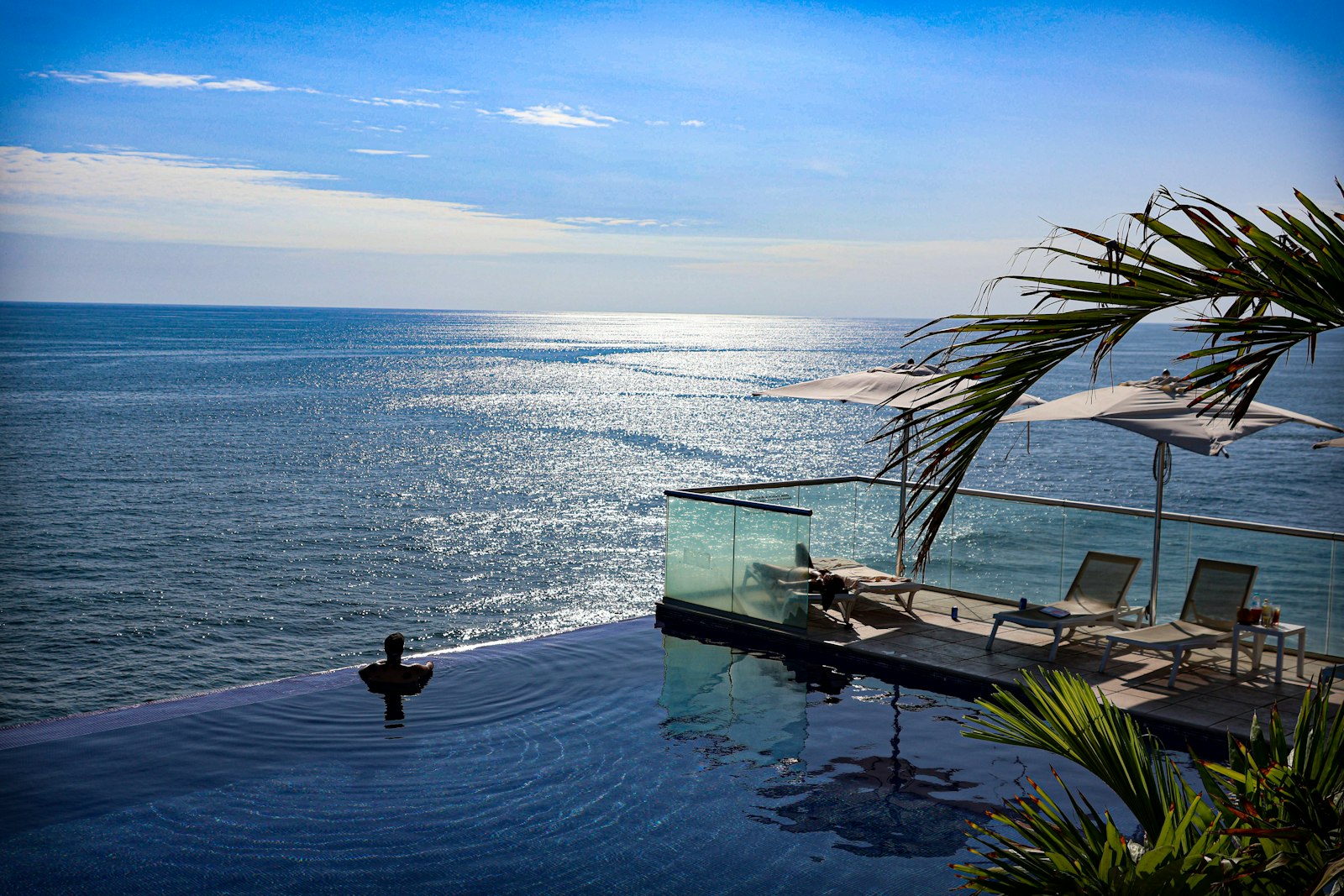
How to read this: Sumba Destination Wedding is an independent wedding-curation guide — we research and compare cliffside, beach, resort and intimate settings on Sumba, then route your enquiry to a vetted planning partner. We are not a wedding planner, venue, resort or booking platform, and any property named (including well-known names) is a neutral example only, not a claim of endorsement or affiliation. Legal marriage requirements for foreigners in Indonesia are complex — this is general information, not legal advice; always verify current rules with the relevant authorities. Costs are by quote and vary by season, party size and logistics; figures here are indicative ranges only.
A Sumba vs Flores wedding comparison really comes down to what you want surrounding your ceremony: raw, deeply private savannah-and-cliff landscape on the one hand, or an established adventure gateway with Komodo dragon territory at the door on the other. Both islands sit in East Nusa Tenggara, both are reached via a short turboprop hop from Bali, and both will cost you more to produce a wedding than Bali would for the same quality level. When couples ask whether a flores or sumba destination wedding is the better fit, there is no universal answer — only the right answer for your specific guest list, budget, and aesthetic. The similarities end there. This guide works through every variable that matters when you are deciding between them.
Island Character: What You Are Actually Choosing
Before logistics, ask what you want your guests to remember about this place — because the islands feel completely different on arrival.
Sumba: Untamed Savannah, Cliff Coast, and Living Marapu Culture
Sumba is large — roughly 10,900 square kilometres — and still lightly developed by the standards of eastern Indonesia. The terrain is limestone-based rather than volcanic, producing open savannah and grassland that turns golden-brown through July to October and lush green in the wet months. The south-west coast is all cliff faces, secluded white-sand beaches, and surf that discourages casual tourism. That is precisely why couples who come here choose it: the landscape looks like nowhere else you have seen photographed at a wedding.
The cultural layer runs deep. Marapu — the indigenous ancestral and animist belief system of Sumba — is still actively practiced, often alongside Christianity. Traditional villages such as Ratenggaro and Praijing cluster around central megalithic stone tombs. The sacred Pasola mounted-spear ritual, the intricate resist-dye Tenun Ikat textiles exchanged at real Sumbanese marriages, the blessing ceremony by a local ritual specialist called a Rato — these are not reconstructed heritage experiences. They are living practices, and they offer a ceremony context available nowhere else in the archipelago. Handled respectfully, they make a Sumba wedding genuinely singular. Handled carelessly, they embarrass everyone involved.
Flores and Labuan Bajo: Adventure Pairing and a More Built-Up Base
Flores is longer and narrower, draped in volcanic ridges and richer in accessible infrastructure. The western gateway — Labuan Bajo — has grown substantially as a tourism hub, buoyed by proximity to Komodo National Park and the resulting flow of live-aboard dive cruises, speedboat day trips, and ranger-escorted Komodo dragon encounters. The town itself is not large, but it has a functional strip of waterfront restaurants, accommodation at several tiers, and a vendor pool that has been growing to meet the tourism demand.
This matters for weddings in a practical way. When a planner in Labuan Bajo needs to source additional décor rental or find a second videographer, they are working in an environment that has seen real demand. When a planner in Sumba needs the same, the answer is almost always “fly someone in from Bali.”
The headline pairing for a Flores wedding is what your guests do beyond the ceremony: liveaboard sailing into Komodo, snorkelling Manta Point, hiking above the pink-sand beaches of Padar Island. If your guest list runs toward adventure divers and nature enthusiasts, Flores gives them a richer activity itinerary than Sumba can match.
Access: Getting Your Guests There
Neither island is easy to reach, which is part of the point. Couples who choose remote eastern Indonesia have already decided that a certain amount of travel friction is worth it. But the friction is not equal.
Sumba Airports and Connections
Sumba has two commercial airports. Tambolaka (TMC), officially Lede Kalumbang Airport, serves the west and south-west — the side where the main wedding-capable properties are concentrated. Waingapu (WGP), Umbu Mehang Kunda Airport, serves the east. Both are served primarily by turboprop aircraft. Direct flights from Bali (DPS) to Tambolaka operate via Lion Air Group carriers including Wings Air, with a typical block time of around 85 minutes — there is a verified Wings Air schedule running at roughly that duration. Garuda Indonesia also operates the route at times. Flight schedules change seasonally; confirm live timetables close to your planning date and do not quote a specific number of daily departures as guaranteed.
Most couples and vendors travel via Bali regardless of origin. There is no reliably verified direct Lombok–Sumba route; the standard path is DPS as hub. Your guests flying from Jakarta, Singapore, or further afield should plan Bali as their connection point and expect a possible overnight there if timing does not allow a same-day connection.
Labuan Bajo and Komodo Airport
Labuan Bajo’s Komodo Airport (LBJ) receives jet service — not only turboprops — from Bali and Jakarta on airlines including Garuda, Lion Air, and Batik Air. This is a meaningful practical difference. Jet service from Bali to Labuan Bajo runs faster, has more daily options as of recent schedules, and gives guests from Jakarta a viable direct routing. The airport infrastructure is more developed than either Sumba gateway. For a large group all arriving around the same time, Labuan Bajo is simply a less anxious logistics experience.
Transfer Times on the Ground
From Tambolaka airport to the main west-Sumba wedding properties, transfers run roughly 30 to 60 minutes depending on road conditions and destination. Roads on Sumba are real but rough in places; build margin into transfer schedules. The drive between Tambolaka and Waingapu is long — several hours — so if your venue is in the west, guests arriving at Waingapu need an additional domestic flight or a full day’s land transfer, which essentially never happens in practice. Pin down your venue’s airport before communicating travel instructions.
In Labuan Bajo, the town is compact enough that most accommodation is within 15 to 30 minutes of the airport. For ceremonies on nearby islands or aboard vessels, factor in speedboat or charter-boat transfer times.
Wedding Venues: Depth and Options
This is where the gap between the two islands is most pronounced, and where couples who want to compare flores sumba ceremony settings find the starkest difference in what each can deliver.
Sumba: One Confirmed Star, Several Possibles
Nihi Sumba — formerly Nihiwatu — is the only property on the island with a confirmed, dedicated weddings programme backed by real wedding films, a wedding brochure, and a named celebration offering. It occupies around 560 acres on the south-west coast with 2.5 kilometres of private beach. The property accommodates roughly 70 adults across approximately 36 rooms and villas (the resort’s own pages cite slightly varying numbers — treat both figures as approximate). For groups above that size, you run out of rooms at the primary property and the logistics of housing overflow guests elsewhere on a sparse island become genuinely complicated.
Nihi operates on a full-resort buyout model for larger weddings. This is not a small package-plus-extras. Buyout economics at an ultra-luxury resort of this calibre mean the planning cost band runs into the tens or hundreds of thousands of US dollars — we are not going to print a fixed number because Nihi does not publish one and any figure we invent is worse than no figure at all. Request a quote directly.
Cap Karoso on Karoso Beach and Lelewatu Resort on the cliffs above west Sumba are real, credible upscale properties. Both appear in wedding marketplace directories. Neither has a verified dedicated wedding programme as of our last check — contact each property directly and get specifics in writing before budgeting.
Labuan Bajo: A Growing Field, Still Thin
Labuan Bajo has a wider range of properties that handle events — boutique resorts, hilltop venues with Komodo-horizon views, and a growing number of charter boats that can double as floating ceremony venues. The range of what you can stage here is broader: a clifftop terrace overlooking the Flores Sea, a private island beach with speedboat access, or a phinisi liveaboard ceremony at anchor. The vendor pool is also deeper; local planners in Labuan Bajo have handled more international-couple events in recent years than their Sumba counterparts.
“Deeper” is relative. Neither place approaches Bali’s density of florists, HMUA artists, AV rental companies, and bespoke décor suppliers. Flying in from Bali remains the default for specialist vendors at both locations. Labuan Bajo’s advantage is a shorter vendor gap, not an absence of one.
Vendor Reality: What You Will Actually Need to Fly In
At both islands, couples planning a wedding should assume the following will come from Bali unless the specific resort provides them in-house:
- Wedding photographer and videographer
- Bridal hair and makeup artist
- Florist and décor designer
- Advanced audio-visual and lighting production
- Independent event planner (if not using the resort’s coordinator)
Nihi Sumba’s in-house team provides the ceremony venue, all food and beverage, service staff, on-site events coordination, and local cultural elements — a Rato blessing, Sumbanese music, ceremonial horses on the beach. That is a meaningful package. What it does not include is the photography, full floral/décor design, specialist lighting, or a bridal artist who knows how to work with your specific style. For Labuan Bajo venues, the in-house provision varies widely by property — confirm every line item.
Vendors flying in from Bali arrive a day or two early as a travel buffer against flight disruptions. Their flights, accommodation, per diems, and excess baggage for equipment are your cost. This is one of several reasons remote eastern Indonesian weddings price above a comparable Bali production. It is not a hidden fee — it is a structural reality of working with a very small local supply pool.
Ready to map out your vendor budget? Reach us through our enquiry form or send a message on WhatsApp to +62 811-3941-4563 — we can help you build a realistic vendor plan for either island before you commit to a venue.
Guest Capacity: How Many People Can These Islands Actually Host?
Sumba is, at its core, an intimate-wedding destination. The verified ceiling at Nihi is around 70 adults, which already requires full-resort buyout. There are no large chain hotels with 200 or more rooms on Sumba. Multiple boutique properties are spread across a large, sparsely settled island. Coordinating 150 guests across two or three separate properties, each needing its own transfer schedule on rough roads, stops being a destination wedding and starts being a logistical rescue operation.
A Sumba wedding works beautifully for 20 to 70 guests. Push past that with any ambition of keeping the group coherent, and the constraints become significant.
Labuan Bajo can flex somewhat higher, but it is not a destination for a 200-person wedding either. The accommodation concentration in the town means overflow guests can at least stay within a reasonable distance of the ceremony site, which Sumba cannot reliably offer. If your list runs to 80 or 100 guests and you need them in the same general area, Labuan Bajo gives you more viable options.
Cost: What to Expect at Each Island
Both islands cost more than Bali for a comparable production quality, and neither publishes wedding packages with fixed prices. Everything here is a planning estimate — your actual spend depends on guest count, vendor choices, and how much you customize. Do not hold any of these figures as a quote.
| Variable | Sumba (rough estimate) | Flores / Labuan Bajo (rough estimate) |
|---|---|---|
| Venue hire / buyout | Quote-only; ultra-luxury ranges far above standard Bali packages | Quote-only; wider tier range than Sumba |
| Per-head catering (mid) | USD 40–80 est. | USD 35–75 est. |
| Per-head catering (luxury) | USD 80–150+ est. | USD 70–130+ est. |
| Vendor fly-in premium | Moderate to high (limited local pool) | Low to moderate (some local depth) |
| Planner fee (general industry) | ~10–15% of total budget | ~10–15% of total budget |
| Guest activity options | Island/beach/cultural; limited diversity | Komodo, liveaboard, diving, Padar hike |
All figures above are rough planning estimates only, not sourced quotes. Nihi’s buyout — to use the island’s anchor property as an example — is at a price level that reflects a sole five-star resort on the island with a private beach. We are not going to invent a number. Contact the property for current pricing.
The structural cost drivers are the same at both locations: fly-in vendor costs, imported florals and décor, staff accommodation and per diems, freight for production equipment, and limited vendor competition keeping prices high. Sumba’s vendor supply is thinner, so the fly-in premium is generally higher there. A Labuan Bajo wedding using local vendors where possible will typically save some of that freight and accommodation cost, though not all of it.
Weather and Season: Timing Your Ceremony
Both islands share a similar climate pattern — a pronounced dry season and a wet season — though the regional specifics differ.
Sumba
The core dry season runs June through September, with mid-June to late August being the most reliable window. Clear skies, very little rain, comfortable daytime temperatures in the 30 to 33°C range. The savannah turns a striking golden-brown through July to September — exactly what you have seen in photographs of Sumba weddings. September can bring the first storms of the wet season and is often very hot. The wet season peaks December through February; the west of the island receives considerably more rain than the east.
One note specific to cliff and south-coast venues: the Australian south-east monsoon wind runs hard June through August. Beach ceremonies on exposed south-facing coastlines can be genuinely windy in peak dry season. Work with your venue and planner on wind-proof décor or a sheltered ceremony site if that applies to your chosen location.
Flores and Labuan Bajo
The dry season timing is similar — roughly May through October, with June to August the most comfortable. The wind pattern applies here too, though Labuan Bajo’s harbour-facing geography can moderate it more than exposed south Sumba cliffs. The wet season brings heavy rain from November through April. For Komodo diving and liveaboard access, the dry-season window aligns well with the wedding season, making June to August a double draw for adventure-oriented guests.
Health and Practical Considerations
This section is information only — not medical or legal advice. Consult a travel-medicine clinic and your relevant embassy for guidance specific to your situation.
Both Sumba and Flores sit within the East Nusa Tenggara province, which is routinely listed among malaria-risk areas of eastern Indonesia. This is distinct from Bali, which carries low to no routine malaria risk for most visitors. All guests — and you — should consult a travel-medicine doctor several weeks before departure about appropriate prophylaxis. Dengue is also present across eastern Indonesia and is prevented primarily through bite avoidance rather than vaccination. Your caterer should be briefed on food-safety standards; tap water is not safe to drink anywhere on either island.
ATMs on both islands are limited and can be out of service; bring sufficient Indonesian Rupiah withdrawn at Bali or your home country. Road travel on Sumba in particular involves rough surfaces and long travel times — build margin into every schedule. Serious medical emergencies on either island require evacuation to Bali or Jakarta; comprehensive travel insurance with medical evacuation is not optional at this level of remoteness.
Tourist Visa on Arrival (VoA) or e-VoA covers a symbolic wedding ceremony with no Indonesian legal effect. The e-VoA costs around 500,000 IDR (roughly USD 30–35) for a 30-day stay, extendable once. A legally recognized Indonesian marriage has additional requirements — and Indonesia’s Marriage Law No. 1 of 1974 requires that both partners share the same recognized religion. The most common approach for international couples is to marry legally at home and hold a symbolic blessing ceremony in Indonesia, which avoids the same-religion requirement and the associated civil registry paperwork entirely. Most destination planners recommend this route.
The Honest Verdict: Which Island for Which Couple?
After covering the variables side by side — a genuine labuan bajo vs sumba wedding analysis across access, venues, capacity, cost, and culture — the choice usually clarifies itself fairly quickly.
Choose Flores and Labuan Bajo if: your guest list skews toward adventure, you want more than one island experience on the trip, you need jet access from Jakarta or slightly more robust vendor infrastructure, or you want to pair the ceremony with Komodo dragon encounters and liveaboard diving. Labuan Bajo is the more built-up destination; your vendors have a shallower logistics gap to bridge, and your guests have more to do in the days around the wedding.
Choose Sumba if: your non-negotiable is privacy and a landscape that looks like nowhere anyone has photographed a wedding a hundred times before. The savannah, the clifftops, the Marapu cultural depth, the Nihi beach at golden hour — there is a specific visual and emotional character to Sumba that Labuan Bajo, for all its merits, does not replicate. If your guest count is between 20 and 70 and you have the budget to support a full resort or boutique-property buyout with fly-in vendors, Sumba produces a ceremony that people tend to describe for years afterward.
Neither island is the right choice for a large wedding, turnkey convenience, or budget-first planning. Both require guests who genuinely want to travel for the experience, not just arrive at a ceremony. The distinction is what kind of experience you are building around the vows.
If you are still working through the decision, use our enquiry form to tell us a bit about your guest count, preferred dates, and what matters most to you. Or start a conversation directly on WhatsApp at +62 811-3941-4563 — our team plans for both islands and can help you work through the specifics without any pressure.
Frequently Asked Questions
Is Sumba or Flores easier to reach for international guests?
Flores and Labuan Bajo are generally easier for guests arriving from multiple origins. Komodo Airport (LBJ) receives jet services from both Bali and Jakarta, giving guests from the capital a viable direct routing. Sumba’s airports at Tambolaka (TMC) and Waingapu (WGP) are served primarily by turboprops connecting through Bali, so all Sumba-bound guests effectively route via Bali regardless of origin. Both islands require planning at least one Bali layover into your guest travel communications.
Can we legally get married in either Sumba or Flores?
A legally recognized Indonesian marriage requires both partners to share the same religion — one of the six officially recognized faiths under Indonesia’s Marriage Law No. 1 of 1974 — and involves civil registry filing in the local regency office. The paperwork and same-religion requirement lead most international couples to marry legally at home and hold a symbolic blessing ceremony in Indonesia, which requires no local registration and is perfectly valid as a meaningful ceremony. Either island can host a beautiful symbolic ceremony; the civil requirements apply island-wide and are not unique to Sumba or Flores. Consult your nearest Indonesian embassy for current requirements before finalizing plans.
How many guests can we realistically invite to a Sumba wedding?
Sumba is an intimate-wedding destination. The main verified wedding-capable property, Nihi Sumba, accommodates around 70 adults and operates larger events on a full-resort buyout basis. No large chain hotels exist on the island. Guest lists of 20 to 60 are the natural sweet spot; above 70 becomes logistically difficult because there is simply not enough coordinated accommodation in one location. If your list is larger, Labuan Bajo offers slightly more flexibility, though neither island suits a 150-person wedding.
Which island is better for guests who want activities beyond the wedding?
Flores and Labuan Bajo offer a richer ancillary activity programme. Komodo National Park, Komodo dragon ranger walks, Padar Island hikes, Manta Point snorkelling, and liveaboard dive cruises are all accessible from Labuan Bajo and are genuinely world-class. Sumba’s draws — the savannah landscape, traditional village visits, ikat weaving workshops, horse riding on the beach — are meaningful but more limited in variety. If keeping adventure-oriented guests entertained for four or five days around the ceremony is a priority, Flores is the stronger choice on that specific criterion.
Will a Flores or Sumba wedding cost more than a comparable Bali wedding?
Yes, both will generally cost more than a Bali wedding at the same quality level. The premium comes from structural factors: specialist wedding vendors typically fly in from Bali, bringing their flights, accommodation, and equipment with them; imported florals and décor are freighted in; there is less vendor competition, which keeps prices high; and logistics require contingency time and cost buffers for flight disruptions. Sumba’s vendor pool is thinner than Labuan Bajo’s, so the fly-in premium tends to be somewhat higher there. For either island, treat any planning budget as an estimate and build a contingency buffer of at least 15 to 20 percent.