How to read this: Sumba Destination Wedding is an independent wedding-curation guide — we research and compare cliffside, beach, resort and intimate settings on Sumba, then route your enquiry to a vetted planning partner. We are not a wedding planner, venue, resort or booking platform, and any property named (including well-known names) is a neutral example only, not a claim of endorsement or affiliation. Legal marriage requirements for foreigners in Indonesia are complex — this is general information, not legal advice; always verify current rules with the relevant authorities. Costs are by quote and vary by season, party size and logistics; figures here are indicative ranges only.
Choosing between a Sumba or Bali wedding comes down to one honest trade-off: Bali gives you convenience, vendor depth, and the ability to scale to a large guest list; Sumba gives you a landscape and a degree of privacy that Bali cannot replicate, at a higher price and with significantly more planning complexity. Neither is objectively better. Which is right for you depends on how many guests you are bringing, how much your budget can absorb in remote-logistics costs, and whether the ceremony feeling matters more than the comfort of a fully packaged, vendor-rich environment.
This guide is the comparison most couples searching sumba vs bali wedding cannot find anywhere: a wedding-specific breakdown, written without a stake in either island’s resort revenues, covering vendor reality, guest access, capacity limits, cost differences, weather patterns, and the genuine reasons to say no to Sumba — because there are several.
The Single Biggest Difference: Packaged Convenience vs Untamed Rarity
Bali has been hosting destination weddings for over two decades. That history shows. There are hundreds of photographers, florists, hair-and-makeup artists, caterers, AV specialists, and planners — most operating from Seminyak, Canggu, and Ubud — who can be briefed, contracted, and on-site within 24 hours. The supply chain for flowers, imported wines, custom cakes, and lighting rigs is functioning and competitive. Venues range from clifftop glass platforms in Uluwatu to rice-terrace gardens in Ubud, and they have hosted thousands of weddings. The staff know the drill.
Sumba has none of that infrastructure. One property — Nihi Sumba — stands as the island’s only confidently-verified full-service destination wedding venue. A handful of other upscale resorts (Cap Karoso, Lelewatu Resort) are real and beautiful, but their event capabilities had not been formally confirmed at the time of our research; we recommend contacting each property directly before making assumptions. Outside of resort grounds, the island has no local wedding vendor industry to speak of. Bridestory’s Sumba listings consist mostly of the venues themselves plus a thin handful of photographers, the majority of whom are Bali-based and will fly in for the booking.
Flying vendors in is not a crisis. It is, however, a cost line that does not exist in Bali, and it shapes almost every other aspect of planning. More on that under cost.
Access and Guest Logistics
Getting to Bali
Bali’s Ngurah Rai International Airport (DPS) receives direct long-haul flights from Australia, Singapore, Japan, South Korea, the Gulf states, and several European hubs, in addition to dense domestic connectivity from Jakarta, Surabaya, and most other Indonesian cities. For international guests, Bali is often a one-stop itinerary. For Australian guests flying from Perth, Sydney, or Melbourne, it is sometimes a direct flight. The airport is large, air-conditioned, and familiar. Visa on Arrival processing is reliable. Transfers to the main resort areas run 20–45 minutes depending on traffic.
For guests who have never been to Southeast Asia, Bali is considered a relatively low-friction entry point.
Getting to Sumba
Sumba is reached by a second flight. Every international guest routes through Bali (DPS) and then connects onto a regional turboprop — typically a Lion Air Group aircraft (Wings Air, operating ATR turboprops) — to either Tambolaka Airport (TMC, serving western Sumba, near Waitabula) or Umbu Mehang Kunda Airport in Waingapu (WGP, eastern Sumba). The DPS–TMC sector runs approximately 85–90 minutes block time; the island sits roughly 400–450 km southeast of Bali. Garuda Indonesia has also operated this route at various times.
Nihi Sumba is on the southwest coast, accessible from Tambolaka. The drive from TMC to the resort takes roughly 45–60 minutes on roads that are sealed but not motorway-grade. The total door-to-door travel time from an international departure city to a Sumba resort is typically 12–20 hours, depending on connections and layover length in Bali.
Important logistics notes: Flight schedules on the Bali–Sumba routes are thinner than Bali’s international connections, and turboprop services are more weather-dependent than widebody jets. Build at least one buffer day on each end of the trip into your guest accommodation plan. We have seen enough real weddings derailed by missed connections on regional routes to say this plainly: anyone flying a tight 24-hour turnaround to a Sumba ceremony is taking a meaningful risk.
For elderly guests or anyone with mobility considerations, the two-flight requirement plus the road transfer should be discussed explicitly with them before they commit. Sumba’s roads are manageable but not always smooth.
Guest Capacity: Where Sumba Draws a Hard Limit
This is not a point of nuance. Sumba is, structurally, an intimate-wedding destination.
Nihi Sumba’s wedding program operates up to approximately 70 adults, which corresponds to the resort’s full-buyout capacity of around 36 rooms across roughly 27 villas. (The resort’s own published materials have quoted slightly different figures in different places; treat 70 adults as the planning ceiling rather than a guaranteed number, and verify directly.) A full-buyout wedding at Nihi means your guests occupy the entire resort — it becomes yours. That exclusivity is a feature, not a compromise. But it is also a ceiling.
Other upscale properties on Sumba are small boutique operations spread across a large, sparsely populated island. If your guest list runs to 100 or more, and particularly above 150, Sumba is not the right island. Accommodating overflow guests at separate properties requires road transfers of unpredictable duration between venues, and the gap in accommodation quality between Nihi-tier and everything else on the island is significant. There is no large chain hotel, no convention resort, and no cluster of Airbnb-style villas within easy reach the way Seminyak or Cerobokan in Bali provide.
Bali’s capacity range, by contrast, runs from intimate elopements in a private villa garden to 250-guest weddings at cliff-edge venues in Uluwatu with full catering, live bands, and multiple reception spaces. If your combined family is large, or if you are merging two large guest lists, Bali is simply the more realistic island.
Vendor Depth: The Real Production Difference
A wedding is not just a ceremony — it is photography that will exist for the rest of your lives, food your guests will remember (or not), florals that frame the space, music that sets the mood, and a planner who stops problems from reaching the couple. Here is where the Bali–Sumba gap is starkest.
What Bali Provides
Bali has a mature wedding-vendor market. Hundreds of photographers and videographers work the island, from documentary-style to editorial to cinematic. There are dedicated floral houses with cold-storage, MUA studios with trained bridal specialists, local caterers who can produce multi-course plated dinners or elaborate buffets. Competition keeps pricing negotiable. If a photographer falls ill the day before your wedding, there is a realistic chance of finding a replacement. That redundancy is worth something.
What Sumba Requires
In Sumba, the standard operating model is: fly everyone in from Bali. Your photographer, videographer, hair-and-makeup artist, and florist almost certainly come from Denpasar. That means their airfare, accommodation during your stay (potentially 3–5 nights including travel days), daily per diems, and any excess baggage for equipment or florals are added to your invoice. Fragile or temperature-sensitive materials — orchids, arrangements with tropical blooms — need careful logistics.
Nihi Sumba’s in-house team handles the venue, all food and beverage, service staff, basic sound, and can incorporate Sumbanese cultural elements: a blessing by a local Rato (village ritual authority), traditional music and dance, a procession with horses on the beach. That in-house cultural programming is genuinely distinctive and not available at any Bali venue. But the photography, full floral design, advanced AV and lighting, bridal hair and makeup, and entertainment beyond the resort’s cultural offering — those come from outside.
A planner with Sumba experience will know which vendors travel well and can manage the logistics. If your planner has only worked Bali resorts, budget extra time and contingency.
Cost: Sumba Runs Higher, Often Significantly
Sumba costs more than Bali for an equivalent level of production. That is not a rumor or a selling point — it is the direct consequence of remote logistics, thin vendor competition, and the absence of local supply chains.
To give a rough frame of reference — all figures are estimates and should be treated as planning ballparks, not quotations:
| Format | Bali (Estimate) | Sumba (Estimate) | Key Driver of Gap |
|---|---|---|---|
| Simple elopement / symbolic ceremony, 2–10 guests | $1,500 – $10,000 | $8,000 – $25,000+ | Vendor travel costs, no local alternatives |
| Intimate resort wedding, 20–40 guests | $10,000 – $40,000 | $35,000 – $100,000+ | Fly-in vendors + freight + accommodation premium |
| Full luxury / resort buyout, 40–70 guests | $40,000 – $150,000+ | $80,000 – $250,000+ | Buyout-driven pricing + all-in logistics |
Important: the upper brackets above are rough planning estimates only. Nihi Sumba does not publish pricing; any specific buyout figure must come directly from the resort. Costs vary sharply with guest count, décor ambition, entertainment choices, and the season you book. No referral fee we may receive from any operator changes what we publish here.
The main line items that inflate a Sumba budget beyond a comparable Bali wedding:
- Vendor travel: return airfare plus accommodation for a 4-person photography team could run $3,000–$6,000 in flights and hotel costs alone, before a single image is taken.
- Freight: florals, linen, custom décor pieces, specialty food items, and AV gear must be either shipped ahead or carried as excess baggage — both add cost and require early planning.
- Planner premium: experienced destination planners typically charge 10–15% of total event budget as a fee; the logistics complexity on a remote island effectively pushes this toward the higher end, with some specialists charging a flat Sumba-logistics premium on top.
- Contingency buffer: professional planners add a meaningful weather and transport contingency on Sumba that a Bali plan does not require at the same level.
None of this means Sumba is bad value. It means you are paying for something Bali cannot offer: genuine remoteness, a landscape that has not been photographed at a thousand weddings before yours, and a cultural context that is entirely its own.
Weather: Sumba’s Strongest Card
This is where Sumba pulls clearly ahead of Bali for anyone planning a July or August ceremony.
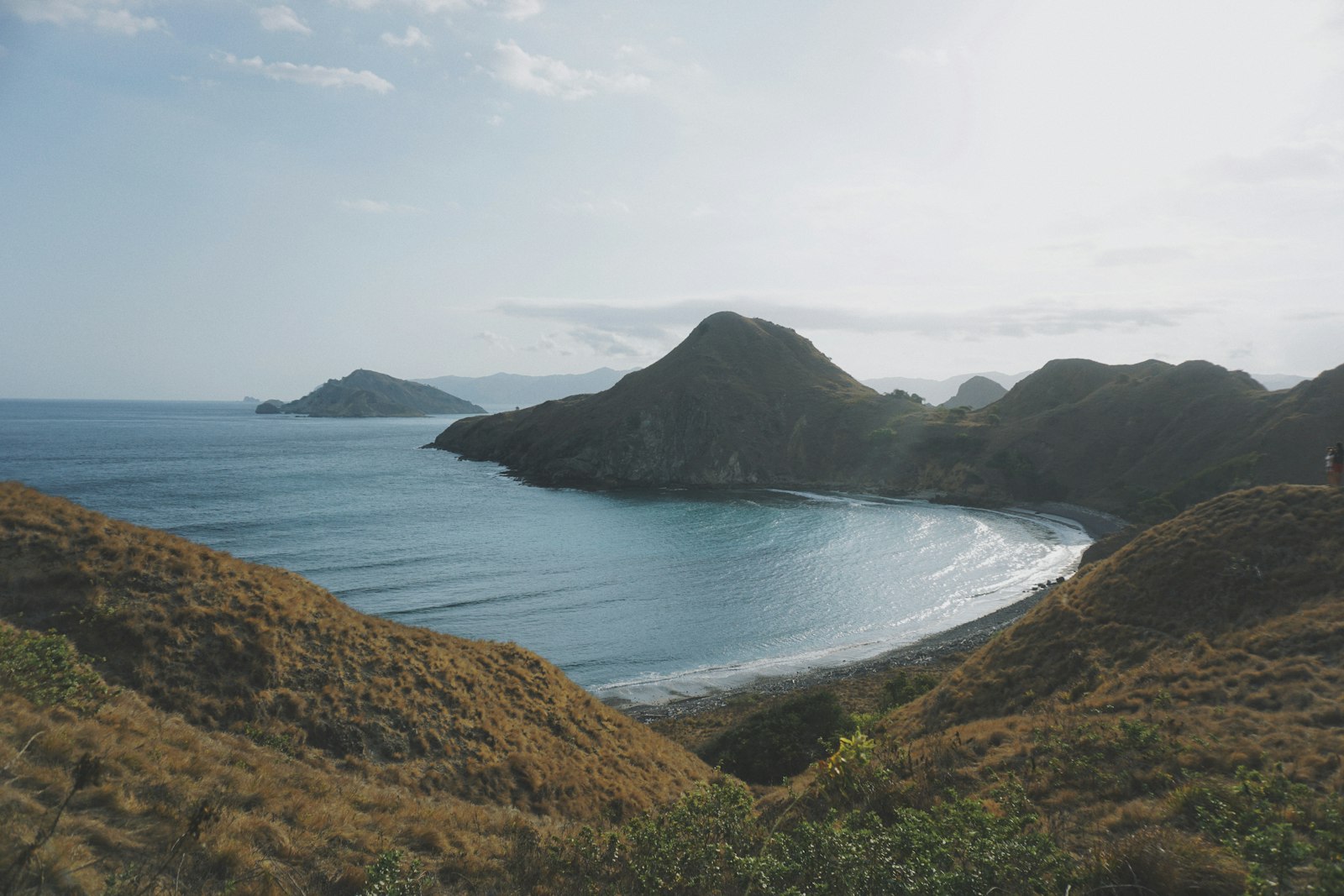
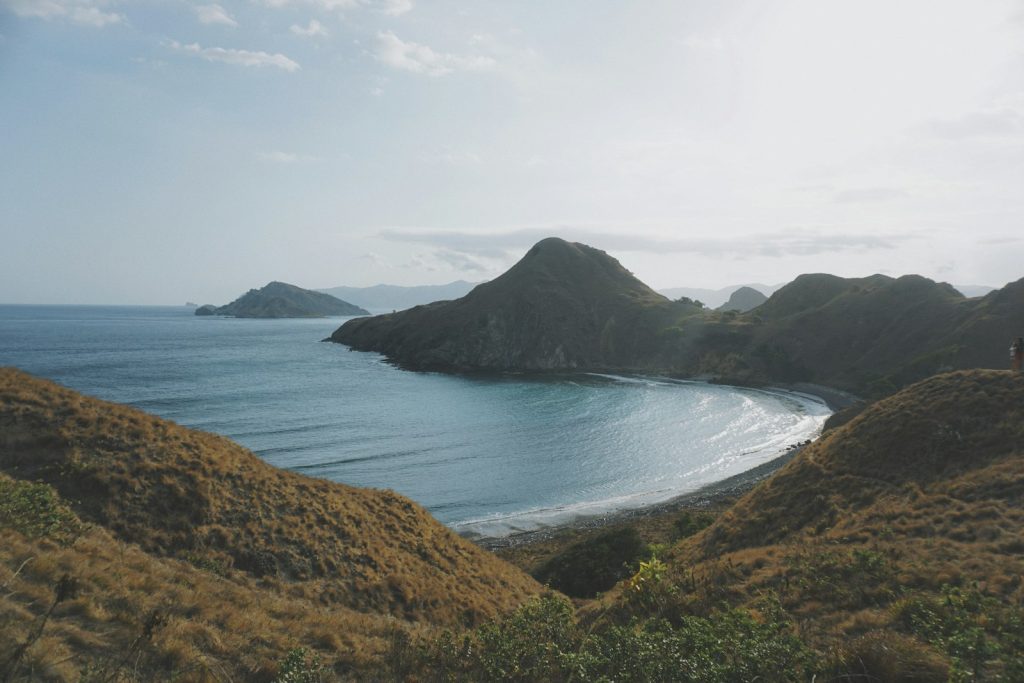
Sumba has a markedly drier climate than Bali. Annual rainfall in much of Sumba runs 800–1,500 mm per year; Bali ranges up to 1,500–3,000+ mm, with the southern resort areas receiving rainfall throughout more of the year. Sumba’s dry season — June through September, with mid-June to late August as the most reliable window — produces long streaks of clear days, consistent warmth, and very low humidity. The landscape goes golden and savannah-like during this period, which is the visual most people associate with Sumba wedding photography.
Bali has a dry season too (roughly April to October), but it is less reliable at the micro-level, and the wetter months in Bali are significantly wetter than their Sumba equivalents. For a couple committed to an outdoor ceremony with no backup structure, Sumba in July is statistically a safer bet than Bali in November.
One caveat the brochures skip: Sumba’s south coast during peak dry season has strong south-facing winds driven by the Australian SE monsoon (June through August). Cliff and beach ceremonies on exposed south-facing sites require wind-resilient décor — candles are difficult, tall floral arrangements need weighted bases, and flowing fabrics may behave unexpectedly. Discuss this with your planner and venue when reviewing ceremony site orientation. North or west-facing sites are more sheltered during this period.
South-coast sea conditions are also rougher from July through September. If any of your guests or activities involve water — snorkeling, boat transfers, beach access — this is worth knowing in advance.
Culture and Landscape: The Real Reason to Choose Sumba
No serious comparison of Sumba and Bali for a wedding can reduce the choice to a spreadsheet of logistics metrics. There is a qualitative difference in what the day looks and feels like.
Bali’s landscape is beautiful — everyone who has been knows this. The rice terraces, the clifftop sunsets, the Hindu temples framed against the sea. But Bali’s landscape has been photographed at a wedding before. Many thousands of times. The clifftops of Uluwatu host ceremonies almost every week of the dry season. That is not a criticism; it is a fact. Bali’s wedding industry is mature because it is genuinely good at what it does, and many couples find the confidence that brings to be exactly what they want.
Sumba’s landscape is not domesticated in that way. The island covers 10,909 km² and holds a population of roughly 852,000 — comparable in land area to a small European country, with the population density of a remote interior. The terrain is limestone-based savannah rather than volcanic; the hills roll open rather than rising dramatically, and the dry-season palette of golden grass, dramatic cliffs, and the Indian Ocean behind the beach produces a visual register that is entirely distinct from Bali’s lush green aesthetic.
The cultural dimension runs deeper still. Sumba is home to Marapu, an indigenous ancestral and animist belief system still actively practiced, often alongside Christianity. Village life in the interior is organized around megalithic stone tombs, peaked thatched-roof clan houses (uma), and a textile tradition — Tenun Ikat Sumba — where intricate hand-woven cloth forms part of ceremonial gift exchange at marriages. These are not museum displays. They are living practices in communities that welcome respectful visitors but are not set up as a tourist backdrop.
Nihi Sumba’s wedding program can incorporate a blessing by a Rato — a village ritual authority — along with ceremonial horses, fire dancers, and local musicians. The Rato blessing specifically is not available to be purchased at a Bali venue. It is site-specific to Sumba, it requires genuine community relationship, and it requires handling with care: the ceremony should be approached as a real cultural exchange, not a photogenic add-on.
If what draws you to a destination wedding is the feeling of being somewhere genuinely far from the familiar, of a ceremony rooted in a place that is rare rather than convenient, Sumba delivers that in a way Bali no longer can. Bali is one of the most visited islands in Southeast Asia. Sumba is not. That distinction, felt in the air and the silence and the lack of traffic outside the resort gates, is what the higher cost is largely buying.
Honest Reasons Not to Choose Sumba
We cover Sumba with genuine enthusiasm. That makes the obligation to be candid about its limitations feel more important, not less.
Guest count above 70–80
If your combined families and friends number much above 70, a single-property Sumba wedding becomes logistically very complicated. There are not enough rooms at a single high-quality property to house a large group. Splitting guests across properties means road transfers that add time and cost, and the gap in accommodation quality between Nihi-tier and the island’s mid-range options is wide. This is not a problem that money easily solves on Sumba. It is a structural limitation of the island’s hospitality infrastructure.
Budget under $30,000 for a meaningful ceremony
A simple, low-cost symbolic ceremony on Sumba is technically possible, but the baseline remote-logistics costs eat heavily into smaller budgets. At the $10,000–$20,000 range that can produce a comfortable intimate wedding in Bali, Sumba is extremely difficult to execute well. If budget is a real constraint, Bali gives you more per dollar at almost every production level below the ultra-luxury tier.
Guests with mobility or medical needs
Sumba has basic medical facilities. Serious cases require medical evacuation to Bali or Jakarta. For elderly guests, guests with limited mobility, or anyone who might need quick access to specialist medical care, this is a material consideration. Travel insurance with medical evacuation cover is non-negotiable for a Sumba trip. Bali has significantly better-equipped hospitals and is more comfortably within evacuation range of international-standard care in Singapore or Australia.
Malaria risk region (information only — consult a doctor)
Sumba and the broader Nusa Tenggara region are classified as areas with ongoing malaria transmission in most travel-medicine guidance. Bali is generally considered a low or negligible malaria-risk destination. This does not mean a Sumba wedding is dangerous — many thousands of visitors travel to eastern Indonesia safely every year — but couples and guests should consult a travel-medicine clinic several weeks before travel about prophylaxis options. This is information, not medical advice; your doctor or a qualified travel-medicine specialist should guide decisions about prevention.
Limited mobile connectivity and cash infrastructure
ATMs on Sumba are limited and may be offline. Mobile data outside town centers is patchy. For guests who have never dealt with cash-dependent travel or sporadic connectivity, this is worth flagging in advance. The practical recommendation: withdraw adequate Indonesian rupiah (IDR) in Bali before boarding the Sumba connection, bring two cards, and set realistic expectations about internet access. Most guests at resort-tier properties will have adequate Wi-Fi within the resort, but anyone venturing further afield should plan accordingly.
Vendor redundancy does not exist
In Bali, if your appointed florist falls ill, you can find a replacement on short notice. In Sumba, your florist flew in from Bali and there is no backup option on the island. This requires contingency planning — backup contracts with an alternative vendor in Bali who is briefed and on standby, or a planner who has enough relationships to mobilize a substitute. The risk is not high, but it exists, and it underscores why Sumba planning needs to start earlier and with more margin than a Bali event of comparable size.
A Note on Lombok as a Middle Path
Couples who search sumba vs lombok wedding are usually asking a different question: is there a bali alternative wedding destination that is more developed than Sumba but more distinctive than Bali?
Lombok sits in that middle position. Its tourism infrastructure is meaningfully more developed than Sumba’s — Lombok International Airport (LOP) receives commercial jet service, the Gili Islands have an established hospitality ecosystem, and there are several boutique resorts that can host small to mid-size weddings. It is considerably less remote than Sumba, which means lower logistics costs and more vendor options, but also less of the rarity factor that makes Sumba distinctive.
Lombok’s southern peninsula (Kuta Lombok, Mandalika) has seen significant resort development in recent years, and the Mandalika Special Economic Zone has brought internationally branded hotels to a coastline that previously had very few. This raises the ceiling on what a Lombok wedding can accommodate in terms of guest capacity and vendor availability.
The honest summary: Lombok is a reasonable choice if you want something more exclusive than Bali but less logistically demanding than Sumba, and if your guest count can still be handled by a smaller resort. It does not replicate Sumba’s untouched-savannah aesthetic or its deep indigenous culture. It is its own island — beautiful, developing, and increasingly viable for destination weddings, but positioned between Bali and Sumba on almost every dimension: infrastructure, exclusivity, cost, and cultural depth.
The Hybrid Option: Legal in Bali, Celebrate in Sumba
This is the approach many experienced planners recommend, and it deserves more attention than it usually gets.
Indonesia’s marriage law requires that a legal marriage be performed according to one of six recognized religions, that both partners share that religion, and that a Certificate of No Impediment (CNI) be obtained from each partner’s embassy before the ceremony. The practical reality is that most international couples find the Indonesian legal requirements complex enough — and the risk of paperwork issues sufficient — that they prefer to marry legally in their home country first and hold a symbolic or blessing ceremony in Indonesia. That ceremony has no legal standing in Indonesian law, but it has every emotional and cultural significance the couple chooses to give it.
The hybrid model works particularly well for a Bali-Sumba itinerary. Some couples hold their pre-wedding events or a small civil celebration in Bali, where logistics are easy, guests can spend a few days comfortably, and a formal restaurant dinner or poolside reception is easily arranged. They then travel as a smaller group — the closest family and friends, typically 20–40 people — to Sumba for the main ceremony. Nihi Sumba’s program includes the option for a Protestant symbolic ceremony in English, or a traditional Sumbanese Rato blessing, both well suited to this format.
The Bali leg gives guests who cannot make the Sumba journey a way to be part of the celebration. The Sumba leg gives the couple and their closest circle an experience that cannot be replicated anywhere else in Indonesia.
If you are considering this approach and want to talk through the structure — what works in Bali, who handles the Sumba piece, how to brief vendors who need to coordinate between two islands — reach out via our enquiry form or message us on WhatsApp at +62 811-3941-4563. We are happy to point you toward planners and venues who have done this route well.
Side-by-Side Comparison at a Glance
- International flight access
- Bali: Direct long-haul from Australia, Singapore, Japan, Middle East, Europe. One-flight or one-stop itinerary for most guests. Sumba: Always a second connecting flight from Bali (DPS→TMC or WGP, ~85–90 min, turboprop); total journey 12–20+ hrs door-to-door from most origins.
- Guest capacity (practical ceiling)
- Bali: 10–300+, depending on venue. Large resort and villa clusters can accommodate substantial guest lists. Sumba: ~20–70 at a single luxury property; very large weddings (150+) are not realistic without major multi-property logistics.
- Vendor depth
- Bali: Hundreds of photographers, florists, planners, MUAs, caterers, and AV teams operating locally. Mature, competitive market. Sumba: Thin local vendor pool; expect to fly most specialists in from Bali (1–2 days early for schedule buffers).
- Cost premium vs Bali
- Bali: Baseline. Sumba: Higher at every production level — budget for vendor travel, freight, accommodation, and logistics contingency on top of equivalent Bali figures.
- Dry-season reliability
- Bali: April–October generally dry; not perfectly consistent. Sumba: June–September very reliable, particularly mid-June to late August. Less annual rainfall overall, drier conditions during prime season.
- Wind and sea conditions
- Bali: Varies by coast; Uluwatu and southern beaches have swell. Sumba: Strong SE monsoon winds June–August on south-facing sites; south-coast seas rough July–September. Plan ceremony orientation accordingly.
- Privacy and exclusivity
- Bali: Private villas and estate venues offer seclusion within a well-touristed island. Sumba: Full resort buyout removes all outside guests; the island itself receives a fraction of Bali’s visitors. Genuinely remote.
- Cultural distinctiveness
- Bali: Rich Hindu-Balinese culture, temples, ceremonies — genuinely meaningful but familiar to many international travelers. Sumba: Marapu ancestral tradition, Tenun Ikat weaving, megalithic villages, Rato blessing — very few international couples have encountered anything comparable.
- Malaria consideration
- Bali: Generally low or negligible risk. Sumba: In an area with ongoing malaria transmission; consult a travel-medicine doctor about prophylaxis before travel. Information only.
- Medical facilities
- Bali: Multiple hospitals; medevac to Singapore or Australia accessible. Sumba: Basic facilities; serious cases require evacuation. Travel insurance with medevac cover is essential.
- Legal marriage on-island
- Both islands: Indonesia requires a religious ceremony under one of six recognized faiths, same-religion rule, plus CNI from each partner’s embassy. Most international couples marry legally at home and hold a symbolic ceremony in Indonesia on either island.
How to Decide: Four Honest Questions
Cut through the comparison and ask these four questions. The answers will tell you which island is right.
1. How many guests are non-negotiable? If the answer is above 80, Sumba is going to cause significant logistical friction. Bali is the rational choice. If the answer is 20–60 and you want everyone at the same property, Sumba becomes genuinely viable.
2. Is the feeling of remoteness and rarity worth a meaningfully higher budget and more planning complexity? Be honest. Some couples care deeply about uniqueness and privacy; others care more about a smooth experience for their guests. There is no wrong answer. Sumba rewards couples who genuinely value the first. Bali serves the second extraordinarily well.
3. Does anyone in your core guest group have mobility limitations, serious medical needs, or significant anxiety about remote travel? One guest who is miserable because of access difficulties can create emotional weight the couple carries throughout the wedding. Think carefully about who actually makes the trip to Sumba, not just who says yes in theory.
4. What do you want to feel when you look at your photographs in 30 years? Bali photographs are beautiful. Sumba photographs look like nowhere else. If the landscape and the ceremony setting are a meaningful part of how you will remember the day, Sumba’s imagery — golden savannah, limestone cliffs, traditional horses on a 2.5-kilometre private beach — offers something that is not reproducible elsewhere in Indonesia.
If you have worked through those questions and still feel uncertain, our enquiry form is the fastest way to get a frank, experience-based answer for your specific situation. You can also reach us on WhatsApp at +62 811-3941-4563 — we respond to most messages within a business day and we are happy to talk through the trade-offs before you commit to anything.
Frequently Asked Questions
Is Sumba more expensive than Bali for a destination wedding?
Yes, consistently. Sumba’s remote logistics — flying vendors in from Bali, freighting florals and equipment, and covering vendor accommodation and per diems — add meaningful cost to every production level. A mid-range intimate wedding in Sumba (20–30 guests) is likely to cost what a luxury Bali event of similar scale would, and the upper end of Sumba’s luxury tier (full resort buyout at a property like Nihi Sumba) requires a budget well above what a comparable Bali buyout would demand. That said, Sumba is not offering the same product as Bali — the remoteness and rarity are part of what you are paying for.
Can I have a large wedding on Sumba?
Not without significant compromise. The island’s premier wedding venue caps at approximately 70 adults for a full-resort buyout. Other upscale properties are smaller boutique operations. If your guest list is above 80–100 people, we would not recommend Sumba as your primary venue. The lack of overflow accommodation at comparable quality, the road transfer times between properties, and the absence of large-scale catering and event infrastructure make very large Sumba weddings extremely difficult to execute well. Bali can handle guest lists of 150–300+ without that friction.
Do I need to marry legally in Sumba or Bali?
Not necessarily — and in fact, the most common path for international couples is to marry legally in their home country and hold a symbolic or blessing ceremony in Indonesia. Indonesia’s marriage law requires a religious ceremony conducted according to one of six recognized faiths, with both partners sharing the same religion. A Certificate of No Impediment from each partner’s embassy is also required. These requirements lead most international couples and their planners to strongly favor the legal-at-home, symbolic-in-Indonesia route. A symbolic ceremony in Sumba carries no legal weight under Indonesian law but every emotional and spiritual significance you choose to give it. For more detail, see our legal requirements guide.
Is Lombok a better option than Sumba for a destination wedding?
Lombok sits between Bali and Sumba on almost every dimension: more developed infrastructure than Sumba but less than Bali, lower logistics cost than Sumba but less of Sumba’s rarity and cultural depth. Lombok is a genuine option for couples who want something more distinctive than the established Bali circuit but are not willing to absorb Sumba’s planning complexity and cost premium. Its southern coastal areas have seen significant resort development in recent years. It does not replicate Sumba’s open savannah landscape, its Marapu cultural context, or the depth of privacy a full-resort buyout on a lightly-touristed island provides. If those elements matter to you, Lombok is a step toward Sumba but not the destination itself.
What time of year is best for a Sumba or Bali wedding?
For Sumba, mid-June to late August is the most reliable window: dry, clear, daytime temperatures around 30–32°C, and the golden savannah landscape at its most photogenic. May and September are acceptable but carry slightly more weather uncertainty at either end. The wet season runs November through March/April (with peak rain December to February) — outdoor ceremonies during this period require serious covered backup plans. For Bali, the dry season also runs broadly April to October, though Bali’s rainfall patterns are more variable than Sumba’s and the island is more humid overall. Both islands require outdoor ceremony insurance in the form of a solid backup plan regardless of season.