How to read this: Sumba Destination Wedding is an independent wedding-curation guide — we research and compare cliffside, beach, resort and intimate settings on Sumba, then route your enquiry to a vetted planning partner. We are not a wedding planner, venue, resort or booking platform, and any property named (including well-known names) is a neutral example only, not a claim of endorsement or affiliation. Legal marriage requirements for foreigners in Indonesia are complex — this is general information, not legal advice; always verify current rules with the relevant authorities. Costs are by quote and vary by season, party size and logistics; figures here are indicative ranges only.
Flying wedding vendors to Sumba means routing almost everyone from Bali — photographers, florists, HMUA artists, AV crews — onto a 75-to-90-minute ATR turboprop into Tambolaka (TMC) or Waingapu (WGP), with their gear packed into hold bags, foam cases, and freight manifests that need thinking through weeks before the wedding date. This is not a logistical footnote. On a remote eastern island with almost no local wedding-supplier infrastructure, the mechanics of moving people and equipment shape your budget, your risk exposure, and your timeline more than almost any other single factor.
The vendor-pool reality — how thin it is, why it is thin — is covered in a separate piece on this site. What we address here is more granular: once you have decided to fly wedding vendors to Sumba, what does the actual execution look like? How do you get a lighting rig and two hundred white orchids onto a 70-seat turboprop? What happens when a delayed flight strands your photographer in Denpasar? And what does all of it cost, honestly?
The Route: Bali to Tambolaka, the Way It Actually Works
The gateway for most Sumba weddings is Tambolaka — officially Lede Kalumbang Airport (IATA: TMC), in Southwest Sumba, roughly 40 minutes from Waikabubak and the heart of the island’s western resort corridor where Nihi Sumba sits. Direct flights from Denpasar (DPS) are operated by Lion Air Group carriers, principally Wings Air (IW), on ATR 72 turboprops. A verified example is Wings Air IW1832, departing 09:10, arriving 10:35 — 85 minutes block time. The broadly accurate planning figure is 75 to 90 minutes.
Waingapu (WGP), the East Sumba gateway with its own regional connections, is an option if your event is in the east, but most destination weddings concentrate in the southwest. The DPS-to-TMC route is the one your vendors will almost certainly use. [Flight frequency and schedule: check directly with Lion Air / Wings Air or a booking agent close to your wedding date — daily counts are schedule-dependent and not reliably stable from any static source.]
One thing couples are often surprised by: there is no Lombok-to-Sumba direct route of any verifiable reliability. Guests or vendors routing through Lombok will transit Bali. The hub is Bali. Build all vendor logistics around that.
Why the ATR Turboprop Changes Everything
ATR turboprops are small. The ATR 72, in its typical Indonesian regional configuration, carries around 68 to 70 passengers. The hold is correspondingly limited — and baggage allowances on Wings Air domestic routes are more restrictive than on a wide-body jet. Standard economy check-in allowance on Lion Air Group domestic routes is typically 20 kg per passenger; Wings Air regional specifics can vary and are worth confirming at booking. [VERIFY current Wings Air baggage policy — allowances are subject to change and differ by fare class.]
The practical implication: a two-person photo-video team with full production kit — camera bodies, lenses, drone, tripods, stabilisers, hard drives, batteries, charging gear — will almost certainly exceed a standard 20 kg allowance, often by a wide margin. Professional lighting kits are worse. A mid-range portable strobe kit with stands and modifiers can run 30 to 50 kg on its own. Floral coolers and conditioning equipment add more. Every kilogram over the free allowance costs money, and on a regional turboprop, those costs compound fast.
Baggage Realities: What Vendors Bring and What It Weighs
Here is a working breakdown of what commonly gets checked when bringing Bali vendors to Sumba, with honest weight estimates. These are not precise figures — team configurations vary enormously — but they give you a planning anchor:
| Vendor Type | Typical Gear Load (approx.) | Fragile / Special Handling? |
|---|---|---|
| Photographer (solo) | 15–30 kg (cameras, lenses, flash, tripod) | Yes — carry-on for bodies/lenses where possible |
| Videographer (with assistant) | 30–60 kg (cinema cameras, gimbals, drone, batteries, audio) | Yes — lithium batteries strict airline rules |
| HMUA (1–2 artists) | 20–45 kg (kit cases, salon chair, products, lighting mirror) | Moderate — products in secure cosmetic cases |
| Florist / Decorator (team) | 40–100+ kg (tools, foam, wire, ribbon, lightweight props) | High — many items breakable or perishable |
| AV / Lighting Engineer | 50–150+ kg (controllers, cables, heads, stands, trussing) | Very high — freight is often the only option |
| DJ / Band (partial) | 30–80 kg (controller, monitors, cables; instruments may ship separately) | High — controllers are expensive and fragile |
The numbers in that table explain why vendor travel logistics for a Sumba wedding can represent 10 to 20 percent of a production budget — sometimes more — before you have booked a single flower or poured a single drink. Excess baggage fees on domestic Indonesian routes are typically charged per kilogram, and the per-kg rate on regional turboprop routes is not trivial. All figures are by-quote and subject to change; ask your vendor team for their actual kit weight before building your budget.
Lithium Batteries: The Overlooked Complication
Video crews running cinema-grade cameras, drone pilots, and lighting engineers who use battery-powered LED kits all travel with lithium battery packs. Indonesian aviation authority (DGCA) rules on lithium batteries broadly follow IATA standards — cells above a certain watt-hour rating cannot go in the hold and must travel as carry-on, with quantity limits per passenger. A drone pilot carrying multiple high-capacity LiPo batteries will need to check with the airline well in advance. This is not a detail to leave to the vendor to sort out the morning of their flight.
Freight and Shipping Ahead: Does It Work?
For very large or very heavy items — full lighting rigs, DJ equipment, structural décor — some production teams explore shipping cargo to Sumba ahead of the wedding. In principle, freight forwarding to Waingapu or onward overland to the west coast is possible. In practice, it introduces a different set of risks: arrival timing uncertainty, customs clearance unpredictability for goods that include electronics, and the question of who receives and secures the shipment at the destination end.
The more common approach for mid-scale productions is to rent locally in Bali and transport only what cannot be sourced there — which still means flying with significant kit. For very heavy structural elements, discuss with your planner and venue whether there is a local vendor or storage point that can take receipt of a shipment. Nihi Sumba, as a resort with its own logistics infrastructure, will have context on what they can accommodate — but that conversation needs to happen well before the wedding week, not two days before the event.
Whatever route you choose: build in a verification step. A lighting rig or décor shipment that arrives in Waingapu but sits in a clearing depot while your wedding is in the west is not a scenario you want to discover 48 hours before the ceremony.
The Transfer: TMC to the Resort Is Not a Short Drive
Landing at Tambolaka is not arriving at your venue. Tambolaka airport sits about 5 km from Tambolaka town and roughly 40 minutes from Waikabubak. From there to Nihi Sumba — and to most of the western-coast resort and ceremony sites — you are looking at road transfers on routes that are not comparable to Bali’s airport expressway. The roads are improving, but sections remain rough, and travel times vary by weather and road condition. Build transfer margin into every vendor arrival day.
A vendor arriving on a mid-morning flight with a 10 kg floral cooler and a lighting rig does not want to discover their vehicle had a tyre problem and they have ninety minutes of rough road still ahead of them. The practical standard: have vendors arrive at the resort with daylight to spare. Equipment should be unloaded, checked, and set up in non-emergency conditions. Any production run-through or lighting check that gets squeezed into nightfall because of an optimistic transfer schedule will add stress that shows up, somehow, on the wedding day itself.
Road Conditions and the Loaded Vehicle Problem
Heavily loaded vehicles on rough road surfaces are slower and harder on equipment. Foam cases protect against many impacts, but sustained vibration and sharp bumps on uneven asphalt take a toll on anything with a delicate calibration — camera fluid heads, sensitive electronic boards in LED lighting controllers, intact floral arrangements. Your local ground handler or resort coordinator should be able to advise on vehicle options — a proper cargo van versus a standard minivan matters when you are moving a full décor team’s worth of kit. This is one of the unsexy details worth asking about in the planning phase rather than discovering on arrival day.
Why Vendors Arrive Early: The Buffer-Day Logic
The standard practice for transporting wedding suppliers to Sumba is to have key vendors arrive one to two days before the wedding date. Not one morning before. One or two full days before.
The reason is not fastidiousness. It is the risk profile of a single ATR turboprop route with limited daily frequency and very few redundancy options. A delayed or cancelled flight from Bali to Tambolaka, under the right (wrong) circumstances, cannot be caught up within a few hours. The next available flight may not be until the following day. If your lead photographer, your HMUA team, and your florist are all arriving the morning of your ceremony and there is a weather delay or a mechanical ground-stop, you have no recovery window.
A one-day buffer means a delayed flight can usually be absorbed. A two-day buffer means your florists can condition flowers, your videographer can scout ceremony sites in proper light, your lighting team can rig and test without a 2 a.m. scramble. That buffer costs money — hotel nights, per diems, ground transport. But those costs are significantly less than the alternative scenario. Any experienced planner coordinating vendor travel logistics for a Sumba wedding will build buffer days into the schedule as a non-negotiable, not an optional upgrade.
What the Resort Provides vs What Must Fly In
Understanding the in-house versus fly-in split matters for budgeting. A resort like Nihi Sumba — the only confidently-verified full-service destination-wedding property on the island — provides a meaningful base of production infrastructure. Getting clarity on what that base includes before you start adding vendors protects against paying for things twice or, worse, underestimating what needs to come from outside.
- What a full-service Sumba resort typically provides in-house
- Ceremony and reception venue spaces (clifftop, beach, garden, private villa settings). Full food and beverage service — kitchen brigade, bar, service staff, rentals for standard table settings. Events coordinator embedded in the resort team. Basic sound equipment adequate for an intimate ceremony (microphone, speaker). Local cultural elements if offered: Sumbanese blessing by a village priest (Rato), ceremonial horse procession, local musicians. Coordination of guest accommodation within the property.
- What almost always needs to fly in from Bali
- Lead photographer and videographer with full professional kit. Bridal and groom HMUA artists (one or more). Floral and décor design team with specialty materials — imported flowers, structural elements, anything beyond what the resort’s base setup covers. Advanced AV and lighting production (if you want a proper dance floor ambience beyond basic in-house sound). Entertainment — a DJ, band, or specialist performers beyond what the resort’s cultural roster includes. A specialist wedding planner or stylist if the couple wants someone independent of the resort’s coordinator.
The split matters because every item in the second column represents a person on an ATR turboprop with kit, a room-night (or two), a per diem, and a return flight. Multiply that across a production team of eight to twelve people and the arithmetic becomes significant quickly.
Ready to map out exactly which vendors you need and what it means for logistics? Use our enquiry form or reach us on WhatsApp — we connect couples with vetted planners who coordinate fly-in vendor logistics as part of their standard service.
The Honest Cost Picture: Why Sumba Runs Above Bali
Couples sometimes expect Sumba to be cheaper than Bali because it is less developed. The reality is the opposite. For any comparable level of production quality, Sumba costs more. The gap is not enormous for simple ceremonies, but it grows considerably as production scale increases. The cost drivers are structural, not random:
- Airfare for each vendor: a return DPS-TMC ticket is not expensive in isolation, but multiplied across a team of six to twelve it adds up. [Verify current fares — pricing fluctuates significantly by booking window and season.] Budget as-a-team, not as individual tickets.
- Excess baggage fees: on an ATR route with tight allowances and heavy kit, this can be several hundred to several thousand US dollars for a full production team. All by-quote from the airline based on actual weight.
- Freight costs: if anything ships separately, add forwarding fees, insurance, and potential import/customs friction.
- Buffer-day room-nights and per diems: two early-arrival nights for a team of eight, at even modest accommodation rates, adds meaningfully to the bill. On Sumba, modest accommodation options are limited in the resort corridors; vendors staying at or near the wedding property pay proximity prices.
- Imported flowers and specialty materials: locally available floristry supply in West Sumba is minimal. Flowers for a significant floral design are sourced in Bali or Jakarta and either transported with the team or shipped separately, both of which add cost and perishability risk.
- Vendor premium for remote logistics: experienced Bali vendors who regularly travel to Sumba will build a remote-work premium into their quotes. This is reasonable — the logistics are genuinely more demanding — but couples should expect it and account for it.
All cost figures here are directional. Every component — airfare, excess baggage, freight, accommodation — is by-quote, varies by vendor, by date, and by what exactly needs to move. A planner who specialises in vendor travel logistics for Sumba weddings will be able to produce a structured cost estimate based on your actual team composition and production requirements. What we can say with confidence is that a like-for-like Bali production on Sumba will cost more, and that the premium is driven entirely by geography, not by inflated vendor rates.
A Planning Estimate for Rough Budgeting
As a rough orientation — not a quote, not a fixed price — couples planning a Sumba wedding at a full-service property with a Bali-sourced vendor team of moderate scale (lead photographer, video team, HMUA pair, florist team, DJ) might expect the logistics component alone — airfare, excess baggage, buffer nights, per diems, transfers — to run somewhere in the range of USD 3,000 to USD 10,000 or above, depending on team size and production complexity. This is separate from vendor fees, flower costs, and freight. Treat it as a line item that needs its own budget allocation, not an afterthought.
Risk Management: When Something Goes Wrong
The flight delay scenario deserves direct treatment because it is not hypothetical — it is a routine feature of regional Indonesian air travel. ATR turboprops on short regional routes are subject to weather holds (afternoon convective weather is common in the wet months, and even in the dry season TMC can experience localized disruption), mechanical ground stops, and slot congestion at DPS during peak periods.
When a key vendor misses their flight, the consequences in Sumba are different from missing a flight to a Bali venue. In Bali, there may be another flight in two hours, a backup vendor a 30-minute drive away, a second-hand option. In Sumba, the next flight option may be the following morning. There is no backup florist in Tambolaka. There is no emergency camera hire at the airport.
The risk mitigations that work:
- Buffer days, already discussed — the single most effective protection.
- Morning flights: early-morning departures from DPS have a much better on-time record than afternoon slots, which catch any cascade delays from earlier in the day. If your vendor has a choice between a 7 a.m. and a 2 p.m. flight on arrival day, the 7 a.m. wins.
- Redundancy in the photo-video team: if one camera operator is stranded, does the team still function? This is a conversation to have with your photographer before they are booked.
- Vendor travel insurance: professional vendors working in remote locations should carry their own travel insurance that covers gear loss and trip interruption. Confirm this rather than assuming.
- Escalation contacts at the resort: know in advance who to call at the property if a vendor is delayed. A well-resourced resort coordinator can sometimes help problem-solve — sourcing a local substitute, rescheduling ceremony timing by an hour — but only if they know the situation early.
Florals and Perishables: The Special Case
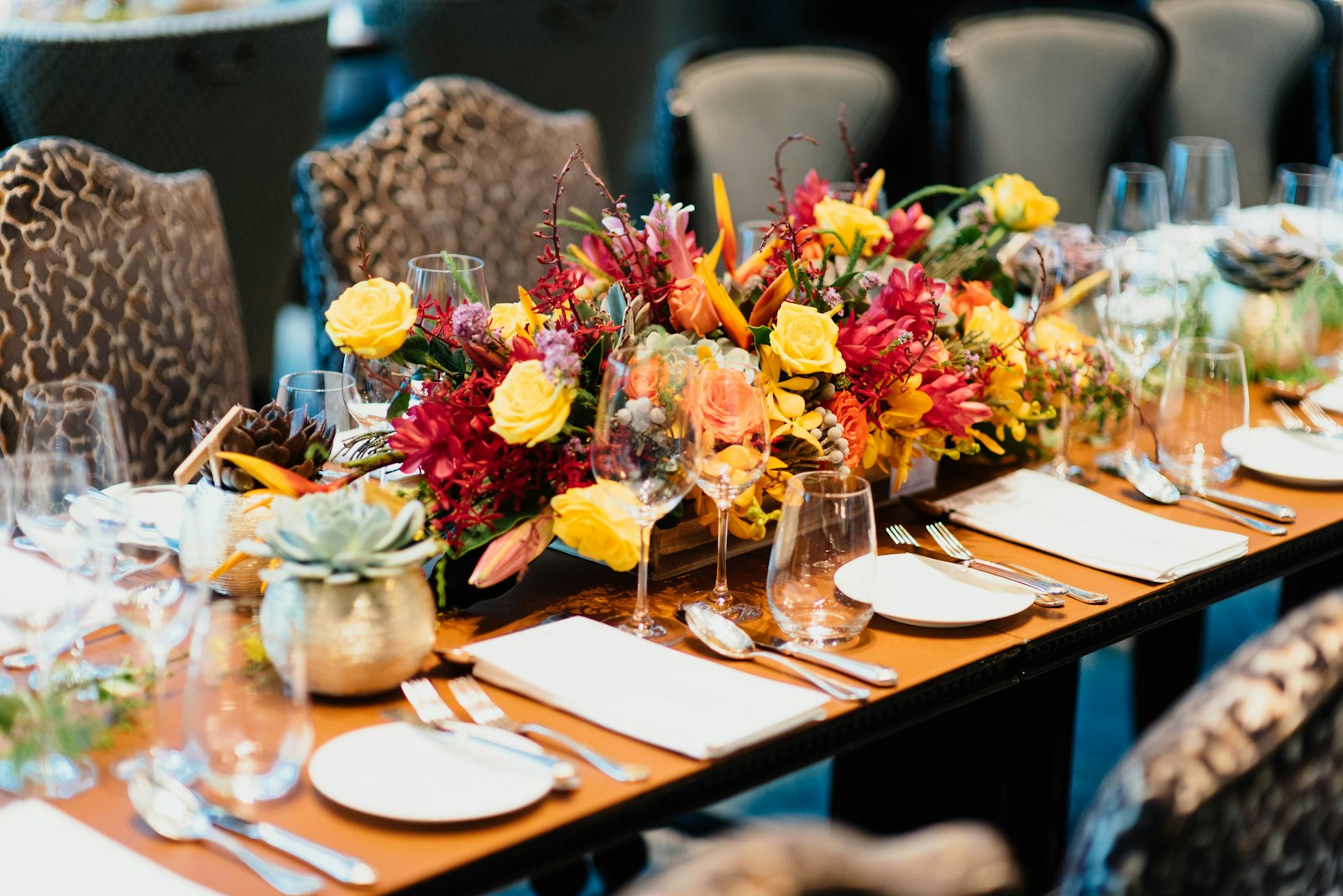
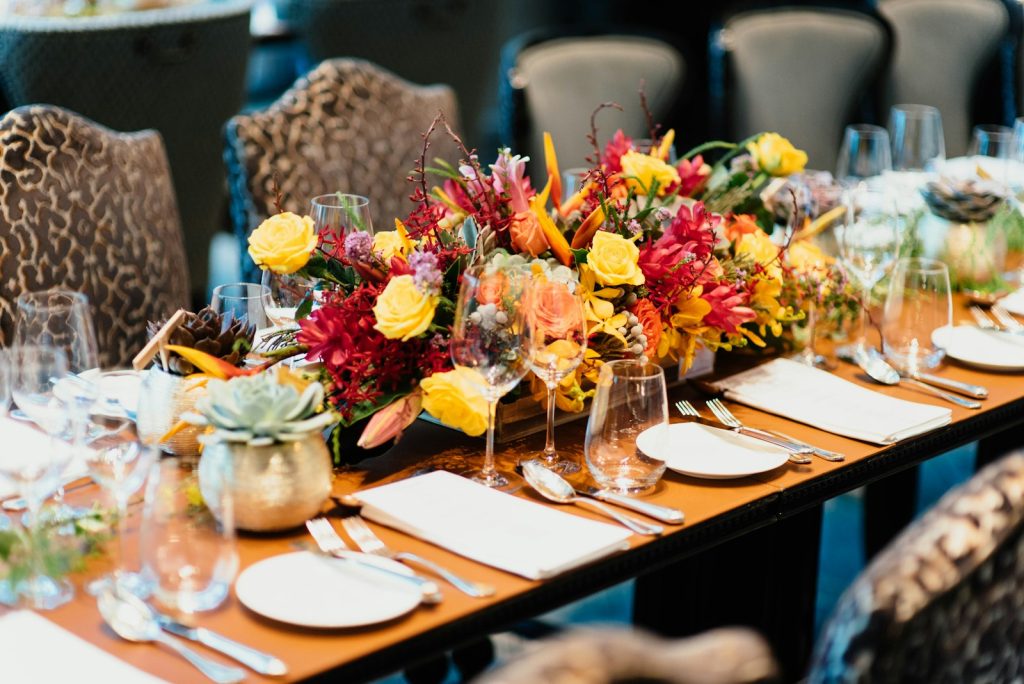
Flowers are the vendor logistics problem that tends to surprise couples most. A significant floral design — ceremony arch, table centerpieces, petal pathways, bridal bouquet and bridesmaids — requires volume, freshness, and often varieties not available on Sumba. The florist team either brings flowers as checked baggage (in insulated cases, on ice packs, with careful packing) or ships them as perishable cargo ahead of the team.
Flowers checked as baggage are subject to the same weight limits and excess-baggage fees as everything else, with the added complication that a long transfer delay or a vehicle problem can push them past their conditioning window before they ever reach the venue. Flowers shipped as freight face customs inspection risk and timeline uncertainty. Neither option is risk-free.
The most reliable approach, as reported by planners who work regularly on Sumba weddings: identify which elements of your floral vision can be achieved with locally sourced or more hardy materials — tropical foliage, certain varieties of orchid that travel well, dried or preserved elements — and reserve the premium perishables for pieces where they matter most. This is both a logistical and a creative decision, and a florist who has done Sumba weddings before will already have views on it. One who has not done the route is going to learn on your wedding.
Planning a floral-heavy design for Sumba and not sure how to structure the logistics? Reach us via our enquiry form or WhatsApp at +62 811-3941-4563 — we can connect you with a vetted florist who has navigated the Bali-to-Sumba supply chain.
AV and Lighting: When Freight Becomes Necessary
A basic ceremony sound setup — wireless mic, small speaker, playback for processional music — sits comfortably within what a full-service resort like Nihi provides. But couples who want a proper production-quality reception: a dance floor with dynamic lighting, a full DJ rig with subwoofers, an LED uplighting design throughout the reception space, or a live band with full backline — that equipment does not fly easily in hold bags on an ATR.
For serious AV production at a Sumba wedding, the freight question is not optional; it is where the conversation starts. A reputable AV company doing a remote-island event will assess what can be carried by the team as personal baggage, what needs to ship as air freight from DPS, and whether any elements can be sourced or rented locally. The last option is minimal — there is no AV hire house in Waikabubak that stocks the kind of equipment a luxury wedding requires. The honest position: advanced AV production on Sumba adds a meaningful logistics premium over the same production in Bali. Whether that premium is worth it depends on your couple’s priorities, not a generic rule.
What This Means for Your Timeline and Planning Lead Time
Vendor travel logistics for a Sumba wedding are not a last-month item. The constraints stack up quickly:
- Identifying and booking Bali-based vendors who are willing and experienced to travel remotely takes time — they book out months ahead, and experienced Sumba-remote vendors are a subset of an already selective pool.
- Understanding each vendor’s actual kit weight and freight requirements takes a planning conversation, not a form tick-box.
- Booking flights and excess baggage in advance, especially for a team of eight or ten people, needs to happen well before the last-minute window, both for availability and for pricing.
- Any freight shipments — for AV gear, structural décor, or floral cargo — need lead time for scheduling, packaging, and any documentation required.
- Buffer accommodation near the venue, if the resort itself is at capacity, needs to be secured well in advance; options around the SW Sumba resort corridor are limited.
A working rule: start the vendor logistics conversation at least four to six months out from your wedding date, and have kit weights, flight bookings, and freight plans confirmed at least six to eight weeks out. That gives you time to solve problems before they become crises.
Coordinating It All: The Case for an Experienced Planner
Everything described above — vendor selection, flight booking, excess baggage management, freight coordination, buffer scheduling, perishable logistics, transfer arrangements, on-the-ground reception of equipment — is the kind of multi-threaded project management that benefits enormously from someone who has done it before. The resort’s internal coordinator will handle many things well, but the logistics of flying in an independent production team is typically the domain of an independent planner who specialises in remote destination weddings.
A planner with Sumba-specific experience will have vendor relationships already established, know which Bali suppliers pack efficiently and arrive reliably, and will have a pre-built logistics framework for buffer days, transfer vehicles, and freight documentation. That expertise is not cheap — planner fees typically run in the range of 10 to 15 percent of total wedding budget (a general industry figure, not a Sumba-specific sourced number) — but the cost of getting fly-in logistics wrong is higher.
If you want to connect with a vetted planner who coordinates fly-in logistics as a core part of their Sumba service, use our enquiry form or message us on WhatsApp at +62 811-3941-4563. We do not charge couples for the introduction; if you proceed with a partner through us, they may pay us a referral fee at no extra cost to you.
Frequently Asked Questions
How long does the flight from Bali to Sumba take for vendors?
The direct route from Denpasar (DPS) to Tambolaka (TMC) on a Wings Air ATR turboprop runs approximately 75 to 90 minutes block time — a verified example puts it at 85 minutes. Vendors should allow for airport check-in time at DPS plus a transfer from TMC to the resort, which adds at least 45 to 60 minutes of road time after landing. A morning departure from Bali does not mean a morning arrival at the venue. Plan the day accordingly.
Can vendors bring all their photography and video equipment as carry-on?
Camera bodies and high-value lenses are commonly carried in cabin bags to protect against checked-baggage handling, but a full production kit — tripods, stabilisers, drones, lighting equipment, full audio rigs — cannot all fit in overhead bins on an ATR 72. Most professional crews check a significant portion of their gear and pay excess-baggage fees for the overage. Lithium batteries above certain watt-hour ratings must travel as carry-on under IATA rules, which affects drone pilots and LED lighting engineers especially. Confirm current airline policy directly with Wings Air / Lion Air before the trip.
What happens if a vendor’s flight to Sumba is delayed or cancelled?
On a remote turboprop route with limited daily frequency, a missed flight can mean arriving the following day — there is no quick ground-transport alternative from Bali to Sumba. This is precisely why buffer days matter: vendors arriving one to two days before the wedding date absorb a delay without it becoming a ceremony-day crisis. Experienced planners build this buffer as a standard, non-negotiable component of Sumba logistics. Morning flights from DPS also have better on-time records than afternoon slots and are worth prioritising for arrival days.
Can florals and flowers for a Sumba wedding be sourced locally?
Local floristry supply in West Sumba is minimal for a wedding-scale design. Florists working on Sumba weddings either bring flowers as checked perishable baggage (carefully insulated and iced) or ship them as air freight from Bali or Jakarta. Both approaches carry timing and condition risk over a long transfer day. Experienced Sumba florists offset this by maximising locally available tropical foliage and hardy varieties, reserving premium perishable flowers for the highest-impact design elements. This is a conversation to have with your florist at booking, not on the week of the wedding.
Does Nihi Sumba provide AV and sound equipment, or does that need to fly in?
Nihi Sumba, as a full-service resort, provides basic sound capability adequate for an intimate ceremony — microphone, speaker, music playback. For a production-quality reception with dynamic lighting, a full DJ or band setup, or architectural LED design, the required equipment exceeds what is held in-house and will need to fly in with a specialist AV team, or be freighted from Bali. The distinction between what the resort provides and what must be brought in is one of the first questions to ask the resort’s events coordinator when planning your production scope. [VERIFY current in-house AV inventory directly with the property.]